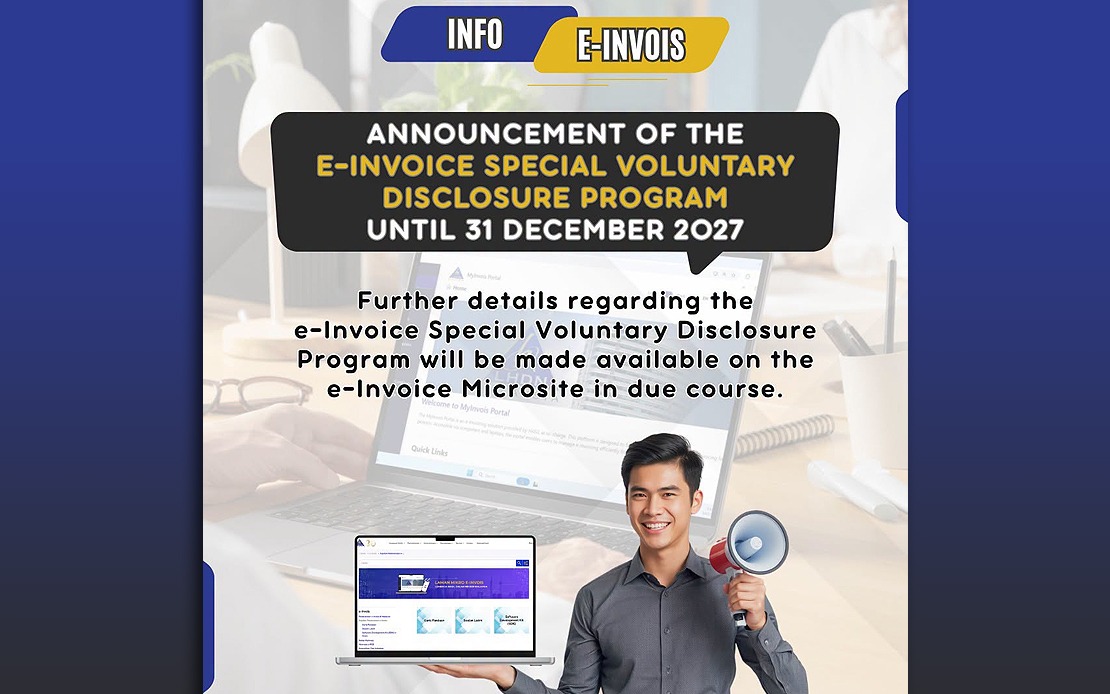
Prime Minister Datuk Seri Anwar Ibrahim, who also holds the Finance Ministry portfolio, announced today the introduction of the e-Invoice Special Voluntary Disclosure Programme (PKPS), a measure designed to ease the compliance burden on businesses as the country accelerates its digital tax infrastructure. The initiative, effective until December 31, 2027, represents a significant policy shift in how Malaysian tax authorities handle implementation of mandatory e-invoicing requirements, providing a window for businesses that have fallen behind on compliance standards to regularise their positions without incurring financial penalties.
The Inland Revenue Board has structured the amnesty to encompass three distinct categories of taxpayers seeking relief. The first group consists of businesses that failed entirely to submit electronic invoices for specific transactions that should have been reported under the scheme. The second category covers taxpayers who did submit e-Invoices but with errors or deficiencies that rendered them non-compliant with the IRB's General and Specific e-Invoice Guidelines. The third and final category applies to taxpayers who never submitted e-Invoices for any period dating back to the mandatory implementation date, representing those with the most significant compliance gaps.
The amnesty programme directly addresses a critical challenge facing Malaysia's business ecosystem, particularly micro, small, and medium enterprises (MSMEs) that often struggle with digital transformation initiatives alongside their core operations. Many smaller businesses cited implementation costs, technical complexity, and resource constraints as barriers to full compliance when the e-Invoice system was first introduced. By offering a penalty-free window, the government acknowledges these practical difficulties whilst maintaining the integrity of the digital tax system. The extended timeline until the end of 2027 provides businesses with nearly three years to systematically address outstanding submissions and corrections.
Crucially, Anwar emphasised that during the voluntary disclosure period, the IRB will refrain from imposing penalties on any updates, revisions, or corrections submitted by taxpayers. This penalty waiver represents the cornerstone of the programme's appeal, transforming what might otherwise be viewed as a compliance failure into a manageable correction process. For businesses that have accumulated backlogs of non-compliant invoices, the assurance of avoiding financial sanctions creates strong incentive to participate rather than risk future enforcement action.
Accompanying this amnesty is an accelerated tax incentive scheme designed to reward full compliance. The government has agreed to permit taxpayers to claim capital allowances for information and communication technology (ICT) equipment purchases within a single fiscal year, rather than spreading deductions across multiple periods. Additionally, expenses related to developing or modifying computer software specifically for e-Invoice implementation qualify for accelerated depreciation. These incentives effectively subsidise the technological investment required for digital transformation, recognising that many businesses require substantial upfront capital to establish compliant invoicing systems.
The IRB has stressed that voluntary disclosures must meet rigorous standards to qualify for protection under the amnesty. All submissions must be accurate and fully comply with established e-Invoice guidelines, meaning businesses cannot use the programme as cover for substantive errors or deliberate underreporting. This requirement maintains the scheme's integrity and ensures that the IRB can rely on the data submitted for audit and compliance purposes. Taxpayers must therefore invest appropriate effort in preparing comprehensive and truthful submissions.
Accessibility to the programme has been deliberately enhanced through multiple channels. Businesses can seek guidance directly through IRB offices distributed nationwide, reach the dedicated e-Invoice helpdesk at 03-8682 8000, engage through MyInvois Live Chat, or correspond via email. This multi-channel approach recognises that business owners have varying comfort levels with technology adoption and different availability constraints. For rural enterprises or those with limited digital literacy, the availability of telephone and in-person support is particularly valuable.
The e-Invoice system itself represents a cornerstone of Malaysia's broader digital economy ambitions and tax administration modernisation efforts. By centralising invoice data through the MyInvois platform, tax authorities gain real-time visibility into business transactions, enabling faster detection of anomalies and improved revenue collection. The amnesty programme effectively leverages this transition period to convert non-compliant businesses into active system participants, expanding the tax base coverage and data quality simultaneously.
For the broader Southeast Asian region, Malaysia's approach offers a pragmatic model for digital tax system implementation. Rather than pursuing punitive enforcement immediately upon deadline, the government has chosen a carrot-and-stick approach that prioritises system adoption over punishment. This strategy recognises that rapid digital transformation requires business cooperation and that overly aggressive enforcement could provoke resistance or non-compliance deeper in the system.
The timing of this announcement reflects accumulated feedback from the business community regarding implementation challenges. Since the e-Invoice mandate took effect, the IRB has likely observed substantial non-compliance rates despite awareness campaigns and technical support. Rather than escalate penalties, the government has chosen to reset expectations through this programme, signalling that compliance is achievable and that the authorities are responsive to practical difficulties faced by businesses.
Looking ahead, the success of this initiative will depend substantially on business participation rates and the quality of submissions received. If uptake proves strong, the IRB will gain comprehensive data on invoice patterns and transactions, creating a significantly improved tax compliance picture. Conversely, if participation remains weak, the government may face decisions about enforcement escalation after 2027. The programme thus represents a critical juncture in Malaysia's digital tax transformation journey.
For MSMEs particularly, this programme may prove transformative in removing technical and financial barriers to e-Invoice compliance. Many small business owners view tax administration interactions with anxiety; this amnesty provides an opportunity to resolve accumulated compliance issues and establish sustainable invoicing practices without fear of retrospective penalties. Businesses considering participation should act within the extended timeframe to ensure thorough preparation rather than rushed submissions as deadlines approach.

