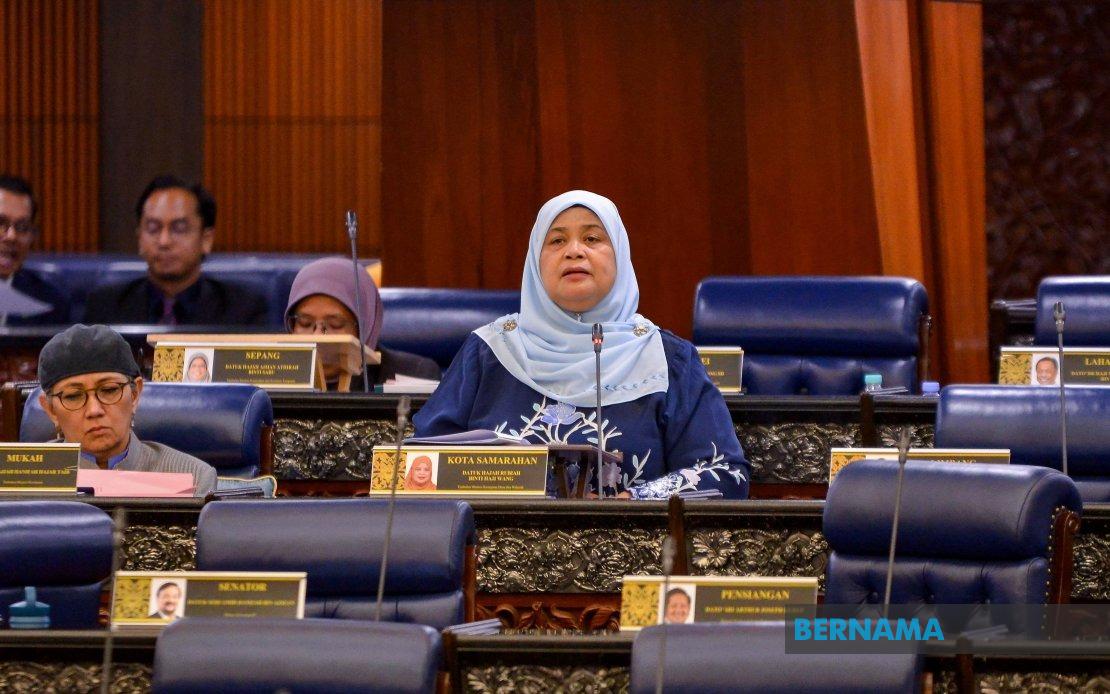
Malaysia's government has committed to a comprehensive overhaul of its Technical and Vocational Education and Training system, anchored on a fundamental shift in how qualifications are validated and recognised across the economy. Speaking in Parliament, Deputy Minister of Rural and Regional Development Datuk Rubiah Wang outlined how the TVET 2.0 initiative will reshape the vocational education landscape by embedding direct endorsement from major industry partners into the accreditation process itself. This structural change represents a departure from traditional top-down qualification frameworks, instead positioning employers as active validators of curriculum relevance and graduate competency.
The strategic rationale behind this transformation runs deeper than administrative convenience. Malaysia, like many Southeast Asian economies, has grappled persistently with a mismatch between the skills graduates acquire and what employers actually demand. By anchoring accreditation in real-time industry feedback, the government aims to create a dynamic system where vocational programmes constantly evolve in response to sectoral needs rather than becoming static repositories of outdated knowledge. This responsiveness is critical in sectors experiencing rapid technological disruption, where a qualification issued five years ago may no longer reflect operational realities on factory floors or in service centres.
The scope of this accreditation transformation extends beyond mere technical competencies. The TVET 2.0 framework incorporates a holistic vision of graduate development that emphasises not only advanced technological proficiency but also entrepreneurial capability and character formation. Deputy Minister Wang stressed that the ministry intends to nurture individuals who can function simultaneously as skilled workers and as potential job creators themselves, a distinction that acknowledges Malaysia's need to move beyond simple employment absorption towards indigenous business generation and wealth creation within rural communities.
A particularly notable dimension of this strategy involves the TVET Tahfiz programme, which integrates Islamic religious education with vocational training. This initiative seeks to develop huffaz—individuals who have memorised the Quran—who simultaneously possess cutting-edge technical expertise in emerging fields. Rather than positioning spiritual development and technological advancement as competing priorities, the programme frames them as complementary elements of a well-rounded professional identity. This approach recognises the values-based dimension of skill development whilst ensuring these graduates remain competitive in globally competitive labour markets where technical expertise alone often proves insufficient.
The emphasis on emerging technologies within the revised TVET framework reflects Malaysia's positioning within the broader digital transformation narrative. Training institutions under the Ministry of Rural and Regional Development are now systematically incorporating instruction in artificial intelligence, Internet of Things infrastructure, cloud computing, cybersecurity protocols, automation systems, robotics applications, and smart manufacturing methodologies. These fields represent the technological frontier where Malaysia seeks competitive advantage, and vocational graduates equipped with practical mastery in these domains position themselves as assets within high-value production chains.
Geographical and sectoral specialisation has become a cornerstone of the implementation strategy, with different TVET institutions designated as focal points for particular technological domains. TVETMARA Petaling Jaya concentrates on IoT expertise development, TVETMARA Besut functions as a centre of excellence for cloud computing instruction, while TVETMARA Pasir MAS serves as the national hub for Building Information Modelling training. This distributed excellence model allows the system to achieve critical mass in specialised fields whilst preventing wasteful duplication of expensive equipment and expert faculty across multiple campuses.
The German-Malaysian Institute occupies a distinct position within this ecosystem, specifically channelling German industrial expertise and manufacturing methodologies to Malaysian institutions and enterprises. By facilitating technology transfer from one of the world's leading manufacturing economies, this partnership ensures Malaysian vocational graduates gain exposure to proven best practices and advanced methods aligned with Industry 4.0 principles. This international collaboration amplifies the system's capacity to leapfrog developmental stages that nations with less access to foreign expertise must trudge through methodically.
At the higher education level, Universiti Kuala Lumpur serves as the apex institution for advanced vocational education, offering Bachelor-level programmes such as the Artificial Intelligence Technology degree. This institutionalisation of high-level vocational qualifications signals an important shift in Malaysia's education hierarchy, where vocational pathways are no longer portrayed as inferior alternatives to academic routes but rather as equally rigorous tracks serving distinct labour market needs. Such positioning carries profound implications for student choice, social mobility, and the economy's capacity to cultivate specialised talent pools.
The connection between accreditation transformation and actual employment outcomes remains the ultimate metric against which TVET 2.0 must be judged. Deputy Minister Wang articulated that the direct industry recognition embedded in the new accreditation framework should substantially improve graduate employability by ensuring that training content stays perpetually attuned to sectoral demand signals. For Malaysian employers, this represents an opportunity to shape the pipeline of talent entering their organisations, potentially reducing expensive training expenses and onboarding time. For rural communities particularly, vocational graduates equipped with both technological sophistication and entrepreneurial orientation offer pathways to economic participation beyond subsistence agriculture or low-skill service employment.
The broader implications for Malaysia's regional competitiveness warrant consideration. Southeast Asia's rising middle class and rapid urbanisation are generating enormous demand for skilled trades, technical services, and advanced manufacturing. Nations that systematically bridge the education-employment gap through mechanisms like industry-accredited TVET systems position themselves to capture disproportionate shares of these opportunities. Malaysia's transformation thus represents not merely a domestic policy adjustment but a strategic positioning within competitive regional dynamics where vocational excellence increasingly determines economic trajectory.
Implementation challenges remain substantial, however. Sustaining meaningful engagement from industry partners across the accreditation process requires institutional mechanisms that go beyond episodic consultation to embed employers as ongoing collaborators. Ensuring that specialised TVET institutions maintain cutting-edge equipment and faculty expertise demands sustained funding commitments that competing budgetary priorities may challenge. Scaling successful models across geographically dispersed locations whilst maintaining quality consistency presents logistical complexities that many developing education systems struggle to resolve. The success of TVET 2.0 ultimately depends not on rhetorical commitment but on sustained institutional investment and bureaucratic flexibility to adapt programmes as technological landscapes shift.

