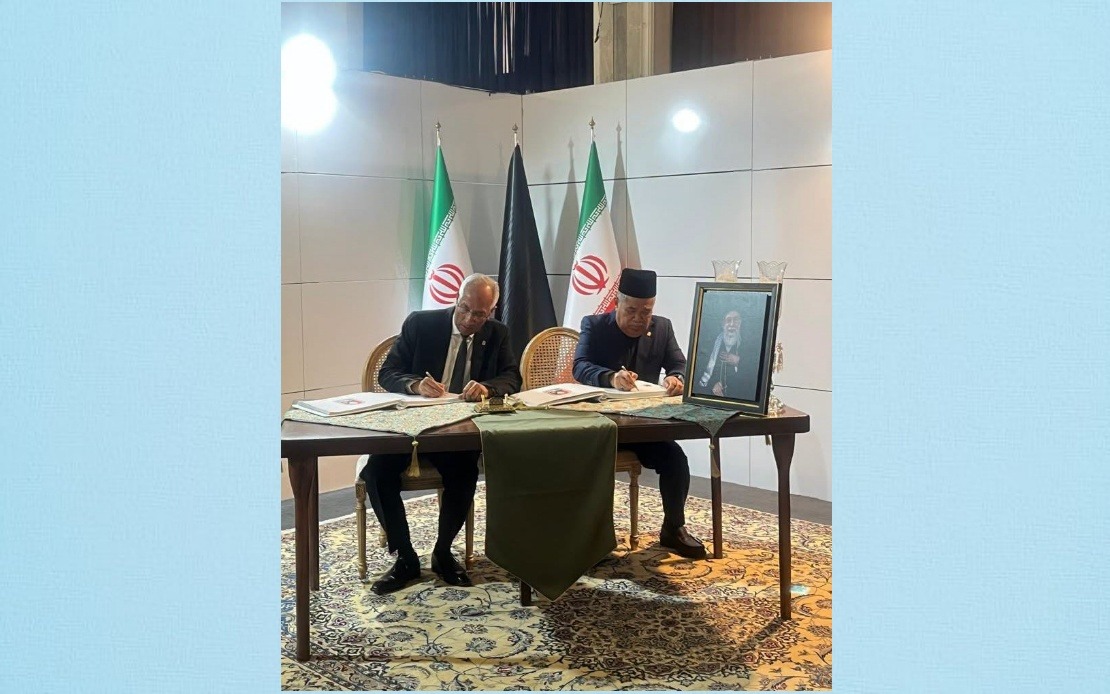
Malaysia sent a high-level government delegation to Tehran this week to pay final respects to Iran's late former Supreme Leader Ali Khamenei, underscoring the diplomatic ties between Kuala Lumpur and the Islamic Republic. The visit was led by Datuk Seri Mohamad Sabu, the Minister of Agriculture and Food Security, who participated in mourning ceremonies held at the Grand Mosalla, one of Iran's most significant religious venues, before Khamenei's body was laid to rest.
According to Mohamad's account shared on social media, the tribute and final rites for Khamenei took place more than one hundred days after his death on February 28, when a joint attack allegedly involving the United States and Israel claimed his life. The extended timeframe between the incident and these formal ceremonies reflects both the complexity of the security situation in the Middle East and the significance accorded to Khamenei's legacy within Iran's political and religious establishment.
The mourning processions themselves were orchestrated across multiple sacred sites in the Islamic world, beginning with ceremonies in Tehran and subsequently moving through Qom, the centre of Shia Islamic learning, before continuing to the Iraqi cities of Najaf and Karbala, both revered pilgrimage destinations for Shia Muslims. This geographical progression through major religious centres demonstrated the pan-Islamic character of the tributes and Khamenei's standing among Shia communities across the region. The final interment was scheduled for July 9 at the Imam Reza Shrine in Mashhad, Iran's holiest city and home to one of Shia Islam's most important theological seminaries.
During the ceremony in Tehran, Mohamad was received by Mohammad Bagher Ghalibaf, the Speaker of the Iranian Parliament, and Abbas Araghchi, Iran's Foreign Minister. These appointments reflected Iran's formal recognition of Malaysia's diplomatic standing and its respect for the Malaysian delegation's participation in the mourning rites. The presence of senior Iranian officials at the reception underscored the significance both nations attach to their bilateral relationship, particularly in matters affecting the Muslim world.
Khamenei's assassination represented a dramatic escalation in regional tensions, coming at a time when Middle Eastern geopolitics remain fractured along multiple fault lines. The attack attributed to American and Israeli forces marked a significant escalation that reverberated throughout the Islamic world and prompted diplomatic responses from numerous countries with historical, cultural, or strategic ties to Iran. Malaysia's decision to send an official delegation rather than merely issuing a statement demonstrated Kuala Lumpur's commitment to acknowledging Iran's significance as a major player in Islamic affairs and regional stability.
For Malaysia specifically, participation in these ceremonies carried several dimensions. Beyond the immediate diplomatic courtesy, the visit reflected Malaysia's broader foreign policy approach towards Iran, a fellow Muslim-majority nation with which Malaysia maintains multifaceted relations spanning trade, cultural exchange, and religious scholarship. Throughout the Muslim world, Iran's role as a leading Shia power has made it a crucial player in regional calculations, particularly regarding conflicts affecting Muslim populations and Islamic interests.
The mourning rituals themselves adhered to Islamic tradition and Shia practices, with Mohamad offering prayers for Khamenei's soul and seeking forgiveness for any transgressions during his life. These spiritual dimensions were not mere ceremonial additions but reflected the religious significance that Khamenei held within Iran's Islamic system. As the Supreme Leader, Khamenei had served as the highest-ranking political and spiritual authority in Iran since 1989, wielding enormous influence over the nation's foreign policy, military apparatus, and interpretation of Islamic law.
The timing of Malaysia's delegation visit, occurring well over three months after Khamenei's death, suggests that the extended mourning period allowed time for diplomatic coordination and for the Iranian government to organize elaborate state ceremonies befitting a figure of his stature. In Islamic tradition and particularly within Shia practice, extended mourning periods and multiple commemorative gatherings serve to emphasize the departed's importance and allow communities spread across different regions to participate meaningfully in paying respects.
For Southeast Asian observers, Malaysia's participation in these ceremonies illustrated how regional powers navigate relations with the Middle East despite geographical distance. The delegation's presence served as a reminder that Malaysia, as a significant Muslim-majority nation within Southeast Asia, maintains engagement with major Islamic centres and leaders, even when doing so requires careful diplomatic balancing given the complex international environment and Malaysia's need to maintain friendships across multiple geopolitical blocs.
The incident that claimed Khamenei's life remained controversial internationally, with the alleged involvement of Western powers generating significant reactions throughout the Islamic world. Malaysia's diplomatic response through official participation in mourning ceremonies represented a measured acknowledgment of these concerns while avoiding direct confrontation with other international powers. Such calibrated diplomacy reflects Kuala Lumpur's experience in maintaining relationships across diverse global partners despite occasional tensions or disagreements.
Moving forward, Malaysia's engagement with Iran will likely continue along established lines of cultural, religious, and commercial interaction. The willingness to send a ministerial-level delegation to participate in significant state ceremonies suggests that bilateral relations remain steady and that both nations view their connection as worth investing in through formal diplomatic gestures. For the broader Southeast Asian region, Malaysia's actions demonstrate how Muslim-majority nations in the region maintain substantive relationships with major Islamic centres without allowing those connections to compromise their broader regional or international standing.
The visit also underscored the complex role that Malaysia plays within the Organisation of Islamic Cooperation and as a bridge between Southeast Asia and the Islamic world. By participating in Khamenei's funeral rites, Mohamad and the delegation he led reaffirmed Malaysia's commitment to recognizing significant developments within the Islamic world and maintaining solidarity with other Muslim nations during periods of collective mourning or crisis.

