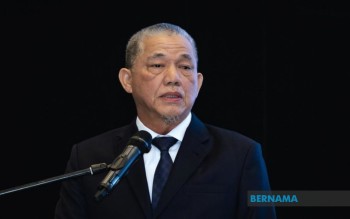
Malaysia is preparing to breathe new economic life into its retiring coal-fired power stations by converting them into renewable energy and battery storage facilities. Deputy Prime Minister Datuk Seri Fadillah Yusof unveiled the National Coal Site Repurposing Framework on July 2 at the closing ceremony of the World Economic Forum's Malaysia Energy Future conference, signalling a strategic pivot that treats coal plant decommissioning not as an economic loss but as a platform for future growth in clean energy infrastructure.
The framework addresses a fundamental challenge in Malaysia's energy transition: existing coal facilities represent substantial accumulated investment in transmission infrastructure, industrial complexes, and strategically valuable land. Rather than allowing these assets to languish as industrial ruins following coal plant closures, the government proposes leveraging their inherent advantages—including established grid connections and proximity to existing industrial zones—to deploy renewable energy capacity and battery systems. This approach recognises that stranded coal assets could become catalysts for new economic activity if properly repositioned within Malaysia's decarbonisation pathway.
Fadillah, who also holds the portfolio of Energy Transition and Water Transformation Minister, emphasised that each retiring power station creates distinct opportunities for workforce transition and industrial development. The framework, developed in partnership with the World Economic Forum's insight paper titled "Beyond Coal: Building a Flexible, Resilient and Clean Power System for Malaysia," is designed to facilitate ongoing dialogue between government agencies, regulatory bodies, utilities, private investors, and affected communities. This multi-stakeholder approach acknowledges that successful repurposing requires coordination across sectors and genuine engagement with local populations whose livelihoods may depend on the power stations.
Malaysia's commitment to the transition remains substantial. The country has pledged not to construct any new coal-fired power plants, to phase out coal-fired electricity generation entirely by 2044, and to achieve 70 per cent renewable energy installed capacity by 2050. These targets place Malaysia among Southeast Asia's more ambitious decarbonisers, though regional competitors including Vietnam and Indonesia are pursuing parallel paths with varying policy certainty. For Malaysian investors and businesses, the clarity of these targets creates both planning security and competitive urgency as the clean energy sector develops.
A critical vulnerability in Malaysia's energy transition strategy lies in the sequencing of coal phase-out relative to renewable deployment. Fadillah highlighted a genuine risk: if renewable energy capacity fails to expand rapidly enough to fill the generation gap left by retiring coal plants, Malaysia could inadvertently shift from coal dependence to reliance on imported liquefied natural gas. This substitution would trade one energy security concern for another, exposing Malaysia to volatile global gas prices and geopolitical disruptions in LNG supply chains—a particular concern given ongoing tensions in key energy-producing regions and unpredictable pricing in compressed LNG markets.
To manage this transition risk, the ministry is prioritising an integrated suite of renewable initiatives. Large-scale solar deployment remains the cornerstone strategy given Malaysia's tropical location and consistent solar irradiance. The Corporate Renewable Energy Supply Scheme, which allows businesses to source renewable electricity directly from generators, creates market-driven incentives for private sector participation. Battery energy storage systems are gaining prominence as they enable renewable power to be stored during peak generation periods and dispatched during demand peaks, smoothing grid operations and reducing reliance on fossil fuel plants for load management. Smart grid modernisation—digitising and automating the electricity network—underpins all these initiatives by enabling real-time balancing of variable renewable sources.
Regional energy cooperation offers another lever for accelerating the transition. Malaysia is advancing the ASEAN Power Grid initiative, which would enable cross-border electricity trading among Southeast Asian nations. This interconnection could allow Malaysia to balance variable renewable generation with hydroelectric capacity from neighbouring countries, diversifying supply sources and improving overall system reliability. The Philippines, Laos, and Cambodia possess substantial hydropower potential that could complement Malaysia's solar and eventual offshore wind development, while grid connections reduce each nation's need to maintain excess domestic capacity.
Looking beyond renewable sources, Fadillah signalled Malaysia's openness to exploring advanced nuclear technologies and small modular reactors as long-term low-carbon options. Small modular reactors—fission reactors with capacities typically between 50 and 300 megawatts—offer potential advantages including smaller land footprints, potential for waste heat applications in industrial processes, and deployment flexibility in distributed systems. However, Fadillah emphasised that nuclear development must proceed only with rigorous attention to safety standards, regulatory governance, and public acceptance. Malaysia's population and regional neighbours remain sensitive to nuclear projects given historical experiences in the region and legitimate concerns about waste disposal and accident risks.
The repurposing framework addresses an often-overlooked dimension of energy transition: the human and institutional legacy of fossil fuel infrastructure. Coal mining and power generation have sustained communities and employment across Malaysia's energy sector for decades. By targeting coal plant sites for economic reinvestment in renewable energy manufacturing, battery assembly, grid management centres, and related services, the framework attempts to preserve local economic activity during the transition. This approach acknowledges that energy policy must account for distributional impacts and social acceptance, not merely optimise for technical efficiency.
For Malaysian manufacturers and the broader business ecosystem, the coal-to-renewable conversion programme represents significant opportunity. Battery assembly, solar panel manufacturing, and grid technology development are capital-intensive sectors with potential to generate substantial employment. Recent global supply chain diversification away from China has created openings for Southeast Asian manufacturers in clean energy equipment. Malaysia's existing electronics manufacturing base, skilled workforce, and proximity to regional markets position it competitively to capture elements of this emerging supply chain.
The framework also reflects Malaysia's positioning within regional energy politics. As ASEAN undergoes rapid electrification driven by industrial development and rising living standards, energy security has become central to economic competition. Nations that successfully transition from fossil fuels to renewable and nuclear sources while maintaining grid reliability and affordability will gain competitive advantages in attracting industrial investment. Malaysia's announcement signals technological ambition and policy coherence that differentiate it from regional peers with less defined transition pathways.
Implementing the National Coal Site Repurposing Framework will require sustained political commitment, substantial capital investment, and effective coordination across fragmented regulatory jurisdictions. Initial success at several pilot sites would build momentum and demonstrate practical feasibility. The framework's success will ultimately depend on whether repurposed coal sites generate sufficient economic returns and employment to maintain public and political support during the difficult middle years of transition, when coal capacity is retiring faster than renewable alternatives can be deployed at scale.

