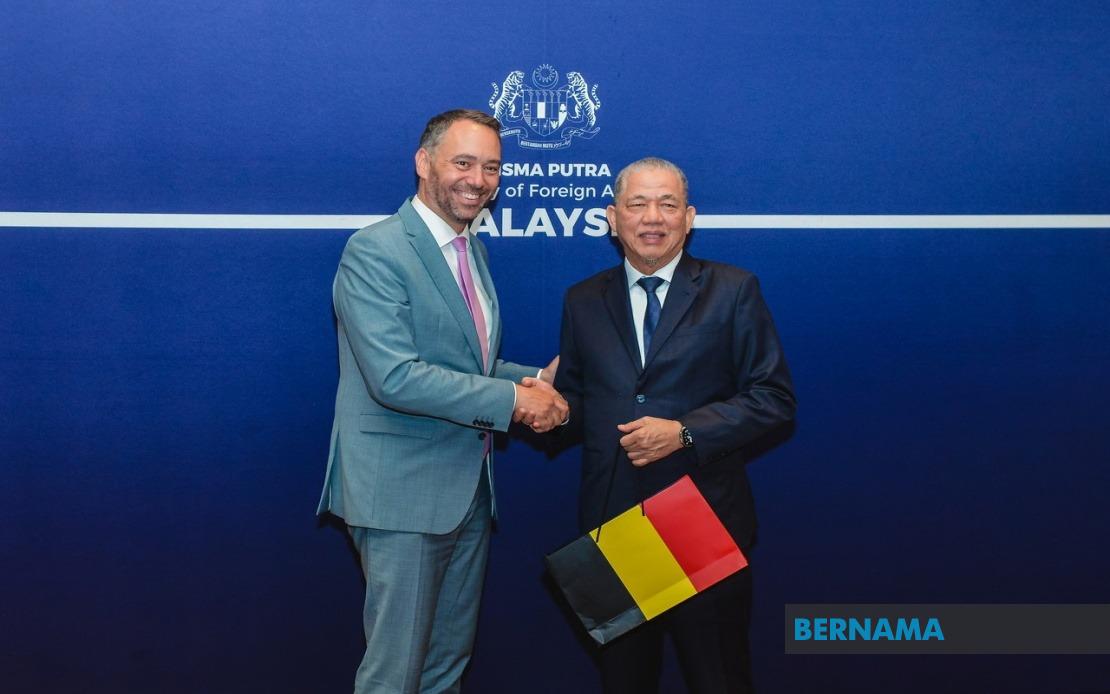
Malaysia has moved to reassure Belgium and the broader European community that the South China Sea will remain accessible to international shipping, reaffirming ASEAN's foundational commitment to maintaining freedom of passage and regional stability. The assurance came from Deputy Prime Minister Datuk Seri Fadillah Yusof during a bilateral meeting with Belgium's Deputy Prime Minister and Minister of Foreign Affairs, Maxime Prévot, who arrived in Malaysia on Thursday for a two-day working visit—his first since taking office in February 2025. The timing of the engagement underscores heightened international anxiety regarding potential disruptions to global maritime commerce similar to those witnessed in strategically critical waterways like the Strait of Hormuz.
Fadillah's explicit guarantee that no blockades would impede access through Southeast Asia's busiest shipping corridor reflects Malaysia's strategic position as both a regional voice within ASEAN and a nation deeply invested in maintaining the international rules-based order that underpins global trade. The Deputy Prime Minister articulated a clear distinction between ASEAN's commitment to openness and the emerging geopolitical tensions that have prompted concerns from trading partners worldwide. His statements emphasize that member states uphold principles of security, neutrality, and peaceful coexistence—values that Malaysia maintains should apply consistently across the region regardless of external pressures or disputes between major powers.
The Belgian delegation's visit appears deliberately timed to address European concerns about supply chain vulnerabilities and the potential for regional conflicts to disrupt critical sea lanes. Prévot sought a comprehensive assessment of the current security landscape in Southeast Asia, including specific attention to whether conditions similar to those affecting oil shipments through the Persian Gulf might emerge in Asian waters. This line of questioning reflects Brussels' substantial economic interests in maintaining unfettered access to markets across East and Southeast Asia, where European manufacturers and traders depend on reliable maritime corridors for their competitiveness.
Beyond maritime security assurances, the two governments identified multiple areas for deepening bilateral cooperation that extend well beyond traditional diplomatic formalities. Trade expansion emerged as a central theme, with Belgium signaling its intention to elevate commercial engagement and potentially reassess its travel advisory for Sabah—a move that could facilitate increased business and tourism connections. Such seemingly technical adjustments carry real significance for Malaysian states seeking to boost their international profile and attract foreign investment, particularly from European sources.
A particularly noteworthy development was Belgium's interest in Malaysia's halal ecosystem and the possibility of adapting Malaysian halal standards as a template for broader European implementation. This initiative reflects growing recognition within the EU that halal certification and compliance represent not merely religious requirements but increasingly important commercial standards with significant market implications. Malaysia's pioneering work in developing comprehensive halal frameworks positions the nation as a potential standard-setter on this issue, offering an opportunity to export expertise and influence international regulatory development.
Energy transition cooperation emerged as another substantive pillar of the bilateral engagement, with Belgian technical expertise in advanced materials and new energy technologies identified as having significant potential for application in Malaysia's transformation agenda. As Malaysia navigates its shift toward cleaner energy systems and industrial decarbonization, European technological partners offer proven solutions and manufacturing experience. Simultaneously, Malaysia presents attractive investment opportunities for Belgian companies seeking to establish or expand operations in a strategically positioned Asian hub with growing renewable energy ambitions.
The inclusion of Foreign Ministry Secretary-General Tan Sri Amran Mohamed Zin and Belgium's Ambassador to Malaysia Peter Van Acker at the official luncheon signified the importance accorded to the bilateral relationship by both governments. This representation at senior diplomatic levels indicates that Malaysia views Belgium not merely as a European Union member but as a substantive bilateral partner capable of contributing to Malaysia's development priorities in energy, trade, and technology sectors.
The broader context of this engagement encompasses Malaysia's ongoing navigation of complex regional dynamics where managing relationships with major powers while upholding ASEAN principles requires careful diplomatic calibration. By providing explicit reassurances to a respected EU representative, Malaysia demonstrates its commitment to international expectations regarding freedom of navigation while avoiding alignment with any particular geopolitical bloc. This approach aligns with Malaysia's traditional foreign policy emphasis on non-alignment and maintenance of constructive relationships across the international spectrum.
The timing of Prévot's inaugural visit to Malaysia since assuming office carries symbolic weight within European diplomatic circles, suggesting Belgium views the bilateral relationship as worthy of high-level attention. For Malaysian policymakers, the visit represents an opportunity to solidify partnerships with European nations that can contribute to technological advancement, trade expansion, and the international legitimacy that comes from sustained engagement with developed democracies. The discussions around halal standards, energy transition, and maritime security demonstrate that Malaysian diplomacy increasingly operates across multiple registers simultaneously—addressing security concerns, advancing commercial interests, and positioning national expertise as valuable contributions to international problem-solving.

