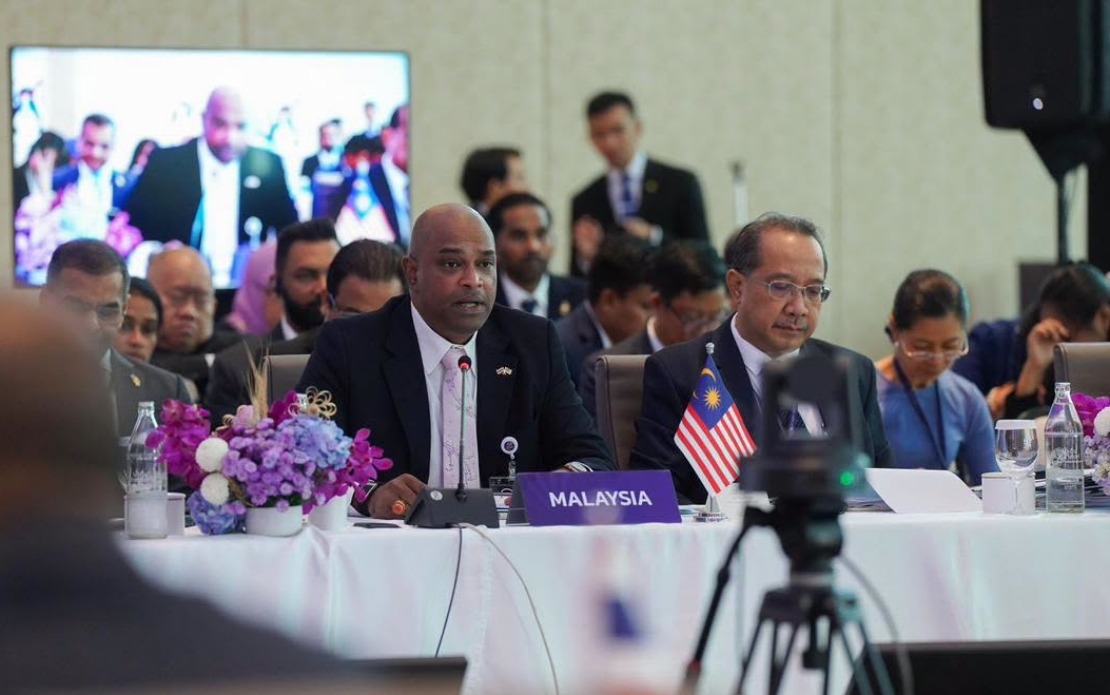
Malaysia is pressing its Southeast Asian neighbours to create robust mechanisms for acknowledging vocational and technical qualifications, arguing that such recognition is essential for workers to pursue careers beyond their home countries and for the region to develop a competitive edge in global markets. Human Resources Minister Datuk Seri R. Ramanan raised the matter at the 14th ASEAN Plus Three Labour Ministers' Meeting in Bangkok, Thailand, bringing together officials from the ten ASEAN nations alongside representatives from China, Japan and South Korea.
The initiative reflects growing recognition among policymakers that ASEAN's economic future depends not merely on having a large labour pool, but on ensuring that workers possess skills genuinely valued by international employers. Currently, qualifications obtained through technical and vocational training in one ASEAN country may carry little weight when a worker crosses into another, creating barriers to mobility and limiting opportunities for talented individuals to maximise their potential. Malaysia's proposal aims to dismantle these obstacles by establishing common standards and mutual certification frameworks.
Ramanan identified three concrete priorities that Malaysia believes should guide regional cooperation. Foremost among these is strengthening joint certification mechanisms and harmonising Technical and Vocational Education and Training qualifications across ASEAN, ensuring that a certificate earned in Malaysia or Vietnam carries comparable credibility in Thailand or the Philippines. The second pillar centres on expanding technology transfer initiatives and providing comprehensive upskilling programmes for teachers and trainers, recognising that educational quality depends fundamentally on instructor capability. The third priority involves developing world-class training programmes in emerging fields including artificial intelligence, next-generation vehicle technology and robotics—sectors increasingly shaping employment landscapes globally.
The timing of Malaysia's initiative proves significant given the rapid pace of technological disruption reshaping labour markets throughout Southeast Asia. As industries transition toward automation and digitisation, workers who trained five or ten years ago may find their skills becoming obsolete without access to continuous retraining. By establishing regional frameworks for skills recognition and development, ASEAN countries could help their workforces adapt more quickly to changing economic conditions. This becomes particularly important for smaller nations with fewer training resources, which could benefit from pooling expertise and sharing educational programmes across borders.
Ramanan emphasised that the recognition framework extends beyond mere administrative convenience. When workers trained in ASEAN countries possess credentials trusted by regional and global industries, and when these workers can move freely across ASEAN borders to pursue opportunities, the entire region benefits from improved labour allocation and knowledge transfer. A skilled technician able to work in the country where their skills command the highest wage, or where labour shortages exist, generates economic benefits throughout the region. Conversely, restrictive practices that trap talent within national boundaries represent a missed opportunity for collective regional development.
Involving China, Japan and South Korea in these discussions acknowledges that ASEAN's success in developing recognised standards requires external expertise and validation. These three nations possess world-leading training systems and industrial practices that could inform ASEAN's standard-setting process. Furthermore, as major investors and employers in Southeast Asia, their willingness to recognise ASEAN qualifications substantially enhances the practical value of any certification framework. A qualification that Japanese or South Korean companies acknowledge as meeting their standards holds genuine international currency rather than remaining merely a regional credential.
The emphasis on technology transfer and teacher upskilling recognises a critical gap in ASEAN's educational infrastructure. Many vocational training programmes in the region struggle to keep pace with cutting-edge industrial developments, partly because instructors lack exposure to the latest technologies and methodologies. Through structured collaboration with technologically advanced partners, ASEAN institutions could progressively upgrade their training delivery, ensuring graduates enter employment markets with genuinely contemporary skills rather than knowledge shaped by outdated practices.
Ramanan's vision of ASEAN workers becoming globally competitive aligns with broader regional economic integration objectives. The ASEAN Economic Community, established in 2015, theoretically permits the free movement of skilled labour across member states, yet implementation remains inconsistent partly because of varying skill standards and qualification recognition issues. By addressing these fundamental barriers, Malaysia's proposal could accelerate the practical realisation of economic integration that has remained largely rhetorical.
For Malaysian workers specifically, harmonised skills recognition offers enhanced career prospects. Rather than competing primarily against fellow Malaysian jobseekers, skilled Malaysians would gain access to employment opportunities throughout Southeast Asia, potentially accessing higher wages and broader experience. Conversely, Malaysia could attract talented workers from neighbouring countries, enriching its own labour market with diverse expertise. This mutual benefit encourages other ASEAN nations to participate seriously in developing fair, credible recognition systems rather than viewing standards harmonisation as threatening to national interests.
The proposal also carries implications for Malaysia's positioning within ASEAN discussions. By championing skills development and workforce quality rather than merely advocating for wage competitiveness or labour availability, Malaysia positions itself as focused on sustainable regional prosperity rather than short-term competitive advantage. This diplomatic approach may encourage broader participation in the initiative and build consensus around quality-focused labour policies.
Looking forward, successful implementation would require establishing international bodies to validate qualifications, developing common assessment methodologies, and building trust between national training authorities regarding standards consistency. These represent substantial administrative challenges requiring sustained commitment. Whether ASEAN nations will invest the political capital and financial resources necessary for meaningful harmonisation remains uncertain, yet Malaysia's advocacy suggests that at least some governments recognise the competitive imperative driving such reforms.
The ultimate question concerns whether ASEAN can transform aspirations for skills recognition into practical, functioning systems that genuinely benefit workers and employers. Malaysian leadership on this issue, backed by partnership with developed regional economies, provides promising momentum for moving beyond statements of principle toward concrete institutional mechanisms that reshape how Southeast Asian talent competes globally.

