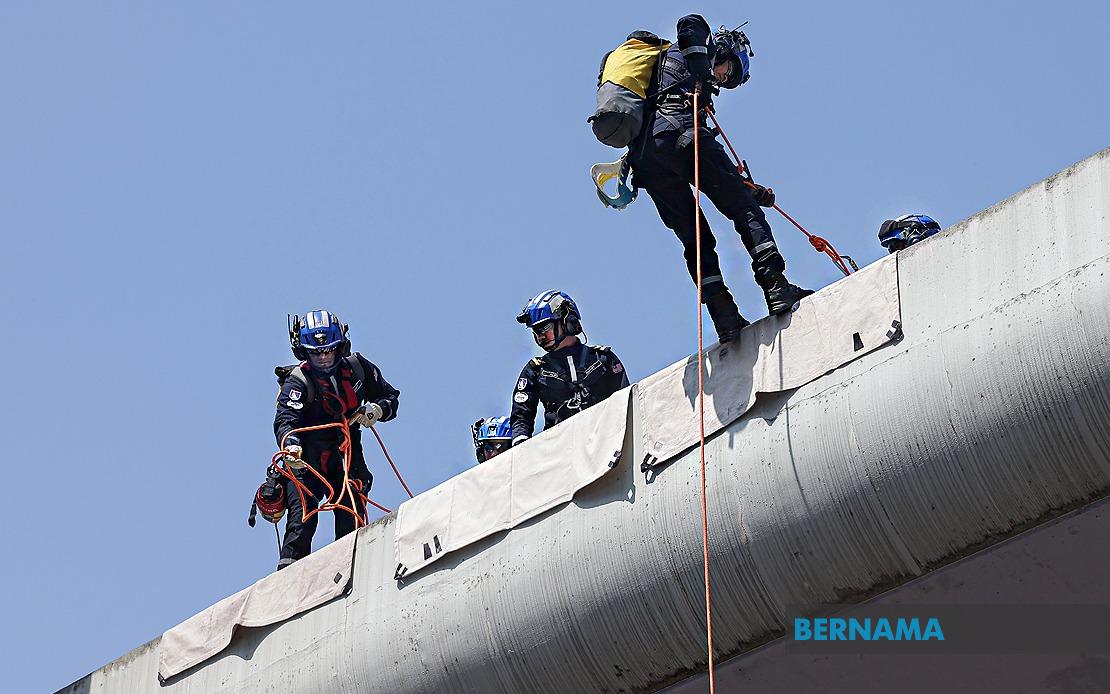
Malaysia has positioned its Special Search and Rescue Team for potential deployment to Nepal following catastrophic flooding that has swept across the country, though the mission remains subject to formal clearance from the Nepali Government. The National Disaster Management Agency confirmed on Friday that SMART personnel maintain readiness to mobilize on short notice, with all diplomatic coordination being managed through Malaysia's Foreign Ministry to facilitate the assistance request and ensure compliance with Nepal's protocols for international relief efforts.
The standby arrangement underscores Malaysia's established role as a regional humanitarian responder, drawing on the SMART team's extensive experience in cross-border disaster operations. SMART has built considerable expertise through previous international deployments, positioning it as a credible asset for search and rescue missions in challenging terrain. The team's preparedness reflects both technical capability and the diplomatic infrastructure required to mount rapid, coordinated responses to major natural disasters affecting neighbouring countries and regional partners.
Snr Fire Supt I Abdul Manaf Che Isa, commanding the SMART contingent, indicated that operational readiness remains uncompromised despite the team's scheduled participation in Malaysia's National Day parade on August 31st. He emphasized the dual commitment to national celebrations and emergency preparedness, noting that personnel maintain mobilization capacity even while fulfilling ceremonial obligations. This simultaneous readiness for both symbolic national duty and potential emergency deployment illustrates how Malaysia structures its disaster response mechanisms to maintain continuous operational availability.
Prime Minister Anwar Ibrahim announced that Malaysia's MADANI Government has formally committed to dispatching SMART to assist Nepal's search and rescue operations. Beyond immediate life-saving operations, the mission encompasses a broader mandate that includes locating and facilitating the return of Malaysian nationals affected by the disaster, as well as providing logistical and coordination support to the Malaysian Embassy in Kathmandu. This multi-layered approach reflects how Malaysia typically structures humanitarian missions to address both rescue priorities and consular responsibilities simultaneously.
The financial commitment accompanying the operational deployment signals Malaysia's comprehensive approach to disaster assistance. A contribution of US$1 million has been pledged to support immediate relief efforts and medium-term recovery reconstruction in Nepal. This combination of specialized personnel and financial resources demonstrates how middle-power states like Malaysia translate humanitarian concerns into tangible support mechanisms that address both immediate emergency response and longer-term rebuilding needs in affected communities.
For Malaysian readers, the deployment represents part of a consistent pattern of regional engagement whereby the country leverages its technical capabilities and diplomatic standing to assist neighbouring populations. Nepal's geographic proximity and the shared challenges of managing natural disasters across South and Southeast Asia create natural alignment for cross-border cooperation. The readiness to mobilize SMART reflects broader Malaysian foreign policy principles that emphasize solidarity with the international community during humanitarian crises.
The approval process overseen by Nepal's Government introduces an important diplomatic dimension often overlooked in discussions of disaster relief. International humanitarian assistance, while morally urgent, operates within formal governmental frameworks that require host-nation consent and coordination protocols. Malaysia's coordination with the Foreign Ministry demonstrates awareness that effective relief operations depend on seamless diplomatic collaboration and respect for recipient-country sovereignty in determining how external assistance integrates with domestic response mechanisms.
The disaster affecting Nepal occurs against a backdrop of increasing climate-related vulnerabilities across the Hindu Kush Himalayan region. Mountainous terrain complicates rescue operations and amplifies the challenges faced by regional responders, making the deployment of specialized teams like SMART particularly valuable. Malaysian expertise in managing search and rescue in complex geographical conditions potentially offers insights and capabilities that enhance overall operational effectiveness in these challenging environments.
From a regional perspective, Malaysian humanitarian engagement in Nepal reinforces Southeast Asian participation in broader Asian disaster response networks. While Nepal technically sits outside Southeast Asia, its inclusion within Asian humanitarian frameworks means that Malaysian assistance contributes to strengthening regional disaster management capacity and institutional relationships. This soft power dimension extends Malaysia's influence and demonstrates commitment to multilateral cooperation beyond formal ASEAN structures.
The timing of the announcement, preceding National Day celebrations, also carries domestic significance within Malaysia's political context. It illustrates how the MADANI Government prioritizes international responsibilities while maintaining national symbolic observances. The willingness to commit resources and personnel to foreign humanitarian needs, even during important domestic occasions, projects an image of Malaysia as a responsible, globally engaged nation that balances internal celebrations with external obligations.
Looking forward, the actual deployment will depend on how Nepal's Government responds to Malaysia's offer of assistance. The contingent readiness reflects prudent disaster management planning while acknowledging that humanitarian operations require receiving country approval. Once formal agreement materializes, SMART's mobilization would likely commence rapidly, drawing on established protocols developed through previous international missions. The combination of technical expertise, diplomatic support, and financial commitment positions Malaysia to provide meaningful assistance if Nepal determines that Malaysian participation would enhance its overall disaster response effectiveness.

