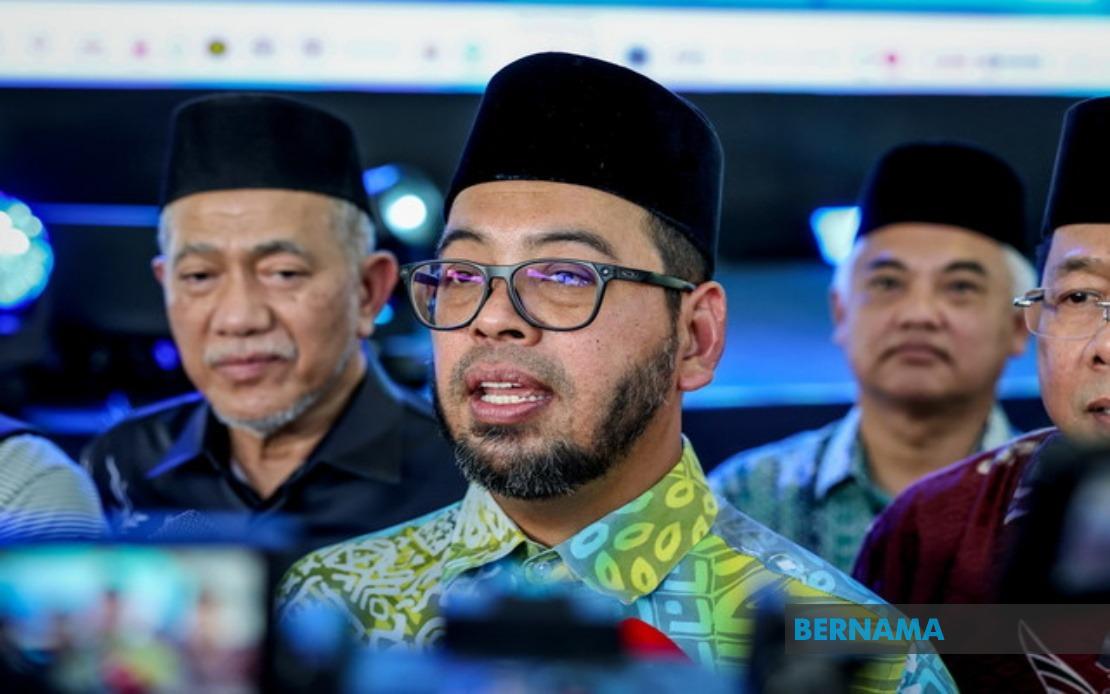
Malaysia has solidified its position among the world's foremost nations in managing Islamic affairs, driven by institutional excellence and evidence-based policies that command respect from international scholars and observers worldwide. At the opening of the Northern Zone MADANI Ulama and Umara Multaqa held at Masjid Timah in Permatang Pauh, Bukit Mertajam, Minister in the Prime Minister's Department (Religious Affairs) Dr Zulkifli Hasan highlighted how Malaysia's comprehensive approach to Islamic governance continues to attract global attention and emulation. This recognition extends far beyond ceremonial acknowledgement, with concrete metrics and third-party validation from international observers consistently positioning the nation as a benchmark for religious affairs administration across the Muslim world.
The minister's assertion gains particular weight when measured against prevailing narratives. International perception directly contradicts claims occasionally made that Islam faces marginalisation or threat within Malaysia's secular constitutional framework. Rather, the global community increasingly views Malaysia as a driving force in advancing Islamic practices and institutional development on the international stage. Dr Zulkifli noted that during his foreign engagements, Malaysia's management of Islamic affairs frequently becomes a subject of admiration and careful study by delegations from other Muslim-majority nations seeking to strengthen their own religious governance structures. This external validation underscores how Malaysia's model transcends regional significance to assume global relevance.
The hallmark of Malaysia's Islamic credentials rests substantially on its halal certification ecosystem, stewarded by the Department of Islamic Development Malaysia (JAKIM). The system has achieved widespread international recognition as among the world's most rigorous and credible, a distinction particularly valuable given the exponential growth of global halal commerce. As Muslim populations expand across diverse geographies and halal consciousness rises among consumers worldwide, Malaysia's JAKIM certification provides assurance that carries weight in markets from Southeast Asia to Europe and beyond. This infrastructure represents decades of institutional development, technical expertise, and international coordination that positions Malaysia as the gold standard against which competing certification bodies measure themselves.
Islamically-centred financial services represent another domain where Malaysia has achieved singular prominence. The nation's Islamic finance sector has held the global leadership position for eleven consecutive years, an achievement that reflects sustained institutional maturity and investor confidence. This dominance encompasses Islamic banking, takaful insurance, sukuk issuance, and Islamic wealth management—collectively representing hundreds of billions of ringgit in assets managed according to Shariah principles. The consistency of this ranking demonstrates that Malaysia's financial institutions possess not merely transient competitive advantages but structural superiority rooted in regulatory frameworks, human capital, and market infrastructure that competitors struggle to replicate.
The administration of hajj pilgrimage through Lembaga Tabung Haji has similarly earned repeated international accolades, reflecting the enormous logistical, spiritual, and financial responsibilities involved in organising the annual journey for Malaysian pilgrims. The institution's success in managing hundreds of thousands of Malaysian Muslims undertaking one of Islam's five pillars annually has established it as a model of efficient coordination between Malaysian authorities and Saudi counterparts. This operational excellence extends beyond mere passenger movement to encompass financial safeguarding, health provisions, religious guidance, and dignity preservation for Malaysia's hajj contingent, earning recognition from international bodies monitoring pilgrimage administration globally.
Educational frameworks dedicated to Islamic knowledge transmission form the philosophical bedrock of Malaysia's broader Islamic affairs strategy. The government has substantially reformed the Kelas Al-Quran dan Fardu Ain (KAFA) curriculum through the KAFA 2.0 initiative, which systematically elevates practical application and experiential understanding of Islamic teachings beyond rote memorisation. This pedagogical shift acknowledges contemporary educational philosophy while maintaining doctrinal integrity, producing students equipped to navigate modern life through Islamic ethical frameworks. The initiative demonstrates Malaysia's capacity to evolve traditional Islamic education structures without abandoning foundational principles—a balancing act that many nations find challenging.
Complementing KAFA is Malaysia's comprehensive tahfiz (Quran memorisation) ecosystem, which represents one of the most developed institutionalised systems globally. The architecture encompasses the National Tahfiz Council providing governance, the National Tahfiz Policy establishing standards, the National Tahfiz Standard ensuring quality consistency, and the Malaysia Tahfiz Certificate conferring recognised credentials. This structured framework enables tahfiz graduates—students who have memorised the entire Quran—to transition seamlessly into professional, technical, and higher education pathways rather than remaining confined to traditional religious vocations. The government explicitly commits to producing professional huffaz (Quran memorisers) capable of contributing to broader national development, effectively mainstreaming Islamic scholarship into the economy and civil society.
Philanthropic support for religious institutions underscores how Malaysia's Islamic affairs management extends beyond governmental apparatus into civil society mobilisation. During the Bukit Mertajam event, Yayasan Takwa distributed RM280,000 across twenty-eight mosques throughout Penang, allocating RM10,000 to each institution, while selected religious schools received equivalent support. This targeted allocation of approximately RM280,000 demonstrates how private charitable foundations complement state initiatives, strengthening the material foundation of grassroots Islamic institutions that serve as community anchors. Such distribution patterns reflect Malaysia's capacity to mobilise resources across both governmental and civil channels toward coherent religious development objectives.
For Southeast Asian observers and policymakers, Malaysia's trajectory holds significant lessons. The region comprises multiple Muslim-majority nations alongside plural societies with substantial Muslim minorities, all grappling with questions of religious governance, institutional development, and the relationship between Islamic advancement and pluralism. Malaysia's model demonstrates that Islamic excellence and institutional modernisation need not conflict with constitutional secularism, minority rights protection, or economic competitiveness. The nation's achievements across halal standards, Islamic finance, hajj administration, and religious education suggest that when governments invest systematically in Islamic institutional capacity while maintaining secular constitutional frameworks, the resulting synthesis can command international respect and deliver tangible benefits to Muslim populations and broader society.
Dr Zulkifli Hasan's remarks should be contextualised within Malaysia's broader positioning strategy in an increasingly multipolar global order where soft power and civilisational influence assume heightened importance. As Western dominance in normative global standard-setting gradually disperses, Malaysia has recognised that Islamic affairs excellence represents a potent avenue for asserting influence and attracting international partnerships. The minister's emphasis on data, statistics, and international scholarly validation reflects how Malaysia translates institutional achievements into narratives of civilisational leadership that resonate with Muslim-majority nations and Islamic organisations worldwide. This strategic deployment of genuine accomplishments amplifies Malaysia's voice in international forums addressing religious governance, minority protections, and the relationship between faith and modernity.
Looking forward, sustaining Malaysia's leadership position requires continued investment in institutional innovation, human capital development, and regulatory evolution. The KAFA 2.0 initiative and tahfiz ecosystem modernisation demonstrate governmental awareness that Islamic excellence demands adaptation to contemporary contexts rather than mere preservation of historical models. Maintaining dominance across halal certification, Islamic finance, and hajj administration necessitates regular review of standards, competitive benchmarking against emerging competitors, and proactive engagement with international bodies setting norms in these domains. Malaysia's current pre-eminence reflects decades of strategic choices; sustaining it demands equivalent commitment to continuous improvement and innovation in Islamic institutional management across coming decades.

