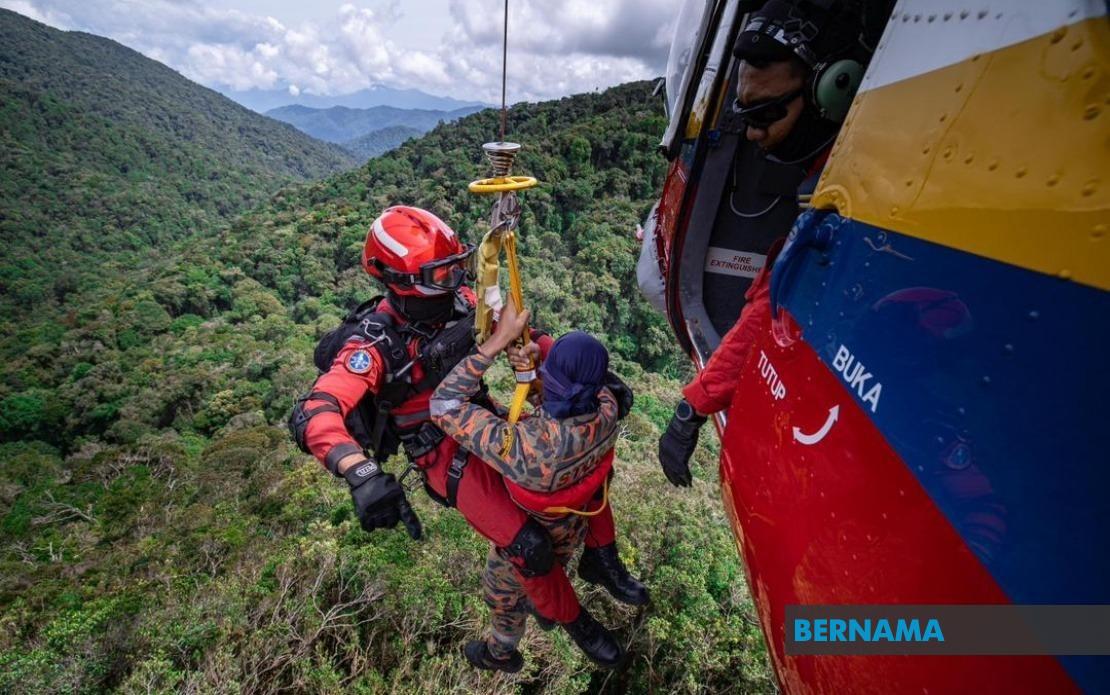
The alarming toll of hiking-related incidents in Malaysia has prompted urgent action from the government, which revealed that 1,059 accidents involving hiking activities have been recorded nationwide over the past four years, claiming 63 lives and leaving 87 people injured. Deputy Minister of Natural Resources and Environmental Sustainability Syed Ibrahim Syed Noh disclosed these figures during parliamentary question time, drawing attention to the serious risks that have accompanied the surge in popularity of forest-based recreational activities across the country.
The statistics, compiled by the Fire and Rescue Department of Malaysia, underscore a troubling gap between the growing enthusiasm for outdoor pursuits and the preparedness of hiking infrastructure to handle the expanding volume of participants. Each fatality represents not only a personal tragedy but also a failure in the safety ecosystem that should protect adventure seekers venturing into Malaysia's diverse terrain, from accessible day trails to challenging mountain expeditions. The scale of the problem has galvanized government agencies to move beyond reactive responses and implement preventive frameworks that address systemic vulnerabilities in how hiking activities are managed and monitored.
To create a structured approach to trail safety, the Peninsular Malaysia Forestry Department has developed the Mountain Risk Assessment and Management Guideline (MoGRAM) with technical backing from the United Nations Development Programme. This comprehensive framework serves as a reference document for identifying and mitigating hazards while also establishing protocols for managing how many hikers can safely use particular trails at any given time. The existence of such guidelines represents a significant shift toward evidence-based management of recreational forests, moving away from ad-hoc approaches that have historically characterized trail oversight in Southeast Asia.
A cornerstone of this safety overhaul involves the mandatory deployment of certified Forestry Mountain Guides in 189 high-risk hiking areas across Peninsular Malaysia. These guides, known locally as Forestry Mountain Guides (MGP), are trained professionals equipped to provide real-time safety supervision, coordinate emergency responses, and enforce best practices among hikers. The government has invested in certification programmes that have already produced 2,322 trained guides drawn largely from local and indigenous communities, creating employment opportunities while simultaneously building a human safety net across vulnerable hiking zones. This approach recognizes that professional oversight on the ground remains irreplaceable despite technological advances in monitoring and communication.
The demographic composition of the guide workforce carries particular significance for Malaysia's rural economy and indigenous communities. By prioritizing local recruitment and certification, the government has created an income-generating mechanism that ties forest protection directly to community livelihoods, potentially fostering stewardship of natural resources among those most familiar with local terrain and weather patterns. These guides serve as intermediaries between bureaucratic safety protocols and the practical realities of hiking in tropical forests where weather can shift rapidly and injuries can occur far from immediate medical help.
Parallel to human-centered interventions, authorities are developing a sophisticated digital infrastructure for hiking management. A new system utilizing geospatial technology, geographic information systems, and remote sensing data is being constructed in collaboration with the Malaysian Space Agency. This technological backbone would enable comprehensive mapping of all hiking trails, centralized information management, and substantially improved search and rescue capabilities through precise spatial analysis. Such systems have proven effective in other mountainous nations and represent a move toward the kind of sophisticated monitoring typical of developed nations' national parks.
Currently, hiking registration remains fragmented across state forestry departments, conducted either through manual processes or disparate online platforms that reflect Malaysia's federal structure where states retain jurisdiction over forest reserves. This decentralization, while respecting constitutional boundaries, has created blind spots in emergency response and left hikers vulnerable to inconsistent safety standards depending on which state they choose to trek. The government's vision of a unified national digital registration log would fundamentally transform how authorities track hikers in real time, enable rapid identification of missing persons, and coordinate search operations across state boundaries during emergencies.
Implementation of such a system would require significant coordination between federal and state governments, raising questions about data governance, privacy protections, and how information flows between agencies. The practicalities of persuading hikers to register consistently, maintaining accurate trail databases, and ensuring the system remains accessible to local guides and rescue teams present ongoing operational challenges. Nevertheless, the government appears committed to moving forward, recognizing that the current patchwork of registration methods contributes to delayed emergency responses and incomplete information during crises.
Beyond infrastructure and technology, the government has committed to continuous professional development for the guides and nature specialists who serve as the first line of defense for hiking safety. Training programmes now cover hiking safety protocols, risk assessment and management, wilderness first aid, survival techniques, and specialized search and rescue methods. This emphasis on capacity building acknowledges that even the most advanced technology cannot replace human judgment and expertise in dynamic outdoor environments where conditions change minute by minute and individual hikers present varying levels of fitness and experience.
The cumulative approach—combining physical guides in high-risk areas, sophisticated digital monitoring systems, evidence-based risk assessment guidelines, and ongoing professional training—reflects an understanding that hiking safety is fundamentally multifaceted. No single intervention can address the complex factors that contribute to accidents: individual error, environmental hazards, medical emergencies, inadequate preparation, and simple misfortune all play roles. By layering multiple protective measures, the government is attempting to create redundancy in the safety system so that if one mechanism fails, others remain in place to prevent tragedy.
For Malaysian hikers and international trekkers visiting the country, these developments signal an evolution in how outdoor recreation is being managed. The establishment of certified guides and enhanced digital tracking transforms hiking from an largely unregulated activity into one that operates within defined safety parameters. As hiking's popularity continues to rise—driven by increasing awareness of mental health benefits, growing middle-class disposable income, and social media promotion of hiking destinations—these safety infrastructure investments become ever more critical to protecting both hikers and the rescue personnel who must retrieve them when things go wrong.