Malaysia has achieved a significant milestone in coastal ecosystem restoration, with nearly 4,000 hectares of mangrove forests successfully rehabilitated across the country through an ambitious national tree-planting programme. The Natural Resources and Environmental Sustainability Ministry revealed that over 9.3 million mangrove trees and other suitable coastal species have been planted as part of the initiative, underscoring the government's longstanding commitment to protecting and revitalising the nation's vital coastal environments.
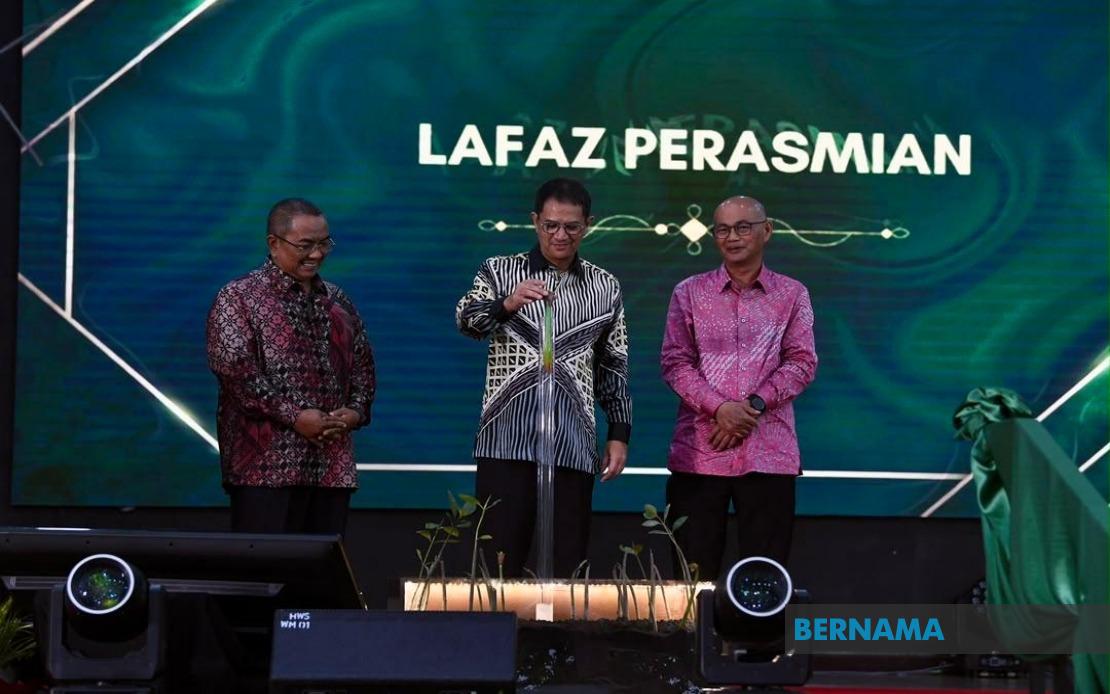
Minister Datuk Seri Arthur Joseph Kurup announced the accomplishment during the National-level International Day for the Conservation of the Mangrove Ecosystem 2026 celebration held in Alor Setar, where Kedah Raja Muda Tengku Sarafudin Badlishah Ibni Sultan Sallehuddin officiated the event. The achievement represents not merely a numerical success in forest coverage but signals Malaysia's strategic approach toward sustainable coastal management at a time when mangrove ecosystems face unprecedented pressure from development and climate change across Southeast Asia.
Since its inception through 2025, the National Coastal Mangrove and Suitable Species Tree Planting Programme has commanded an investment of RM71.3 million, enabling comprehensive restoration activities that extend far beyond simple tree planting. The funding has supported crucial maintenance operations, scientific research initiatives, continuous ecosystem monitoring, and extensive public awareness campaigns designed to foster community engagement with conservation goals. This multifaceted approach recognises that successful environmental restoration requires sustained financial commitment and coordinated action across multiple sectors.
Looking ahead, the government has demonstrated continued resolve by allocating RM2 million under the 13th Malaysia Plan specifically earmarked for 2026 mangrove conservation and coastal preservation efforts. The funding will support initiatives across Peninsular Malaysia, Sabah, and Sarawak, reflecting recognition that mangrove protection must remain a geographically inclusive priority given the ecosystems' critical importance to all three regions. This longitudinal commitment suggests that coastal restoration is transitioning from episodic projects into institutionalised policy.
The restoration programme operates through an expansive collaborative framework involving multiple government agencies and research institutions. Forestry Peninsular Malaysia, the Sabah Forestry Department, the Sarawak Forest Department, and the Forest Research Institute Malaysia coordinate efforts, pooling technical expertise and operational resources to maximise ecological outcomes. This inter-departmental cooperation model addresses a persistent governance challenge in regional environmental management: the need to harmonise conservation activities across administrative boundaries where ecosystems operate as unified ecological systems regardless of political demarcation.
Crucially, the programme's success increasingly depends on partnerships with non-governmental organisations and local communities, whose involvement has become integral to sustainability planning. Environmental education initiatives and awareness campaigns conducted by these stakeholders create foundational understanding that enables communities to serve as stewards of restoration efforts. By investing in community-based ecosystem protection activities, the government acknowledges that top-down conservation mandates rarely achieve lasting transformation without grassroots buy-in and local environmental stewardship.
The annual International Day celebrations have evolved into substantive scientific forums rather than ceremonial events. The 2026 edition featured the National Mangrove and Coastal Ecosystem Seminar, jointly organised by Forestry Peninsular Malaysia and the Forest Research Institute Malaysia, which attracted researchers, technical officers, and stakeholder representatives. The seminar's comprehensive programme—comprising 12 academic papers, 15 technical posters, and nine exhibition booths addressing mangrove management, research methodologies, and conservation strategies—created structured opportunities for knowledge exchange and best-practice dissemination.
These platforms facilitate the critical function of harmonising restoration approaches across diverse geographic and climatic contexts. Malaysia's mangrove ecosystems span environments ranging from the peninsular west coast to Sabah and Sarawak's complex deltaic systems, each presenting distinct ecological and management challenges. By convening specialists to share research findings and operational lessons, the seminars strengthen the collective technical capacity underpinning nationwide conservation efforts and enable adaptive management strategies responsive to regional variation.
The restoration initiative explicitly connects mangrove conservation to the broader blue economy agenda, recognising that coastal ecosystem health underpins economic activities ranging from fisheries to tourism. Mangrove forests provide critical nursery habitats for commercially important fish species, stabilise coastal zones against erosion and storm surge, and sequester substantial carbon quantities relevant to climate mitigation. By framing conservation within economic sustainability language, policymakers situate environmental protection as integral to prosperity rather than competing with development imperatives.
For Southeast Asian nations grappling with accelerating mangrove loss due to aquaculture expansion and urban development, Malaysia's sustained financial commitment and institutional infrastructure offer instructive examples. Regional neighbours confronting similar coastal pressures may observe how integrating scientific research, government coordination, community engagement, and long-term funding creates conditions for ecosystem rehabilitation at meaningful scales. The restoration of nearly 4,000 hectares demonstrates that reversing environmental degradation remains achievable when political will matches resource allocation.
At the Alor Setar celebration, Raja Muda Tengku Sarafudin presented certificates of appreciation to four NGOs and community groups whose contributions to mangrove ecosystem conservation merited formal recognition. These awards symbolise government acknowledgment that restoration success emerges through collaborative rather than unilateral action. As Malaysia continues implementing coastal rehabilitation across three geographically distinct regions through 2026 and beyond, the programme's expansion reflects deepening recognition that mangrove ecosystem integrity constitutes essential infrastructure for environmental security and economic resilience.
The sustained momentum in mangrove restoration suggests Malaysia is transitioning toward comprehensive coastal zone management frameworks where ecosystem protection receives equivalent priority to development activities. With RM71.3 million invested through 2025 and additional funding committed for subsequent years, the national commitment remains tangible rather than rhetorical. The convergence of scientific research, institutional coordination, community participation, and sustained funding positions Malaysia to maintain restoration momentum and potentially expand initiatives addressing other threatened coastal ecosystems requiring comparable ecological rehabilitation.

