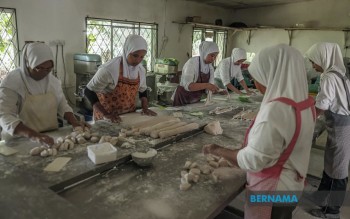
The Malaysian government has unveiled a comprehensive strategy to strengthen domestic halal ingredient production through 23 integrated initiatives spanning research, financing, talent cultivation and commercialisation. Rolled out across seven strategic pillars of the Halal Industry Master Plan 2030 (HIMP 2030), these measures represent a deliberate pivot towards self-sufficiency in a sector where import dependency has long constrained growth and exposed producers to supply-chain volatility. Implementation has progressed steadily, with tangible progress recorded as of May 30, 2026, signalling a commitment to reshaping how Malaysia sources and manufactures critical halal raw materials.
The Ministry of Investment, Trade and Industry (MITI) has positioned seven core initiatives at the heart of this transformation, each targeting distinct leverage points within the halal ecosystem. Research and development forms the intellectual foundation, generating innovations in ingredient formulation and processing that can displace imported alternatives. Financing mechanisms tailored for micro, small and medium enterprises (MSMEs) address a persistent bottleneck: most domestic producers lack capital to scale production or invest in advanced processing technology. Talent development programmes are building the skilled workforce needed to operate sophisticated manufacturing facilities and manage quality assurance. Commercialisation support bridges the final gap between laboratory success and market deployment, helping promising innovations reach halal manufacturers and food producers at competitive prices.
Implementation unfolds through a carefully sequenced roadmap designed to build momentum rather than overwhelm emerging industries. The government has mapped critical ingredient categories—identifying which products represent the highest-value import leakage and strongest domestic production potential—allowing resources to concentrate where impact matters most. Research and development projects are advancing in parallel with commercialisation pipelines, ensuring that breakthroughs move rapidly from institutions into production facilities. Investment facilitation activities connect companies with capital sources, while industry-matching exercises create collaboration networks that accelerate knowledge transfer and supply-chain integration. This phased methodology acknowledges that ingredient substitution cannot happen overnight, yet maintains urgency through overlapping project timelines.
A pivotal enabler launched in August 2025, the MyHALALINGREDIENTS system developed by the Department of Islamic Development Malaysia (JAKIM), provides unprecedented visibility into ingredient sourcing across the halal manufacturing ecosystem. Operating as a data collection and assessment platform, it captures raw material usage patterns among industry participants, particularly food and beverage manufacturers. This granular intelligence allows policymakers to identify which ingredients remain chronically import-dependent and therefore merit targeted domestic development efforts. Beyond tracking, the system strengthens governance: it records ingredient provenance, purity certifications and compliance histories, creating an auditable record that underpins Malaysia's halal assurance framework.
Integration with the existing MYeHALAL certification platform amplifies these gains. By linking ingredient-level data to halal certification workflows, the combined system eliminates redundant documentation and accelerates approval timelines for manufacturers seeking halal accreditation. Companies no longer navigate separate, fragmented certification pathways; instead, ingredient data automatically feeds into halal assessments, streamlining bureaucracy and lowering compliance costs. For small producers lacking dedicated regulatory teams, this efficiency gain is substantial, reducing the administrative burden that often deters market entry and expansion.
The government's approach rests on strategic selectivity rather than blanket protectionism. Rather than attempting to substitute all halal ingredient imports, MITI has adopted a targeted methodology concentrating on categories meeting three criteria: strategic value to the broader economy, substantial import dependence indicating supply-chain vulnerability, and genuine domestic production potential. This disciplined focus prevents wasted investment in uncompetitive ventures while maximising the probability that selected initiatives will succeed and generate export opportunities for Malaysian producers. By identifying categories where Malaysia possesses raw material advantages, skilled labour, or technological capabilities, the strategy builds on competitive strength rather than fighting market dynamics.
Industry collaboration forms the connective tissue binding these initiatives together. Leading domestic companies and multinational manufacturers operating in Malaysia serve as anchor partners, piloting new ingredients, providing technical feedback, and committing to offtake agreements that de-risk commercialisation. This partnership model differs markedly from top-down industrial policy: it leverages market intelligence and purchasing power to shape which innovations survive and scale. When established manufacturers engage with emerging suppliers, they bring quality standards, volume certainty and brand credibility that transform promising startups into sustainable businesses. The matching process—systematically linking innovators with corporate partners—accelerates this transformation beyond what government funding alone could achieve.
For Malaysian small and medium enterprises, this initiative represents a significant opportunity window. The combination of targeted R&D support, MSME-specific financing, and pathway-to-market assistance creates unprecedented scaffolding for entrepreneurs developing halal ingredients. Companies that historically lacked the scale or capital to compete against established importers can now access subsidised R&D services, government-backed loans at preferential rates, and introductions to major manufacturers seeking domestic sources. This democratisation of ingredient innovation could catalyse a new cohort of local champions, similar to how government support and market protection historically nurtured Malaysia's palm oil, electronics, and pharmaceuticals sectors.
Regional supply-chain resilience constitutes an overlooked dimension of this strategy. Southeast Asia's halal ingredient sector remains heavily dependent on imports from the Middle East, South Asia, and industrial countries, creating vulnerability to geopolitical disruption, currency fluctuations and logistics bottlenecks. By strengthening Malaysia's domestic ingredient capacity, the HIMP 2030 initiatives create a more robust regional alternative to overseas suppliers, potentially positioning Malaysia as a halal ingredient hub serving the broader Association of Southeast Asian Nations (ASEAN) market. This export potential transforms the programme from a purely inward-looking import-substitution exercise into a growth-oriented regional strategy.
The halal ingredients sector itself represents a natural Malaysian advantage. With a majority Muslim population, the nation possesses deep expertise in halal compliance, manufacturing standards and consumer preferences. The established MYeHALAL certification framework generates international brand confidence in Malaysian halal products, opening doors in majority-Muslim countries across the Middle East, South Asia and Southeast Asia where halal assurance carries religious and commercial weight. By embedding ingredient innovation within this certification ecosystem, Malaysia amplifies the credibility and market access of domestically produced alternatives.
Longer-term, successful ingredient substitution could reshape Malaysia's entire food and beverage manufacturing landscape. Currently, local producers must import ingredients at global-market prices, compressing margins and limiting profitability. Access to cheaper, more reliable domestically sourced ingredients would improve competitiveness of Malaysian food manufacturers in export markets, potentially expanding the sector's economic footprint. This productivity gain ripples through employment, foreign exchange earnings and value-added manufacturing output, making halal ingredient development a strategic economic priority rather than a niche concern.
Monitoring progress requires vigilance. The government has set ambitious goals spanning R&D project completion, MSME loan disbursement, and talent training throughput. Transparent reporting against these metrics—publicly released quarterly or annually—would strengthen accountability and enable course correction. Regional policymakers watching Malaysia's implementation may benefit from documented lessons regarding which support mechanisms most effectively transition laboratory innovations into commercial-scale production and which financing structures best serve halal ingredient producers.

