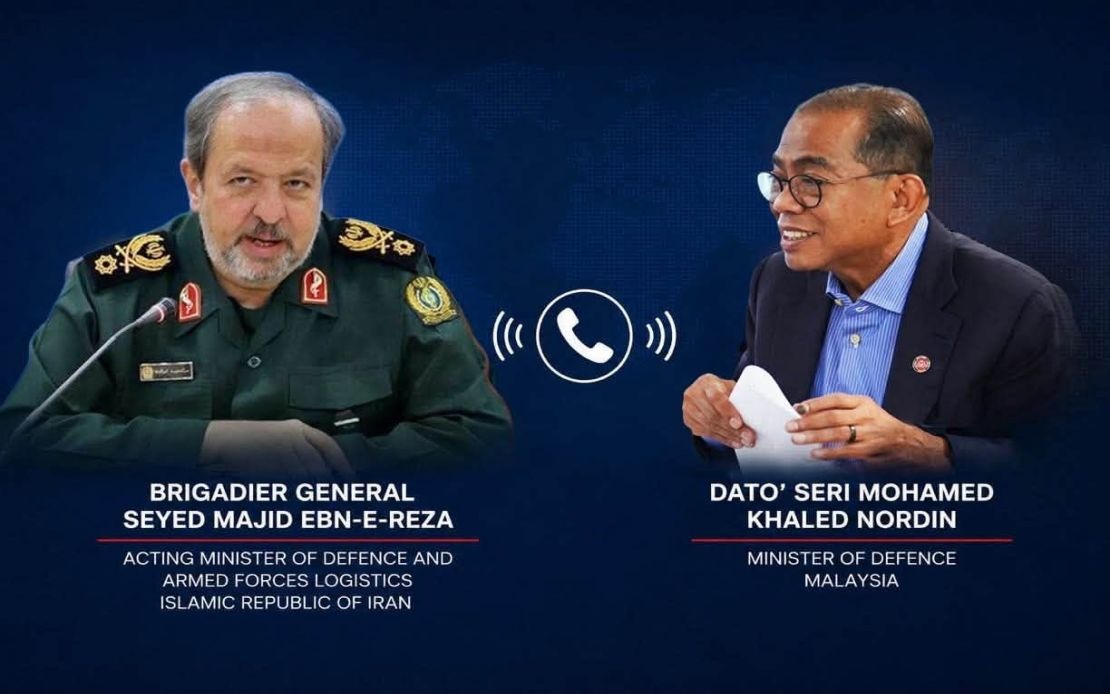
Malaysia is positioning itself to significantly expand its defence and military cooperation with Iran, marking a strengthening of bilateral relations between the two nations. Defence Minister Datuk Seri Mohamed Khaled Nordin conveyed this intention during a recent telephone discussion with Iran's Acting Minister of Defence and Armed Forces Logistics, Brigadier General Seyed Majid Ebn-e-Reza, according to statements released through official channels.
The move reflects Malaysia's broader strategic approach to deepening ties with Iran beyond conventional diplomatic engagement. Rather than limiting interaction to political discourse, Kuala Lumpur is now pursuing substantive military collaboration that would formalize existing informal arrangements. This shift suggests Malaysia views Iran as an increasingly important partner in regional security matters, particularly given shared interests in maritime security and regional stability.
Central to Malaysia's initiative is the pursuit of a formal Memorandum of Understanding on defence cooperation. Such an agreement would institutionalize military coordination between the two countries and create a structured framework for ongoing collaboration. The emphasis on formalizing ties through an MoU demonstrates Malaysia's intent to move beyond ad hoc interactions toward a comprehensive, long-term defence partnership that can withstand political fluctuations and provide clear guidelines for military engagement.
Malaysia has also extended an invitation for Iran to participate in next year's Langkawi International Maritime and Aerospace Exhibition, one of the region's most prominent defence industry showcases. This invitation carries significant symbolic and practical weight, as LIMA serves as a platform where nations display advanced military capabilities and establish defence industry connections. Iranian participation would enhance visibility of its defence sector throughout Southeast Asia and the broader Indo-Pacific region, while simultaneously offering Malaysia opportunities to deepen understanding of Iran's military modernization efforts and technological capabilities.
Beyond the defence cooperation framework, Malaysia's outreach reflects humanitarian concerns regarding the broader regional conflict situation. Defence Minister Mohamed Khaled extended Malaysia's formal condolences for Iranian military personnel, security forces, and civilians who have lost their lives in ongoing West Asian conflicts. This acknowledgment signals Malaysia's recognition of Iran's strategic vulnerabilities and demonstrates empathetic engagement with a nation facing significant security challenges.
Crucially, Malaysia has reaffirmed its commitment to peaceful resolution of regional conflicts while simultaneously appreciating Iran's cooperation in maintaining maritime security during volatile periods. The statement specifically commends Iran's treatment of Malaysian vessels and support for safe passage through contested waters, underscoring practical collaboration that has already yielded tangible benefits for Malaysian maritime interests. This dimension of the relationship reflects Malaysia's pragmatic approach—seeking cooperation with Iran on issues of direct national interest while maintaining broader commitment to regional stability.
The emphasis on safeguarding the Strait of Hormuz reflects Malaysia's vital stakes in maintaining open sea lanes through this critical chokepoint. As a trading nation heavily dependent on maritime commerce, Malaysia has fundamental interests in ensuring unobstructed passage through one of the world's most strategically significant waterways. By strengthening cooperation with Iran on maritime security, Malaysia is essentially securing its own economic lifelines while simultaneously contributing to regional stability. This approach acknowledges Iran's central role in Hormuz security arrangements and recognizes that excluding Tehran from dialogue mechanisms would be counterproductive to Malaysian interests.
Malaysia's recognition of Iran's indigenous defence capabilities and demonstrated resilience adds another dimension to the partnership rationale. By acknowledging Iran's ability to develop and produce its own military technologies, Malaysia is signalling respect for Iranian sovereignty and technological achievement. This framing contrasts with approaches that might view Iran primarily through the lens of international sanctions or external pressure, instead recognizing Iran as a capable defence industry player with legitimate technological aspirations.
For Malaysia and Southeast Asia more broadly, strengthened ties with Iran carry important implications for regional balance. As tensions in the Middle East fluctuate and great power competition intensifies across Asia, Malaysia's defence partnerships reflect efforts to maintain equidistant engagement with major powers while developing tailored bilateral relationships. This strategy allows Malaysia to preserve flexibility in responding to regional security challenges without becoming overly dependent on any single external actor.
The timing of this announcement also matters. Regional security dynamics have shifted considerably in recent years, with various Middle Eastern powers increasingly engaging Southeast Asian nations through defence cooperation frameworks. Malaysia's proactive approach to formalizing defence ties with Iran suggests recognition that passive engagement is insufficient in contemporary strategic competition. By moving swiftly to establish formal cooperation mechanisms, Malaysia positions itself advantageously relative to other regional actors who might also be cultivating Iranian relationships.
Moving forward, the success of Malaysia-Iran defence cooperation will depend on operationalizing the proposed memorandum and translating diplomatic initiatives into concrete military collaboration programs. Training exchanges, technological cooperation on maritime security, and coordinated responses to piracy and other transnational maritime threats represent potential areas for substantive cooperation. These practical dimensions would transform the relationship from symbolic gestures into mechanisms generating measurable security benefits for both nations.

