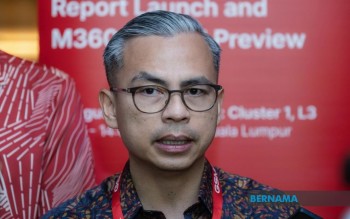
Malaysia has secured a significant regional advantage by becoming the inaugural Southeast Asian host of M360 ASEAN 2026, scheduled for September 9 and 10 in Kuala Lumpur. The decision positions the country as a nexus for digital innovation and technology leadership across ASEAN, underscoring its growing influence in shaping the region's technological future. Communications Minister Datuk Seri Fahmi Fadzil emphasised that hosting this flagship GSMA event represents not merely a logistical achievement but a deliberate assertion of Malaysia's credentials as a serious player in global telecommunications and artificial intelligence development.
The M360 ASEAN 2026 forum will convene an expansive ecosystem of stakeholders spanning industry executives, technology vendors, policy experts, institutional investors, academic researchers, and government officials from across the Southeast Asian bloc. This convergence creates a rare opportunity for Malaysia to showcase its technological capabilities and policy frameworks to an influential international audience while simultaneously extracting knowledge and best practices from peer economies. The breadth of participation signals the event's importance in shaping regional consensus on critical digital issues that will reverberate across ASEAN's combined economy of over 2.6 trillion dollars.
The timing of Malaysia's selection comes against a backdrop of accelerating digital transformation across Southeast Asia. GSMA analysis forecasts that mobile technologies and services will inject 1.4 trillion US dollars into the Asia-Pacific economy by 2030, representing a substantial 40 percent expansion from the current 1 trillion US dollar baseline. This projection underscores the enormous economic stakes underpinning telecommunications investment and digital infrastructure development throughout the region. Malaysia's role as host positions it to capture disproportionate attention from investors and technology partners seeking strategic entry points into Southeast Asian markets, potentially channelling significant capital flows and technical expertise into the country.
Minister Fahmi highlighted that the conference will facilitate substantive dialogue among ASEAN governments regarding the strategic direction and priorities of the digital economy. Participants will examine interconnectivity expansion strategies, methodologies for responsible artificial intelligence governance, and mechanisms for ensuring equitable technology distribution across member states. These conversations carry particular relevance for Malaysia, where policymakers have increasingly recognised that technology sector development cannot be treated as a purely commercial matter but requires coordinated government guidance to maximise social benefits and mitigate emerging risks.
The GSMA report underpinning M360 ASEAN 2026 identifies four critical convergence points that will structure Asia-Pacific digital growth trajectories through the remainder of this decade. The exponential proliferation of artificial intelligence applications represents the first priority, reflecting technology sector consensus that AI will function as the paramount innovation driver for the foreseeable future. Malaysian firms and institutions must meaningfully participate in these discussions to ensure their voice shapes emerging international AI governance frameworks before established precedents calcify.
Decay in digital trust represents the second priority animating conference discussions. As cybersecurity threats intensify and data misuse incidents accumulate, confidence in digital platforms has deteriorated markedly across many populations. ASEAN economies face particular vulnerability given their developmental diversity and varying regulatory capacities. Malaysia, as a middle-income economy with relatively sophisticated financial and technology sectors, can position itself as a trusted interlocutor between advanced economies pursuing aggressive digital expansion and developing Southeast Asian nations seeking stronger consumer protections and data sovereignty guarantees.
Resilient digital infrastructure constitutes the third priority. The COVID-19 pandemic exposed critical vulnerabilities in ASEAN's connectivity backbone, with lockdowns straining networks and revealing geographic disparities in broadband accessibility. Subsequent geopolitical tensions have amplified concerns regarding supply chain concentration and technological dependency on individual suppliers. Malaysia's telecommunications infrastructure, developed through decades of private sector competition and government investment, offers valuable lessons regarding resilience architecture that neighbouring economies can adapt to their circumstances.
Digital sovereignty emerges as the fourth priority capturing ASEAN attention. Southeast Asian governments increasingly resist external technological dependency and seek to develop indigenous capabilities across semiconductor manufacturing, software development, and digital service provision. This nationalist impulse reflects legitimate concerns regarding technology capture by foreign powers and the loss of domestic policy autonomy over critical systems. Malaysia's existing semiconductor industry base and growing software sector position it advantageously to champion sovereignty-conscious technology development models that balance innovation imperatives with autonomy preservation.
Hosting M360 ASEAN 2026 carries immediate diplomatic implications beyond the conference itself. The selection signals international recognition of Malaysia's technological maturity and regional influence, enhancing the country's soft power credentials within ASEAN and across global technology governance forums. For Malaysian telecommunications operators and technology enterprises, the event functions as an unparalleled networking opportunity to forge commercial relationships, explore partnership possibilities, and establish brand visibility among regional decision-makers. Government agencies gain analogous exposure regarding Malaysia's regulatory frameworks and policy approaches, potentially attracting foreign direct investment in priority sectors.
The broader significance extends to ASEAN's collective technological trajectory and strategic posture within global technology competition. By hosting the first regional M360 iteration, Malaysia implicitly assumes responsibility for demonstrating ASEAN capacity for sophisticated technology governance and innovation leadership. Success in delivering a high-impact conference could catalyse greater regional cooperation on digital standards, cybersecurity protocols, and talent development initiatives. Conversely, a mediocre performance risks reinforcing perceptions of Southeast Asian technological subordination to established powers.
For Malaysian readers and businesses, participation in M360 ASEAN 2026 planning and execution offers concrete opportunities to advance national digital objectives while strengthening competitive positioning within regional markets. The confluence of government ambition, industry enthusiasm, and international attention creates a rare window for galvanising momentum behind transformative technology initiatives that could define Malaysia's economic trajectory through the 2030s and beyond.

