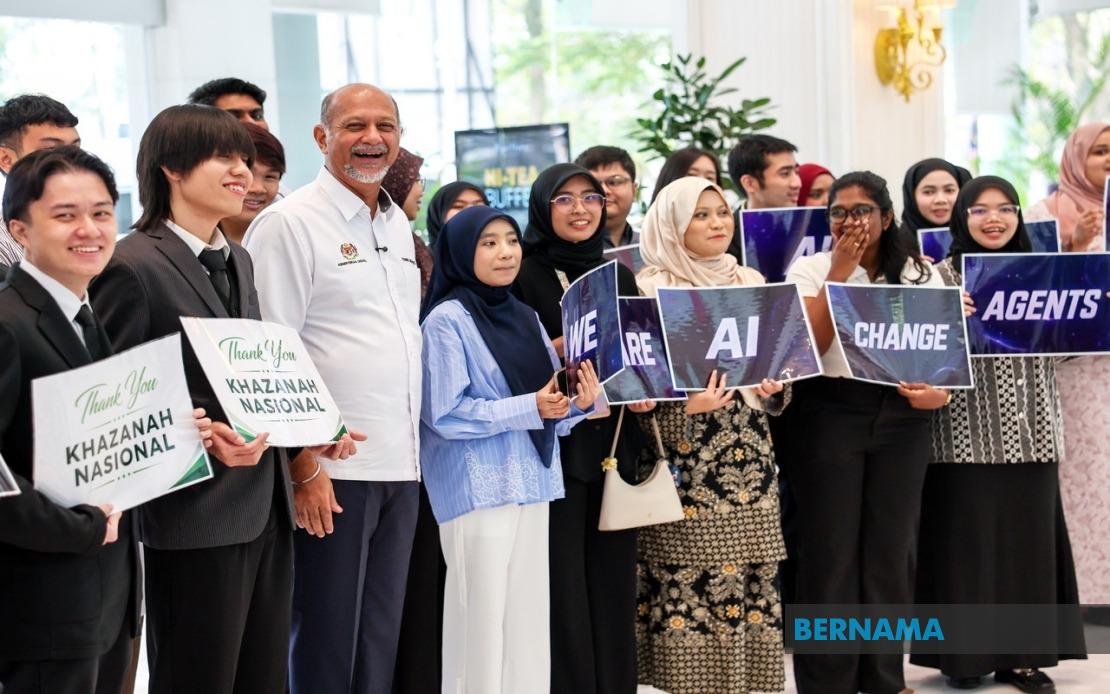
Malaysia is fundamentally rethinking its approach to technology governance by moving away from reactive crisis management toward anticipatory policymaking. Digital Minister Gobind Singh Deo made this strategic pivot clear when addressing delegates at the AI-Ready Malaysia Summit 2026 in Petaling Jaya, emphasising that the nation's rapid technological advancement demands a fundamentally different governance model. The traditional approach of formulating responses after problems surface no longer suffices in an environment where artificial intelligence and related technologies evolve at breathtaking speed. Instead, the government now seeks to identify potential challenges years in advance, embedding solutions into legislation and policy frameworks that can be deployed swiftly when issues materialise.
The establishment of AI Malaysia represents the centrepiece of this strategic recalibration. Constituted as the primary agency driving the nation's ambition to achieve artificial intelligence leadership by 2030, this body embodies the government's commitment to proactive governance. Rather than reacting to technological disruption as it occurs—a process that historically consumed considerable time and resources—AI Malaysia will anticipate emerging risks and opportunities. This approach recognises that in the accelerating technology landscape, delay in policy response often means falling behind competitors who have already seized market advantages. By positioning solutions ahead of problems, the government aims to ensure that Malaysia can respond with agility rather than scrambling to catch up.
Gobind articulated the fundamental weakness in Malaysia's previous reactive framework. For decades, the standard government practice involved observing an issue, convening stakeholders, drafting legislation, and then implementing enforcement mechanisms. This sequential process, while thorough, invariably lags behind the actual pace at which technology transforms economies and society. The digital minister acknowledged that this methodology was designed for a slower-moving world where technological change unfolded over decades rather than months. The current environment demands a complete inversion of this logic: rather than waiting for problems to crystallise into crises, policymakers must engage in prospective analysis, scenario planning, and pre-emptive regulatory architecture.
The articulated strategy extends beyond vague aspirations toward specific sectoral targeting. AI Malaysia has identified six key economic domains where artificial intelligence will deliver transformative impact, with particular emphasis on agriculture, transport, and healthcare. This sector-specific focus provides granularity that distinguishes genuine strategic planning from rhetorical commitment. Agricultural applications might encompass precision farming, crop disease detection, and resource optimisation—areas where Malaysian farmers could gain competitive advantage through early technology adoption. Transport challenges range from autonomous vehicle regulation to logistics optimisation and urban mobility planning. Healthcare applications span diagnostic assistance, personalised treatment protocols, and hospital resource management. By mapping these concrete use cases in advance, the government can develop tailored policies rather than imposing generic frameworks.
A critical dimension of this proactive strategy involves public awareness and technological literacy. Gobind recognised that even well-designed infrastructure and favourable policies cannot generate adoption if citizens lack understanding of artificial intelligence's practical applications and benefits. The digital minister stressed that awareness precedes adoption: people must first comprehend what technology accomplishes before they can appreciate its value proposition. This insight reflects a sophisticated understanding of technology diffusion. Technical capability without public comprehension typically results in expensive infrastructure that remains underutilised because end-users fail to understand operational benefits or remain sceptical of capabilities.
Accessibility emerges as a second pillar underpinning the adoption strategy. Technological capability distributed unequally across society undermines national competitiveness and exacerbates existing inequalities. The government's commitment to ensuring that artificial intelligence tools remain affordable and obtainable across all socioeconomic segments reflects recognition that Malaysia's economic advancement depends on broadbased technological participation rather than concentration among elite actors. This principle particularly resonates in a region where income disparities remain substantial and rural-urban digital divides persist. Cost barriers that might be negligible for affluent urban professionals could prove insurmountable for smallholders or small enterprises in less developed areas.
The policy framework also acknowledges that awareness and accessibility must precede meaningful adoption. This sequencing reflects realistic understanding of technology rollout dynamics. Rushing implementation before populations understand applications and can access tools reliably typically generates frustration, underutilisation, and political backlash. Instead, Gobind's articulation suggests a staged approach: first establishing comprehension among key constituencies, then removing financial and logistical barriers to access, and finally supporting practical integration into daily economic and social activities. This methodical progression contrasts sharply with technology hype cycles that promise rapid transformation without attending to implementation realities.
For Malaysian policymakers, this proactive framework offers several advantages over reactive approaches that characterise many Southeast Asian governments. First, anticipatory governance permits incorporation of local values, circumstances, and priorities into technology regulation from inception rather than retrofitting foreign frameworks after adoption accelerates. Second, advance planning allows Malaysia to position itself as a regional thought leader on artificial intelligence governance—an increasingly valuable commodity as Southeast Asian nations confront similar challenges. Third, prospective policymaking creates institutional capacity within government for engaging sophisticated technology questions, building expertise that proves invaluable across multiple domains.
However, the success of this strategy depends fundamentally on execution quality. Proactive governance frameworks can easily devolve into elaborate bureaucracy that stifles innovation rather than facilitating it. The challenge confronting AI Malaysia will involve formulating enabling rather than restrictive policies—creating space for experimentation while maintaining safeguards against genuine harms. This represents a delicate balance that many regulatory agencies struggle to maintain. Additionally, the government must ensure that its anticipatory framework remains flexible enough to adapt as technology evolves in directions not currently foreseeable. Overly rigid proactive policies can become obsolete almost as rapidly as reactive ones.
Regionally, Malaysia's articulated approach carries implications for Southeast Asian technology governance more broadly. As the region confronts artificial intelligence's disruptive potential across manufacturing, services, and agricultural sectors, the demand for sophisticated regulatory frameworks will intensify. If AI Malaysia successfully demonstrates that proactive, anticipatory governance can harness technology benefits while mitigating risks, it may establish a model that other Southeast Asian nations seek to emulate. Conversely, if the initiative produces bureaucratic gridlock or fails to deliver tangible outcomes, it could reinforce scepticism about governmental capacity to manage technology transitions. The stakes surrounding this strategic reorientation extend well beyond Malaysia's borders.

