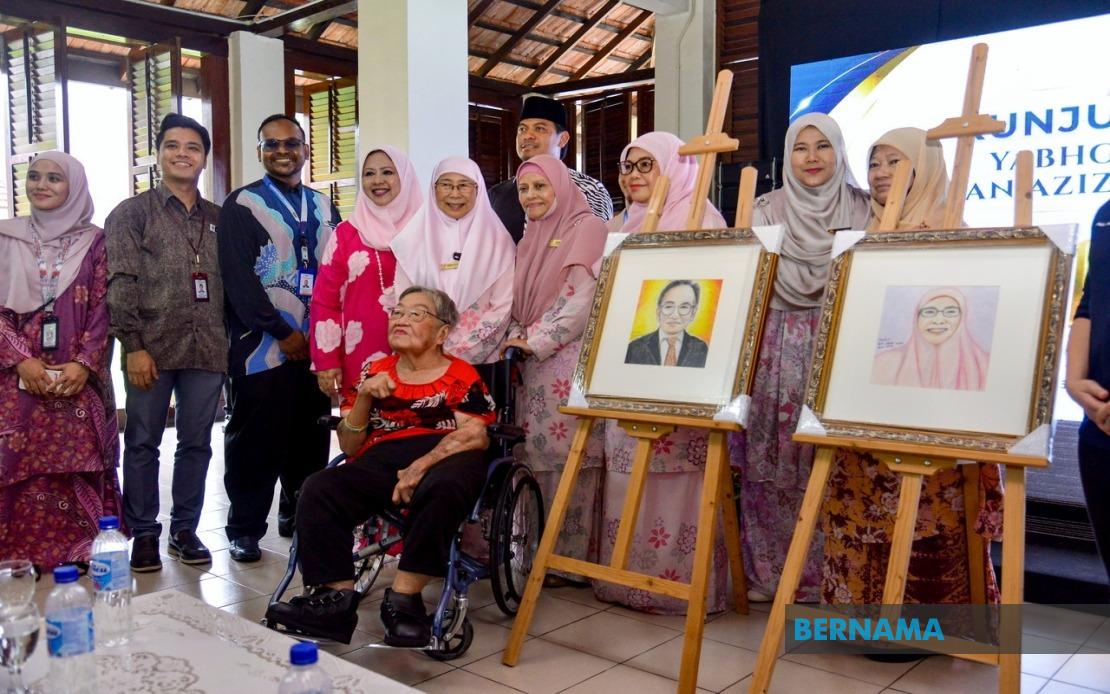
The National Leprosy Control Centre at Sungai Buloh Hospital, which has reached its 100th year of operation, deserves to be maintained as a cornerstone of Malaysia's medical heritage, according to Prime Minister's wife Datuk Seri Dr Wan Azizah Wan Ismail. The facility, established in 1926, has played a transformative role in documenting and treating one of humanity's oldest diseases within the Malaysian context. Dr Wan Azizah, who made a special visit to the centre to mark the milestone, emphasized that the institution represents far more than just a treatment facility; it embodies the nation's capacity to overcome a once-devastating public health challenge through organized medical intervention and social commitment.
During her tour of the complex, Dr Wan Azizah received comprehensive briefings on the centre's historical significance and its ongoing role in leprosy management and research. The visit included meaningful engagement with both staff members and residents, reflecting her recognition that the human stories within the facility's walls are integral to understanding its importance. She distributed essential supplies to residents and accepted a portrait painted by one of the centre's occupants, a gesture that underscored the dignity and capabilities of those living there. These interactions revealed a facility that continues to serve not merely as a medical institution but as a community where individuals with a historically stigmatized condition have maintained productive lives and contributed creatively to society.
Beyond the symbolic preservation of physical structures, Dr Wan Azizah articulated a vision for continuous improvement of healthcare delivery at the facility. She recognized that heritage conservation must not mean stagnation or neglect of modern medical standards. Instead, the centre should undergo periodic upgrades and enhancements to ensure that residents and patients receive contemporary care while the institution maintains its historical character. This dual mandate reflects a sophisticated understanding of heritage management: respecting the past while ensuring the present and future remain relevant and beneficial to those who depend on the facility's services.
The psychological and social dimensions of leprosy have transformed dramatically over the past century. Dr Wan Azizah highlighted the shifting public perception of the disease, noting that modern understanding has dispelled many myths that once surrounded transmission and contagiousness. The old narrative of leprosy as an easily communicable affliction requiring permanent isolation has been replaced by evidence-based knowledge demonstrating that the disease is relatively difficult to transmit and highly treatable with modern antibiotics. This reframing has profound implications for the social reintegration of affected individuals and for reimagining the role of institutions like Sungai Buloh, from places of exile to centers of healing and continued human development.
Malaysia's achievement in leprosy control represents a public health success story that deserves international recognition. The country attained leprosy elimination status in 1994, a milestone that few tropical nations achieved at that time. The current prevalence rate of 0.15 cases per 10,000 population stands substantially below the threshold of one case per 10,000 population established by the World Health Organisation as the elimination benchmark. This accomplishment emerged from decades of systematic disease surveillance, patient treatment programs, and public education efforts centered at facilities like the National Leprosy Control Centre. The statistical data provides only a partial picture; behind these numbers lie countless individuals whose lives were extended and enhanced by effective medical intervention.
Prior to achieving elimination status, the Sungai Buloh facility held the distinction of being the world's second-largest leprosy isolation centre, a ranking that reflects both the historical prevalence of the disease in the region and Malaysia's commitment to establishing specialized treatment infrastructure. The centre's expansion during the 20th century corresponded with increasing scientific understanding of the disease and growing capacity to offer therapeutic interventions that could arrest disease progression. The very scale of the facility's historical operations underscores why its preservation matters: it documents a period when leprosy represented a major public health concern requiring institutional solutions of considerable magnitude.
The centre's adaptability became evident during the COVID-19 pandemic, when it was repurposed to serve as a quarantine and isolation ward for coronavirus patients in 2020. This flexibility demonstrates that heritage institutions need not exist frozen in time; they can respond to contemporary health crises while maintaining their core historical mission. The experience of housing COVID-19 patients within a facility designed for an entirely different infectious disease highlights both the timelessness of isolation facility design principles and the centre's continued relevance to Malaysian public health infrastructure. This functional versatility strengthens the argument for preserving the facility, as it has proven capable of serving multiple generations' health needs.
Dr Wan Azizah's advocacy carries particular weight given her position as chair of KASIH Malaysia, an organization focused on welfare and charitable work. Her intervention signals high-level governmental recognition of the centre's importance and suggests that preservation efforts may receive institutional backing and resources. The involvement of the Prime Minister's household in promoting heritage conservation sends a message about national priorities, elevating the discourse around medical history preservation beyond specialist academic circles to the level of official policy consideration. This political endorsement could influence budgetary allocations and heritage protection measures.
The preservation agenda raises broader questions about how Malaysia values and commemorates its medical heritage. Many developing nations struggle to maintain historical health institutions, as resources are directed toward newer facilities and contemporary challenges. Yet these older centres often contain architectural, documentary, and human resources of inestimable value. The Sungai Buloh facility represents not just Malaysian medical achievement but also demonstrates how tropical nations successfully engaged with and overcome diseases that were once considered intractable. For regional neighbors and the global health community, Malaysia's preservation of this institution would constitute a tangible statement about the importance of institutional memory in public health.
The centenary of the National Leprosy Control Centre represents an opportune moment for Malaysia to establish comprehensive conservation policies that extend beyond the building itself to include archival materials, oral histories, and documentation of the centre's medical innovations and social programs. Future researchers studying the social history of disease, the development of tropical medicine in Asia, or the institutional responses to chronic conditions would benefit immensely from a well-preserved and accessible historical record. By deciding to maintain and enhance the Sungai Buloh facility, Malaysia would be investing in its capacity to educate future generations about both its medical achievements and the human dimensions of disease management across the past century.

