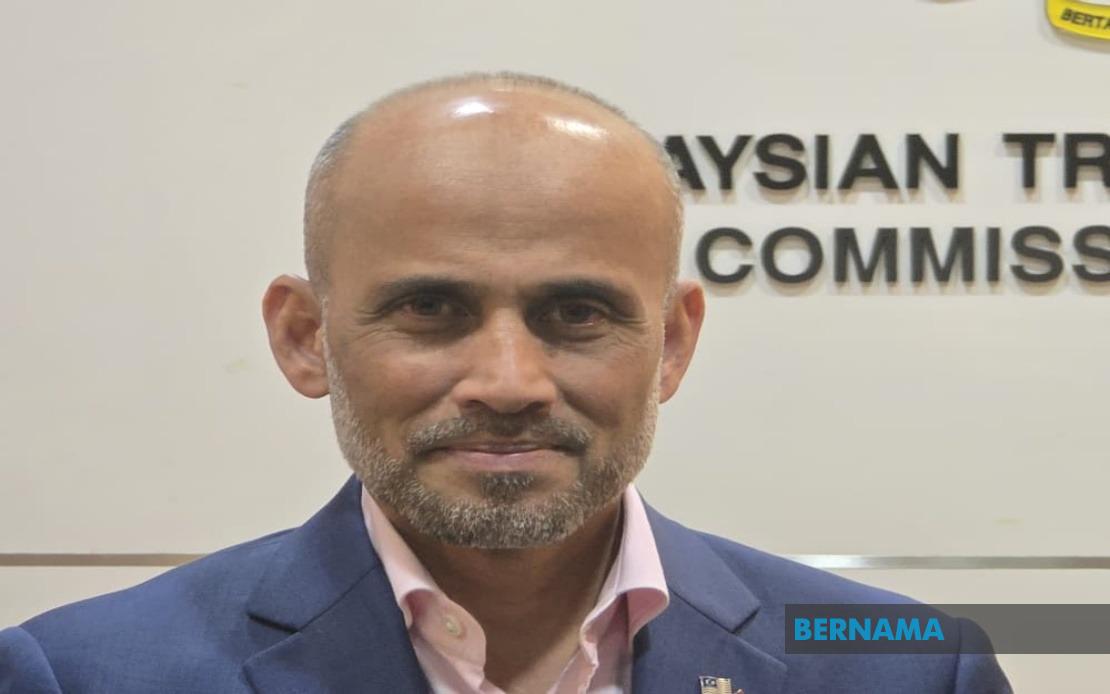
Datuk Dr Azfar Mohamad Mustafar, Malaysia's High Commissioner to Singapore, is departing his post having witnessed a deepening of ties between the two neighbours built on shared purpose and pragmatic cooperation. Speaking ahead of his transfer to become High Commissioner to the United Kingdom effective July 1, Azfar reflected on a five-year tenure in which both countries learned to move forward together despite extraordinary external pressures. The relationship, he stressed, has matured through these trials, suggesting that the foundation between Malaysia and Singapore has proven resilient.
Azfar's appointment in Singapore coincided with one of the most destabilising moments in recent history. When he took office in June 2021, the COVID-19 pandemic remained a grave threat to economic and social life across Southeast Asia. The virus forced governments to implement restrictive measures that tested the robustness of cross-border cooperation. For Malaysia and Singapore, this proved particularly acute, given the historical pattern of daily movement between the countries. Tens of thousands of Malaysian workers, professionals, and businesspeople depend on seamless access to Singapore's economy, and any impediment to this flow creates friction affecting both societies.
The closure of land borders and restrictions on movement created unprecedented consular pressures. Azfar recalled how his office had to respond with urgency and flexibility to manage the surge in cases requiring official assistance. These were not abstract diplomatic challenges but practical difficulties affecting real families and livelihoods. His willingness to highlight this struggle illustrates how contemporary diplomacy often involves less fanfare and more problem-solving in the trenches. For Malaysian readers concerned about the cross-border workforce, his tenure demonstrated that bilateral channels can be mobilised to protect citizen interests even in crisis.
As the acute phase of the pandemic receded, economic recovery became the priority. According to Azfar, bilateral trade and investment flows have now rebounded to levels not seen since before coronavirus struck. Singapore continues to rank among Malaysia's most significant trading partners, a relationship that reflects decades of economic integration and complementary industrial structures. This recovery is not merely a statistical rebound but a sign that investor confidence in the Malaysia-Singapore partnership has held firm.
Investment dynamics deserve particular attention for Malaysian policymakers and business watchers. Azfar noted that Singapore remains one of the principal sources of foreign capital flowing into Malaysia. The city-state's investors bring not just money but expertise, networks, and technology that upgrade Malaysian capabilities across sectors. This inflow is expected to accelerate further with new opportunities on the horizon, particularly the recently established Johor-Singapore Special Economic Zone. This joint initiative represents a shift towards deeper, more structured economic cooperation, pooling resources and aligning regulations to create a competitive industrial corridor.
The Johor zone is potentially transformative for Malaysia's southern region. By facilitating integrated manufacturing, supply chains, and services spanning the Strait of Johor, the zone could unlock billions in investment and generate thousands of jobs. Azfar's emphasis on Singapore's continuing appetite to invest in Johor suggests that Singaporean businesses view Malaysia not as a remote market but as an extension of their own economic space. For Johor especially, but also for Malaysia's broader development ambitions, this represents validation that the state can position itself as an attractive destination for the kind of capital and expertise Singapore controls.
Beyond trade and investment, Azfar highlighted infrastructure cooperation as a frontier for deeper integration. The ASEAN Power Grid initiative emerged in his remarks as a priority area of mutual concern. This project, if realised, would create a unified electricity network across Southeast Asia, allowing countries to trade power and optimise energy supply and demand in real time. For Malaysia, participation in such a scheme could enhance energy security while positioning the country as a hub for regional energy flows. The initiative reflects how contemporary challenges—climate transition, energy security, and economic efficiency—are pushing Southeast Asian governments towards unprecedented levels of integration.
Singapore's assumption of the ASEAN chair in 2025 will test this partnership further. As chair, Singapore will set the agenda for the region's highest diplomatic forum and attempt to shepherd the ten members towards consensus on critical issues. Azfar confirmed Malaysia's backing for Singapore's leadership, signalling that bilateral confidence remains high enough that Malaysia is willing to support its neighbour in a position of regional prominence. This may seem routine, but it underscores that despite historical sensitivities and occasional friction, Malaysia views Singapore as a responsible steward of regional interests.
Azfar's career trajectory illustrates the professionalisation of Malaysia's diplomatic corps. Joining the Foreign Ministry in 2001 after nearly a decade in the administrative service, he rose to serve as Ambassador to France before his Singapore posting. His appointment to the United Kingdom, one of the world's most significant diplomatic postings, suggests he is regarded as a capable practitioner of high-level statecraft. For Malaysia, maintaining veteran diplomats in key capitals is essential to advancing national interests and sustaining the bilateral relationships that underpin regional stability.
The outgoing High Commissioner's reflective tone—acknowledging that much work remains and that he has played a modest role—reflects diplomatic humility. Yet his five-year tenure clearly mattered. Navigating the pandemic, rebuilding economic flows, and positioning Malaysia to benefit from the Johor-Singapore Special Economic Zone are substantial achievements. As he moves to London, a new High Commissioner will inherit a relationship that has weathered storms and emerged stronger. For Malaysia, continuity in managing this crucial partnership is paramount, ensuring that the gains secured under Azfar's tenure are consolidated and extended in the coming years.

