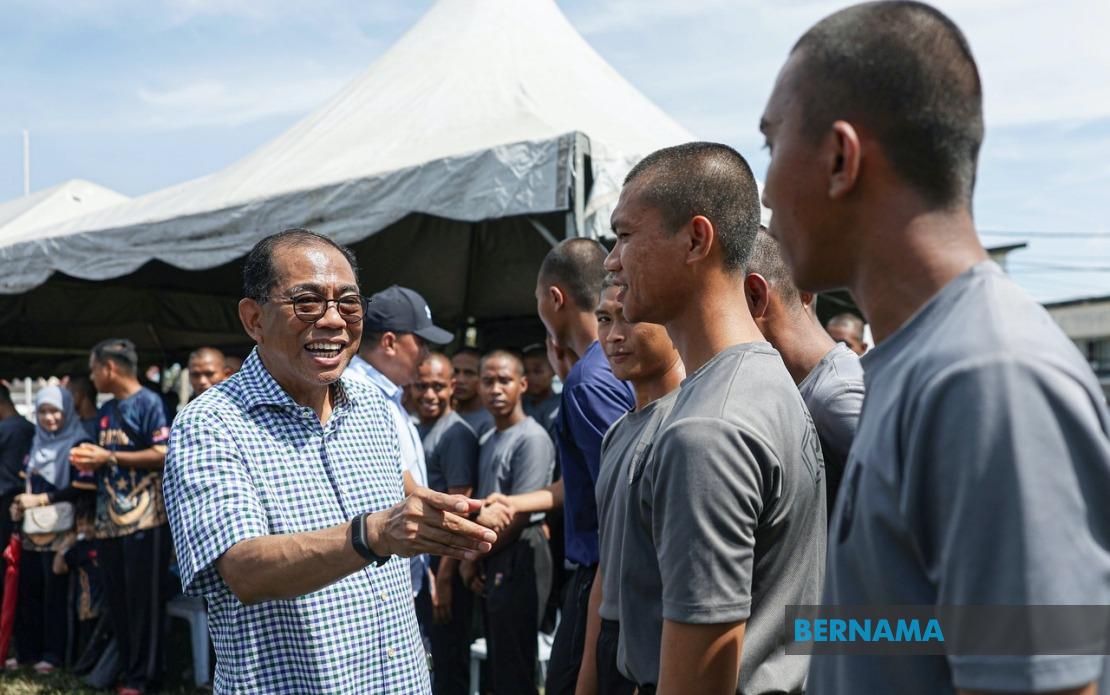
Malaysia has formalized a significant departure from its traditional defence procurement practices by signing memoranda of understanding with Turkiye and South Korea for direct government-to-government acquisitions. Defence Minister Datuk Seri Mohamed Khaled Nordin made the announcement at Port Dickson on July 26, indicating that this streamlined approach marks a fundamental restructuring of how the Malaysian Armed Forces will source critical military equipment moving forward. The bilateral agreements represent only the first phase of a broader strategy, with discussions ongoing with other major defence suppliers including Italy and France regarding similar arrangements.
The genesis of this procurement reform lies in concrete cost savings already demonstrated through direct negotiations. Prime Minister Datuk Seri Anwar Ibrahim revealed just days earlier that Malaysia had negotiated a 15 per cent reduction in the acquisition price of Littoral Mission Ships through direct engagement with the Turkish government, eliminating the customary agent commissions that had historically inflated defence spending. This breakthrough provided the political impetus for formalising the G2G mechanism as the preferred methodology for selected defence projects, signalling a decisive break from conventional tendering processes that had long characterised Malaysian military procurement.
The structural advantages of government-to-government procurement extend well beyond immediate price reductions. By removing commercial intermediaries from the transaction chain, Malaysia gains greater transparency throughout the entire acquisition lifecycle, from specification definition through final delivery and after-sales support. Minister Mohamed Khaled emphasized that the arrangement guarantees supply commitments backed by the supplier nation's sovereign authority, providing Malaysia with assurances that extend beyond standard commercial warranties. This government-level accountability transforms defence procurement from a transactional business exercise into a strategic partnership anchored in diplomatic relations.
Critically, the new framework prioritizes technology transfer and domestic industry development alongside procurement objectives. Malaysia's selection criteria now explicitly require that partner nations demonstrate willingness to facilitate technology sharing and capacity building within Malaysia's own defence industrial base. This dimension reflects a maturation in defence procurement strategy, moving beyond mere equipment acquisition toward building indigenous technological capabilities that will reduce long-term dependency on foreign suppliers. The emphasis on trustworthiness and commitment to Malaysian defence sector development distinguishes this approach from purely commercial transactions that characterise conventional tendering.
The role of Malaysia's armed services in determining procurement priorities remains paramount within this new framework. Minister Mohamed Khaled underscored that the military services—comprising the Army, Navy, and Air Force—retain responsibility for specifying operational requirements and technical standards, ensuring that procurement decisions remain driven by genuine defence needs rather than budgetary convenience or political expediency. This institutional check prevents the G2G mechanism from becoming a vehicle for arbitrary government purchasing, instead anchoring the process to legitimate military doctrine and capability gaps identified by operational commanders.
Beyond the immediate defence acquisition implications, Malaysia's procurement evolution reflects changing threat perceptions that have fundamentally reshaped military planning across the region. Minister Mohamed Khaled articulated that contemporary security challenges now encompass hybrid threats that traditional armed conflict models inadequately address. Cyber-attacks targeting critical infrastructure, weaponised social media campaigns designed to manipulate public opinion, and disruptions to essential services represent emerging vulnerabilities that conventional military procurement struggles to counter. This expanded threat conception justifies enhanced defence spending and explains why securing reliable supply chains through G2G arrangements has become strategically vital.
The government's Whole-of-Nation Defence (HANRUH) concept represents a complementary strategy to the G2G procurement initiative, acknowledging that contemporary security requires mobilisation extending far beyond military institutions. Minister Mohamed Khaled emphasized that public awareness of shared defence responsibility constitutes a critical national security requirement, positioning civilian resilience and societal preparedness alongside conventional military capacity. This civilian-military integration reflects lessons learned across Southeast Asia, where hybrid threats and infrastructure vulnerabilities have demonstrated that defence extends into domains traditionally beyond military purview.
The implications for Malaysia's defence industrial ecosystem merit careful attention. By prioritizing G2G arrangements with nations willing to facilitate technology transfer, Malaysia creates structured opportunities for knowledge absorption and capability development within the domestic defence sector. Turkish and South Korean defence industries, both technologically advanced and export-oriented, represent ideal partners for this technology-sharing agenda. Over time, such arrangements could enable Malaysian firms to develop indigenous production capabilities, reducing perpetual import dependency and creating defence-related employment opportunities within the country.
Regionally, Malaysia's procurement shift signals broader changes in defence sourcing patterns across Southeast Asia. As countries increasingly recognize the advantages of bypassing traditional commercial agents and engaging directly with supplier governments, the competitive landscape for defence contracts fundamentally shifts. Nations like Turkiye and South Korea gain preferential access to significant Malaysian procurement pipelines, potentially strengthening diplomatic relationships and creating enduring strategic partnerships. Conversely, countries reliant on traditional agent networks face declining influence, incentivizing them toward their own G2G engagement strategies.
The timing of Malaysia's G2G procurement initiative coincides with elevated strategic competition in the Indo-Pacific region and mounting pressure on government budgets worldwide. By reducing defence acquisition costs through elimination of intermediary commissions, Malaysia preserves limited fiscal resources for other critical spending while simultaneously modernizing military capabilities. The 15 per cent cost reduction on Littoral Mission Ships demonstrates tangible financial impact, potentially unlocking resources for additional defence projects or social spending priorities. This economic efficiency provides political cover for defence spending increases that might otherwise face parliamentary or public resistance.
Looking forward, the success of the Turkiye and South Korea arrangements will likely determine whether Malaysia expands G2G procurement to encompass larger portions of its defence budget. Should anticipated cost savings materialize and technology transfer proceeds as intended, the model becomes replicable across additional defence suppliers and equipment categories. The precedent established through these initial MoUs positions Malaysia to systematically transform defence procurement practices across the entire military acquisition spectrum, ultimately reshaping how the Malaysian Armed Forces modernize and sustain operational capabilities into the coming decades.

