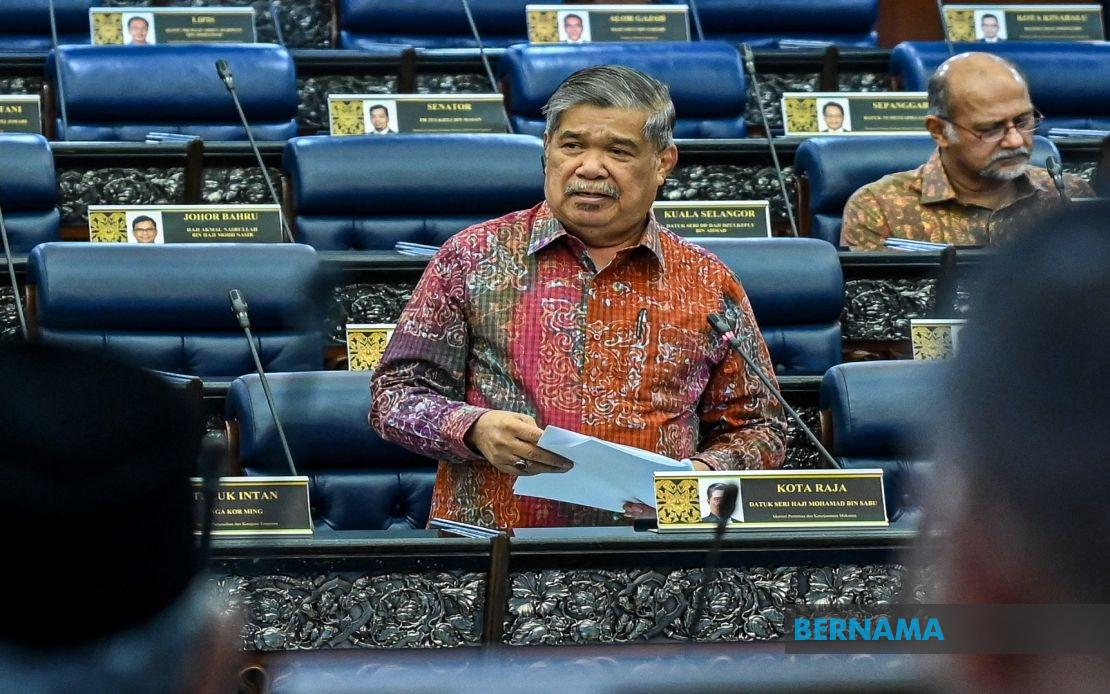
The Malaysian government is rolling out a comprehensive strategy to shield its agricultural sector from the mounting threats posed by the El Niño phenomenon, prioritising water conservation and direct assistance to struggling farmers. Agriculture and Food Security Minister Datuk Seri Mohamad Sabu outlined the multipronged approach during parliamentary proceedings, emphasising that protecting the nation's rice supply and farming communities remains a central pillar of broader food security planning. The initiatives reflect growing concern about the climatic pattern's potential to disrupt domestic production and force greater reliance on imports, a vulnerability that policymakers are determined to reduce.
At the heart of the government's response lies a revamped approach to managing the country's water resources, particularly given the critical role water plays in sustaining paddy fields across the peninsula. The Ministry is implementing continuous surveillance of dam levels and catchment zones to anticipate and respond to shortages before they threaten crops. Beyond monitoring, officials are accelerating deployment of precision irrigation systems that drastically reduce water wastage—a necessity in an era of increasingly unpredictable rainfall patterns. Smart irrigation technology allows farmers to apply water precisely where needed, while drip irrigation systems further optimise consumption, transforming how agricultural land is managed during prolonged dry spells.
Parallel to infrastructure improvements, research institutions are working to develop rice varieties inherently better equipped to withstand drought conditions. The Malaysian Agricultural Research and Development Institute (MARDI) has intensified breeding programmes aimed at producing cultivars that maintain yields despite water stress, addressing a vulnerability that has plagued smallholder farmers during previous dry periods. The Prime Minister's Food Security Meeting specifically tasked MARDI with accelerating this research, signalling the administration's determination to create lasting genetic solutions rather than relying solely on temporary interventions. Cloud seeding operations provide an additional tactical tool, though their deployment depends on meteorological conditions aligning favourably.
The financial commitment to affected farmers represents one of the most tangible elements of the government's response. During the first assistance phase in 2024, approximately RM45.24 million reached 8,224 rice farmers, providing immediate relief during difficult periods. By 30 June 2026, cumulative disbursements had risen substantially to RM38.53 million directed toward 55,058 farmers cultivating approximately 16,933 hectares affected by drought conditions in northern and eastern peninsular regions. These figures underscore the scale of the challenge—tens of thousands of farming households depend on government support to absorb the financial shocks of climate variability.
Maintaining strategic rice reserves represents another pillar of the food security framework. The government keeps approximately six months of domestic rice consumption in reserve, providing a buffer against supply disruptions and price volatility. This stockpiling strategy, combined with flexible import policies that allow additional procurement as conditions warrant, aims to prevent the food inflation and consumer hardship that could result from sudden shortages. The approach acknowledges Malaysia's position as a net rice importer, making it essential to secure adequate supplies through both domestic production enhancement and reliable external sourcing.
The resilience-building agenda extends beyond rice to encompassing broader agricultural transformation. Policymakers are actively promoting large-scale rice farming developments in Sarawak, Pahang, and other states, viewing geographic diversification and farm consolidation as pathways toward increased national production and improved economies of scale. Simultaneously, controlled environment agriculture—including greenhouse and vertical farming systems—is receiving policy encouragement as a method to insulate crops from weather volatility and reduce climate-induced yield fluctuations. These approaches represent a strategic shift toward farming models less vulnerable to natural phenomena like El Niño.
The discussion in parliament also touched on a separate but related agricultural challenge: oversupply and price collapse in the durian sector, which has plagued producers despite strong global demand. The Minister indicated that export expansion, particularly into China's less-penetrated markets, offers a mechanism to absorb surplus production and stabilise domestic prices. While most Malaysian durians currently concentrate in major Chinese urban centres, enormous potential exists in smaller towns and secondary cities where awareness and purchasing power are both growing. Enhanced logistics coordination and streamlined customs procedures could facilitate this market penetration, benefiting farmers through improved pricing while simultaneously diversifying Malaysia's agricultural export base.
The policy response demonstrates recognition that food security in Southeast Asia cannot depend entirely on domestic production, given climatic volatility and land constraints. Malaysia's strategy balances pragmatic acceptance of import dependency with determined efforts to reduce that vulnerability through technological innovation, crop improvement, and farmer support. The combination of infrastructure investment, financial assistance, reserve management, and export diversification creates a resilience framework that acknowledges both immediate needs and longer-term sustainability. For Malaysian farmers facing increasingly erratic weather patterns, these measures represent substantial government investment in their survival and prosperity during climatic stress periods.
The El Niño challenge carries implications extending beyond Malaysia to the broader Southeast Asian region, where rice production and food affordability remain critical development issues. Malaysia's approach—blending high-tech solutions like smart irrigation and drought-resistant breeding with traditional policy tools such as farmer subsidies and strategic reserves—may offer a template worth examining across the region. As climate science increasingly warns of more frequent and severe extreme weather events, agricultural systems throughout Asia will require similar comprehensive rethinking. The government's commitment to continuous research and technology deployment suggests official acknowledgment that past approaches may prove inadequate for the climatic future ahead.

