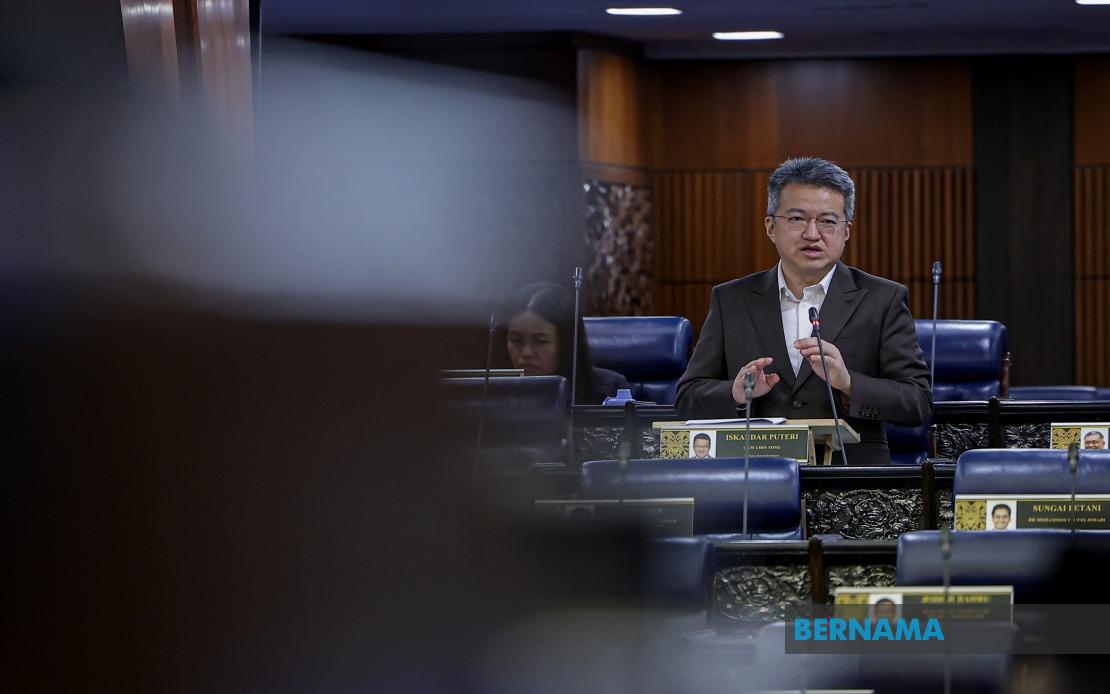
Malaysia's government is pursuing an ambitious programme of institutional reform aimed at closing the governance loopholes that enabled the 1Malaysia Development Berhad scandal and undermined the nation's standing on the global stage. Deputy Finance Minister Liew Chin Tong detailed these efforts in Parliament, emphasizing that the administration under Prime Minister Datuk Seri Anwar Ibrahim has made restoring international confidence a cornerstone of its economic agenda since taking office in March 2023.
The 1MDB scandal, which unfolded over several years and involved billions of ringgit, became a watershed moment for Malaysia's reputation internationally. The revelations triggered investigations across multiple jurisdictions, dominating global media coverage and casting serious doubt on the integrity of the country's public institutions and financial management systems. For Malaysia, a nation heavily dependent on foreign investment and trade, this reputational damage posed tangible risks to economic performance and competitiveness. Rebuilding trust among international investors and financial partners has therefore become a strategic priority for the government.
Central to the government's reform agenda is the Public Finance and Fiscal Responsibility Act 2023, which introduces tighter controls over public expenditure and establishes clearer boundaries around ministerial discretion in financial matters. This legislation represents a formal codification of fiscal discipline and serves as a preventive mechanism against the kind of unchecked spending that characterized the 1MDB scheme. By establishing legal frameworks that require transparency and accountability at every stage of public financial management, the government is signalling to international observers that such lapses are unlikely to recur.
Parallel to this legislative overhaul, the government has substantially expanded the powers of the Auditor-General through amendments to the Audit Act. The new "follow the public money" approach enables auditors to trace funds through complex financial structures and hold entities accountable regardless of how they are organizationally situated. This is particularly significant given that 1MDB operated through multilayered corporate structures that initially obscured the flow of public money. By giving the Auditor-General more aggressive investigative authority, the government has created a more robust internal control mechanism.
Additional reforms are currently in development, including a dedicated Government Procurement Bill designed to bring greater transparency and competition to the government's purchasing processes. Procurement fraud has historically been a vulnerability in emerging-market governance, and Malaysia is not immune to this risk. A comprehensive procurement framework will reduce opportunities for connected parties to exploit government contracts. Furthermore, the government is working to overhaul the legal framework governing state-owned enterprises, recognizing that SOEs have sometimes been used as vehicles for off-budget financing and quasi-governmental spending that evades normal accountability structures.
The financial toll of 1MDB on the national budget remains substantial and ongoing. Since 2017, the government has expended RM18.7 billion from both operating and development budgets to service 1MDB's obligations. After the current government took office, it faced the immediate challenge of redeeming USD3 billion in government-guaranteed bonds issued by 1MDB, requiring the allocation of RM13 billion from the development budget. This sum represented approximately 13.1 percent of the entire development expenditure for that fiscal year, illustrating how the crisis has continued to constrain the government's capacity to invest in productive sectors and social programmes.
Liew's parliamentary statement also emphasized that these governance enhancements have already begun to yield tangible results. Malaysia has recorded its highest-ever approved foreign investments and achieved robust trade performance in recent periods. The country's standing in global competitiveness rankings has also improved, suggesting that international perceptions of Malaysia's institutional quality are gradually recovering. These metrics matter because they demonstrate that governance reform and economic performance are mutually reinforcing—when investors perceive strong institutional safeguards, they deploy capital more readily.
The broader context for these reforms reflects a global shift in investor expectations. International capital increasingly flows toward jurisdictions perceived as having robust governance standards and transparent institutional frameworks. Malaysia's reforms align with this trend and position the country to compete more effectively for the high-value investments that drive sustainable economic growth. For Southeast Asia more broadly, Malaysia's experience serves as a cautionary tale about the costs of institutional weakness, while its reform efforts offer a blueprint for strengthening governance across the region.
The timing of these institutional reforms also carries political significance. By making governance reform a centerpiece of his administration's narrative, Prime Minister Anwar Ibrahim has signalled a clear departure from the institutional practices of previous governments. This positioning has helped the MADANI government rebuild legitimacy with voters and international observers alike. The comprehensive nature of the reforms—spanning legislation, enforcement mechanisms, and organizational structures—suggests a genuine effort to embed accountability into Malaysia's institutional DNA rather than relying on temporary fixes or individual actors.
Looking forward, the success of these reforms will be measured not merely by legislative enactment but by consistent implementation and demonstrated results. International investors and rating agencies will monitor whether the Auditor-General's expanded powers translate into real enforcement actions, whether the procurement framework eliminates corruption, and whether SOE governance genuinely improves. Malaysia's recovery from the reputational damage of 1MDB will ultimately depend on sustained institutional performance rather than rhetorical commitments alone.

