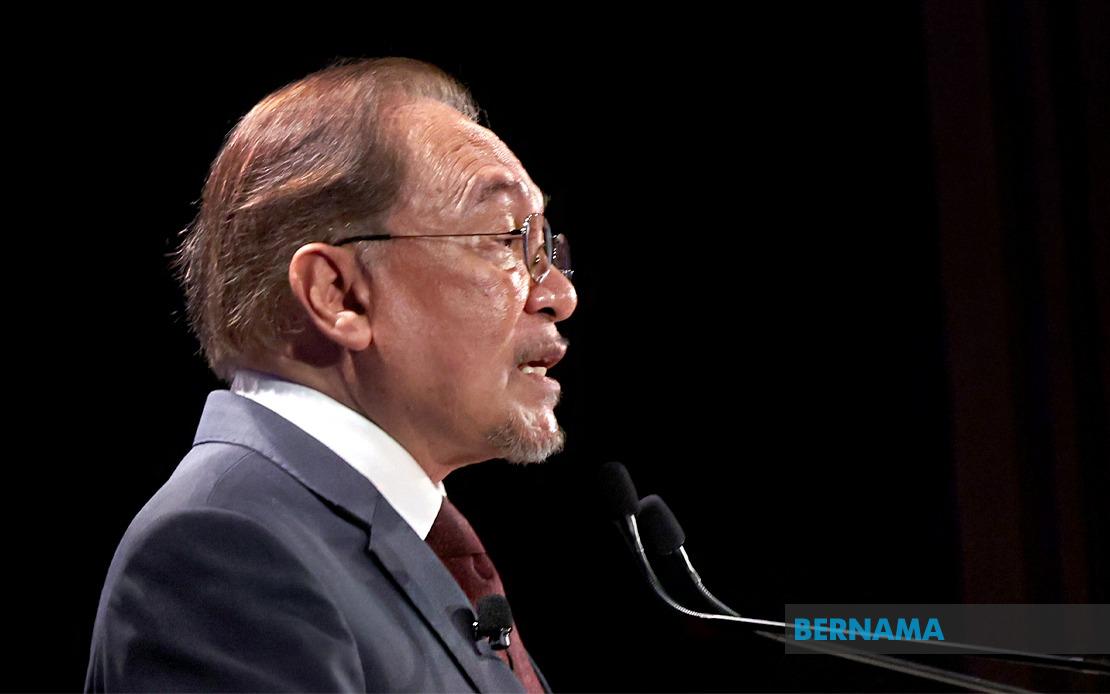
Malaysia has thrown its weight behind a newly brokered understanding between the United States and Iran, signalling Kuala Lumpur's commitment to regional stability even as tensions continue to simmer across the Middle East. Prime Minister Datuk Seri Anwar Ibrahim made the declaration during his keynote address at the 39th Asia-Pacific Roundtable, organised by the Institute of Strategic and International Studies (ISIS) Malaysia, highlighting the nation's active engagement with efforts to resolve one of the world's most volatile geopolitical standoffs.
The Malaysian government's measured endorsement reflects a careful diplomatic balancing act. While welcoming the memorandum of understanding, Anwar struck a cautionary note that underscores the precarious nature of current peace initiatives in the region. He emphasised that the agreement remains vulnerable to sabotage and reversal, a sobering reminder of how fragile Middle Eastern accords can prove given historical precedent and the multiplicity of actors with competing interests in the conflict.
Anwar specifically commended the instrumental roles played by Gulf states, Türkiye, Pakistan and other nations in brokering the understanding, recognising that successful mediation in this arena requires the collective commitment of regional and international stakeholders. This acknowledgment reflects Malaysia's understanding that sustainable peace cannot be imposed externally but must emerge through inclusive dialogue involving all affected parties and concerned neighbours.
A central pillar of Anwar's statement concerns the urgent necessity of maintaining strict compliance with ceasefire terms. Beyond the political symbolism of a signed agreement lies the harder work of implementation, where parties must demonstrate genuine commitment through daily adherence to agreed protocols. For Malaysia, a maritime nation deeply dependent on stable global shipping lanes, this requirement carries particular significance.
The reopening of the Strait of Hormuz to unimpeded international shipping represents perhaps the most immediately consequential outcome of the agreement. Before recent hostilities disrupted normal commerce, this waterway handled approximately one-fifth of global oil supply, making its continued closure economically damaging far beyond the immediate region. Malaysia, as a trading hub and energy-dependent economy, faces direct consequences from any prolonged disruption to this critical passage.
The Prime Minister's remarks placed substantial emphasis on the economic costs of prolonged conflict in the Middle East. He noted that food and energy prices have remained persistently elevated as countries scramble to secure alternative supply routes and stockpile essential commodities. This supply-chain disruption has cascading effects throughout Asia and beyond, impacting everything from manufacturing competitiveness to household budgets for ordinary citizens.
Beyond the dry language of economic statistics, Anwar deliberately drew attention to how these global market dynamics translate into concrete hardship for working families. Billions of dollars in resources that governments might otherwise allocate toward social welfare, education, healthcare and infrastructure development instead find themselves committed to paying inflated prices for fuel and food. This reallocation of public resources effectively represents a hidden tax on development aspirations across lower and middle-income nations.
Quatar's role as an intermediary in indirect talks between Washington and Tehran deserves particular attention. The Gulf state's announcement of positive progress in three days of negotiations concluded on Wednesday signals that backdoor diplomacy continues producing incremental gains even when direct engagement remains politically difficult. Doha's status as a neutral platform acceptable to both American and Iranian representatives demonstrates how smaller regional powers can punch above their weight in high-stakes mediation.
For Malaysia and other Southeast Asian nations, this moment represents both opportunity and necessity. Opportunity because stable Middle Eastern affairs create conditions for uninterrupted trade and reduced energy price volatility. Necessity because any major regional conflict inevitably draws in external powers with global reach, potentially widening the scope of instability. The Association of Southeast Asian Nations has long advocated for peaceful dispute resolution and non-interference in internal affairs; supporting international efforts toward de-escalation aligns these principles with practical national interest.
The Asia-Pacific Roundtable provided an appropriate forum for Malaysia to articulate these concerns. The gathering brings together policymakers, academics and strategic analysts from across the region to discuss transnational challenges. By raising Middle Eastern stability at this event, Anwar signalled that Asia views the outcome of US-Iran tensions as directly relevant to regional prosperity and security architecture.
Moving forward, Malaysia will likely maintain this measured diplomatic posture, neither aligning exclusively with any single power but instead advocating for the rule-based international order and peaceful dispute resolution mechanisms. The challenge lies in translating rhetorical support into concrete actions that encourage both the United States and Iran to deepen their commitments to the understanding, particularly during moments of tension that inevitably arise during implementation phases.
The success of this agreement ultimately hinges on whether both parties genuinely prioritise the benefits of normalisation over the temptations of renewed confrontation. Malaysia's voice, amplified through forums like the Asia-Pacific Roundtable and through multilateral bodies, contributes to the international pressure necessary to sustain momentum toward peace.

