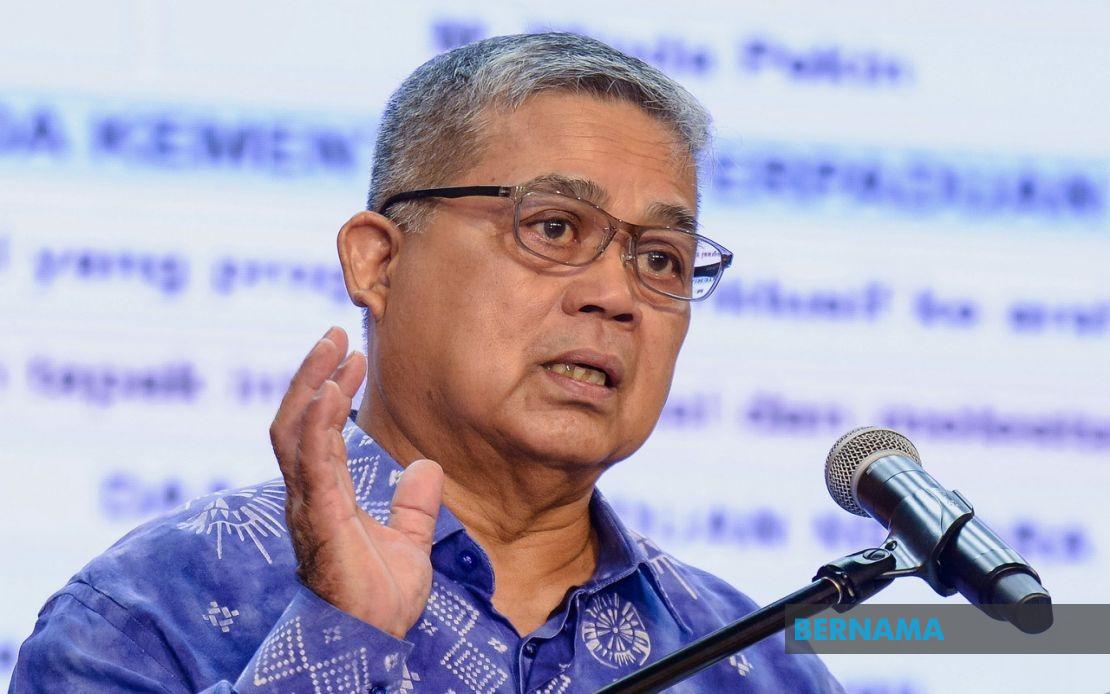
Malaysia's approach to resolving neighbourhood disputes and community conflicts is undergoing a significant expansion. The National Unity Ministry, led by Minister Datuk Aaron Ago Dagang, has announced an ambitious programme to develop 1,280 certified community mediators by the end of this decade. This strategic initiative represents a shift towards building grassroots capacity for peaceful conflict resolution, moving beyond traditional court-based approaches that can be time-consuming and costly for ordinary Malaysians dealing with everyday disagreements.
The mediation framework being promoted reflects a fundamental belief that many disputes, particularly those arising within communities, need not escalate through formal legal channels. By training dedicated mediators embedded within neighbourhoods and communities, the ministry seeks to create accessible pathways for residents to reach voluntary settlements through dialogue and mutual understanding. This decentralised approach recognises that not every conflict requires judicial intervention, and that preserving relationships through negotiated resolution often produces better long-term outcomes for both parties and the wider community.
Underpinning this expansion is the 13th Malaysia Plan, the government's mid-term economic and social framework that prioritises strengthening social unity through effective and sustainable conflict management mechanisms. The mediation initiative fits directly into this national priority, demonstrating how governance policies translate into tangible community services. By investing in mediator training and infrastructure, Malaysia is essentially building social capital at the grassroots level—creating institutions and skilled personnel designed to maintain neighbourhood cohesion during times of tension or disagreement.
The economic and practical benefits of community mediation are substantial. The ministry emphasises that mediation is faster and considerably more cost-effective than litigation, while simultaneously helping preserve relationships between disputing parties. For Malaysian households and small business operators, avoiding court proceedings means lower legal expenses, reduced time away from work, and avoiding the adversarial atmosphere that courtroom disputes can create. These services are provided entirely on a pro bono basis and at no cost to the public, removing financial barriers that might otherwise prevent lower-income groups from accessing professional dispute resolution.
To realise this vision, the government is committing significant infrastructure investment. The ministry plans to establish 12 new community mediation centres by 2027, strategically located across the country to maximise accessibility. These centres will be housed within existing community spaces including neighbourhood residents' associations, public housing developments, and unity activity centres. The planned locations span multiple states: Kota Kinabalu in Sabah, Kuala Lumpur, Pontian in Johor, Terengganu, Shah Alam in Selangor, Kulim in Kedah, Pahang, Kelantan, Labuan, Miri in Sarawak, Kamunting in Perak, and Jasin in Melaka. This geographic spread reflects an intention to serve both urban centres and more remote or underserved areas.
The selection of these locations indicates strategic thinking about where mediation services are most needed. Urban areas like Kuala Lumpur and Shah Alam, where higher population density and diverse community backgrounds can create friction points, receive dedicated facilities. Simultaneously, smaller towns and rural areas including Pontian, Machang, and Labuan are not overlooked, suggesting that the ministry recognises conflict management as a national rather than merely metropolitan challenge. This comprehensive approach could significantly impact how Malaysian communities address issues ranging from neighbour disputes and tenancy conflicts to small commercial disagreements.
The emphasis on collaboration with local authorities indicates that successful implementation will depend on building institutional partnerships. Local councils and municipal governments possess existing relationships with residents and understand local dynamics. By strengthening these partnerships, the ministry positions itself to create a networked system where mediation becomes a familiar and accessible option for conflict resolution at the neighbourhood level. This collaborative model is more sustainable than a purely top-down approach, as local authorities can help identify disputes early and direct parties towards mediation services.
For Malaysia's social fabric, the longer-term implications of this mediation expansion are noteworthy. A population increasingly trained in and comfortable with mediation develops greater capacity for peaceful disagreement and negotiated problem-solving. This cultural shift matters because it normalises the idea that disputes need not be winner-take-all affairs fought in courts, but rather opportunities for creative settlement where both parties retain dignity and relationships. For a multi-ethnic and multi-religious nation like Malaysia, where maintaining community harmony is a stated priority, such conflict management infrastructure represents an investment in preventing small grievances from metastasising into larger societal tensions.
The programme also addresses a practical gap in current services. While formal mediation exists, access for ordinary Malaysians—particularly those without legal knowledge or resources—has been limited. By embedding mediators and mediation centres within communities themselves, the ministry democratises access to professional dispute resolution. A resident facing a boundary dispute with a neighbour, a tenant disagreeing with a landlord, or community members in conflict over shared space will have a local, free, professionally-facilitated option to resolve matters before considering expensive legal action.
However, the success of this initiative depends critically on public awareness and mediator quality. Simply establishing centres and certifying mediators is insufficient if potential users remain unaware of these services or perceive them as less legitimate than court proceedings. The ministry will need sustained public education campaigns explaining the benefits of mediation and the credentials of certified mediators. Additionally, the certification programme itself must maintain rigorous standards to ensure that mediators can genuinely help parties reach fair and voluntary agreements, rather than potentially steering weak parties into unfavourable settlements.
The 1,280-mediator target by 2030 breaks down to roughly 128 mediators per year, a feasible but consistent commitment that requires ongoing training resources and institutional support. The parallel objective of establishing 12 centres by 2027 suggests initial emphasis on infrastructure, with the mediator development accelerating over the subsequent three years. This sequencing makes sense: facilities and basic capacity-building first, then scaling up the trained workforce as demand becomes established.
Regionally, Malaysia's move towards institutionalised community mediation positions it as a potential leader in alternative dispute resolution within Southeast Asia. Neighbouring countries facing similar challenges of rapid urbanisation and community conflict could look to Malaysia's model as a replicable framework. The emphasis on affordable, accessible, and professional mediation services addresses a gap that exists across much of the region, where formal court systems are often overburdened and many disputes lack practical resolution mechanisms.
Ultimately, the National Unity Ministry's mediation expansion represents a strategic wager that stronger community conflict management will contribute significantly to Malaysia's broader goals of social cohesion and stability. By embedding the capacity for peaceful dispute resolution at the grassroots level, the government is essentially building infrastructure for harmony—creating frameworks and training people to handle disagreements before they escalate into larger social problems.

