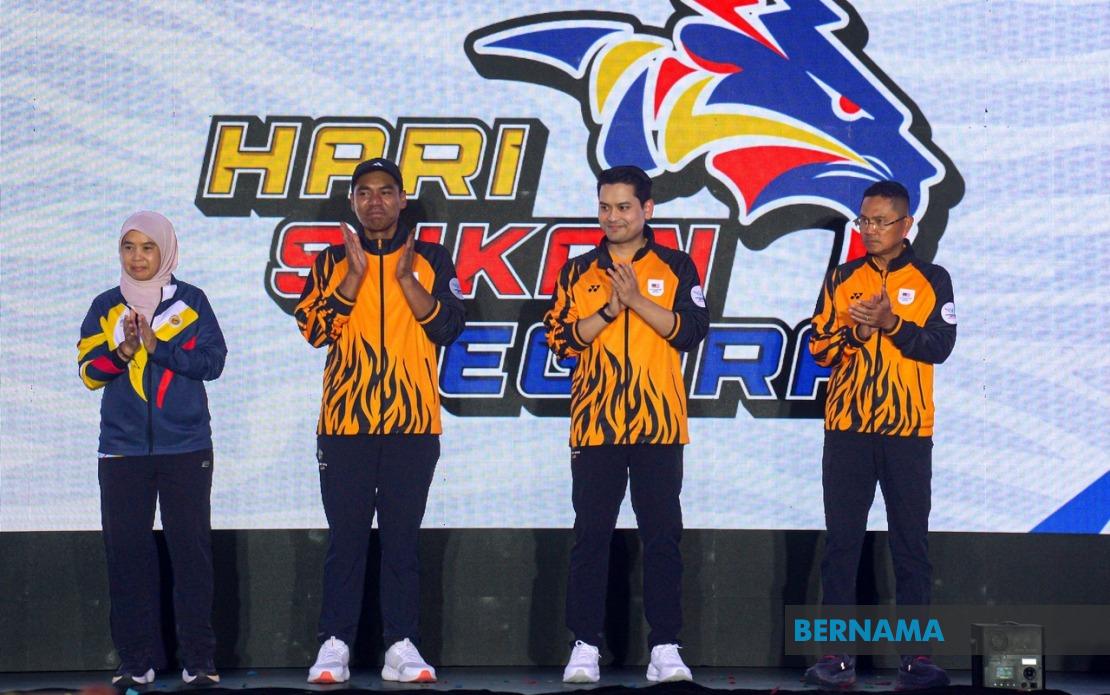
The Ministry of Youth and Sports has unveiled an ambitious vision for the 2026 National Sports Day (HSN), scheduling the three-day celebration from October 9 to 11 with expectations to mobilise more than 5.3 million Malaysians across an array of sports and wellness initiatives spanning districts, states and national platforms. The expanded participation targets reflect the government's determination to position sports as a cornerstone of public health and community engagement in an increasingly digital landscape.
Under the leadership of Youth and Sports Minister Dr Mohammed Taufiq Johari, this year's iteration introduces a distinct visual identity alongside the thematic anchor of "Digital Technology and Artificial Intelligence (AI)". Rather than treating these technological dimensions as peripheral, the ministry intends to weave them throughout sports development strategies, fundamentally reshaping how Malaysians perceive the intersection of modern innovation and athletic pursuits. This positioning demonstrates a strategic pivot toward meeting citizens where they already engage—in digital spaces and virtual environments.
The pre-launch ceremony itself exemplified this technological integration, incorporating extensive virtual reality components to signal the ministry's commitment to digitalisation within the sports sector. By demonstrating VR applications in a sports context, organisers aim to project the impression that Malaysia's sports infrastructure remains contemporary and forward-thinking. This technological showcase extends beyond mere novelty; it serves as a proof-of-concept for how emerging tools can enhance athletic participation and sports development at scale.
A particularly noteworthy aspect of the ministry's messaging centres on e-sports and its relationship to physical wellness. Rather than dismissing competitive gaming as a sedentary pursuit disconnected from traditional sports, Dr Taufiq articulated a vision where e-sports functions as a gateway to broader fitness engagement. The underlying philosophy suggests that digital natives and younger demographics often disconnected from conventional sports infrastructure might discover physical activity through channels already resonating with their interests, thereby expanding the constituency of active Malaysians across generational lines.
Prime Minister Datuk Seri Anwar Ibrahim will preside over the national-level launch ceremony on October 10 at the National Stadium grounds in Bukit Jalil, lending considerable political weight and visibility to the initiative. This prominent positioning underscores government investment in sports as a policy priority and signals that athletic development commands attention at the highest echelons of Malaysia's leadership. The symbolic significance of hosting the launch at a world-class sporting venue further reinforces the connection between national aspirations and grassroots participation.
The 2026 National Sports Day functions strategically as a preparatory platform for Malaysia's hosting of the 2027 SEA Games, a major regional sporting event carrying substantial prestige and organisational complexity. By orchestrating HSN 2026 as a precursor celebration, the ministry leverages the established sports day framework to cultivate public enthusiasm and ownership of the upcoming Games. This integrated approach allows planners to test logistics, assess participation patterns, and generate grassroots momentum well in advance of the 2027 tournament.
Collaboration with the Malaysia SEA Games Organising Committee (MASOC) extends beyond ceremonial gestures, with specific plans for a SEA Games Roadshow designed to penetrate communities nationwide and build awareness among prospective volunteers, spectators and supporters. This decentralised engagement strategy recognises that Games consciousness must permeate beyond Kuala Lumpur and major urban centres to succeed in mobilising the broader Malaysian population. The roadshow model allows direct interaction between Games organisers and citizens across diverse geographic and demographic segments.
The programming architecture for HSN 2026 incorporates multiple streams addressing different constituencies and interests. The MADANI Fun Run and MADANI Fun Walk represent entry points for citizens with varying fitness levels and commitments, removing barriers to participation that might otherwise exclude older adults, those recovering from injury or individuals new to organised sports. Simultaneously, the Active Malaysia and Sports Industry segments signal the ministry's intent to engage professional athletes, sports entrepreneurs and industry stakeholders, positioning sports as an economic and employment vector alongside its health and social dimensions.
Integration of Rakan Muda Lifestyle elements within HSN programming reflects deliberate outreach toward younger Malaysians, acknowledging that youth engagement requires messaging and activities calibrated to youthful preferences and communication channels. By centralising young people within the sports day framework rather than treating them as secondary audiences, the ministry signals recognition that sustained sports participation and lifelong athletic habits germinate during formative years. This youth-centric approach carries implications for long-term national fitness levels and chronic disease prevention.
From a regional perspective, Malaysia's emphasis on technology-enabled sports development positions the nation as a Southeast Asian leader in modernising athletic participation and governance. As neighbouring countries observe HSN 2026 outcomes and the subsequent 2027 SEA Games execution, Malaysia's innovations in digital integration could influence sports policy trajectories across ASEAN. The credibility gained through successful implementation enhances Malaysia's soft power within the region and potentially establishes templates for sports engagement that other nations adopt.
The targeting of 5.3 million participants represents a significant mobilisation goal reflecting approximately 16 percent of Malaysia's population. Achieving this threshold would constitute tangible evidence of successful sports promotion and community engagement, providing measurable validation for the ministry's strategic priorities. The ambitious numerals reflect confidence in both the appeal of the programming and the capacity of existing sports infrastructure to accommodate expanded participation across the nation's diverse geographic and socioeconomic contexts.
Underlying the HSN 2026 initiative lies a conviction that sports transcends entertainment and competition to function as a vehicle for public health enhancement, social cohesion and national identity formation. By positioning technology and artificial intelligence as enablers rather than threats to authentic athletic experience, the ministry navigates contemporary concerns about digital overreliance while capitalising on technological capabilities to democratise sports access and participation. The success of this balancing act will establish precedents for how Malaysian sports development responds to globalisation and technological disruption in coming years.

