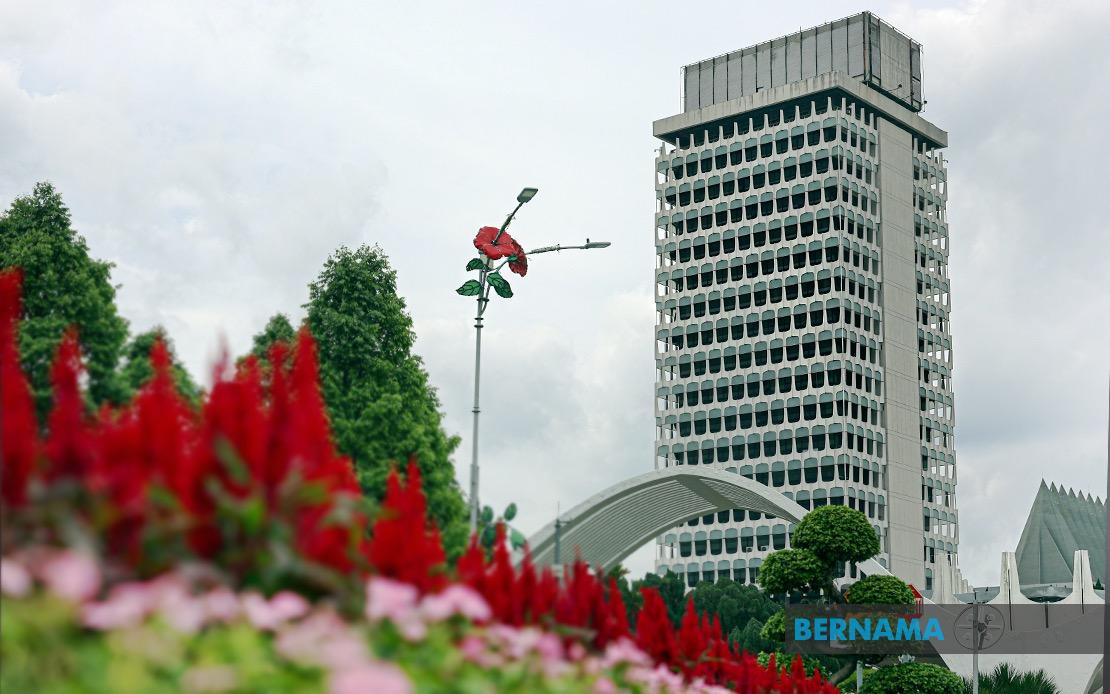
The Dewan Rakyat convened on July 14 for a sitting that placed two interconnected regional challenges at the forefront of parliamentary scrutiny: the emerging Malaysia-Thailand Border Economic Zone and the escalating crisis affecting shipping through the Strait of Hormuz. Both issues represent critical considerations for Malaysia's economic trajectory and geopolitical positioning in Southeast Asia, with lawmakers preparing to interrogate government strategy on resource distribution and risk mitigation.
Datuk Adnan Abu Hassan, representing Kuala Pilah under the Barisan Nasional banner, directed his questioning toward the Prime Minister regarding the anticipated economic dividend from the Malaysia-Thailand BEZ development. His inquiry extended beyond headline figures, focusing specifically on how Malaysia's government intends to channel these gains toward microenterprises and residents inhabiting the border regions themselves. This line of questioning reflects broader concerns about whether large-scale infrastructure initiatives create tangible opportunities for ordinary citizens or concentrate wealth among connected actors. The mechanisms for wealth distribution remain unclear as the project progresses, making parliamentary scrutiny essential for transparency.
The border zone initiative represents a significant attempt to leverage proximity and complementary economic structures between Malaysia and Thailand. Yet implementation challenges loom large. Border communities have historically felt neglected by central development strategies, with infrastructure investment often flowing toward major urban corridors rather than peripheral areas. Parliamentarians recognising this pattern sought assurances that small traders, manufacturers, and service providers in districts like those bordering Thailand would gain preferential market access or capacity-building support. Without explicit mechanisms ensuring inclusive participation, the BEZ risks reproducing familiar patterns of unequal development.
Meanwhile, Datuk Rosol Wahid from Hulu Terengganu representing Perikatan Nasional raised questions about government assessment of the Strait of Hormuz crisis's ramifications. This waterway constitutes one of the world's most strategically vital maritime passages, channelling approximately one-third of global seaborne traded oil. Prolonged instability threatens shipping lanes that Malaysian vessels and cargo transit regularly. Beyond maritime commerce, regional tension influences insurance premiums, shipping schedules, and energy costs—factors that ripple through Malaysia's manufacturing and transport sectors.
The Strait of Hormuz's geopolitical volatility stems from broader Middle Eastern tensions, particularly between Iran and Western powers, alongside proxy conflicts affecting regional stability. For Malaysia, a nation dependent on reliable maritime corridors and stable energy supplies, disruption carries immediate economic consequences. Rising shipping costs increase manufacturing input expenses, potentially dampening export competitiveness. Energy price volatility affects domestic utility costs and industrial production. Yet Malaysian government communication regarding these risks has remained limited, leaving businesses and citizens uncertain about contingency planning. Rosol Wahid's questioning sought to extract government acknowledgment of these vulnerabilities and details about mitigation strategies under development.
Additionally, Datuk Yusuf Abd Wahab, representing Tanjong Manis through the GPS coalition, raised highway safety concerns with the Transport Minister. His question followed an illegal racing incident in Simpang Renggam, Johor, during June, highlighting the government's efforts to suppress dangerous driving behaviours nationwide. This line of inquiry, whilst distinct from the zone and maritime questions, reflects parliamentary attention to public safety alongside economic policy, demonstrating the breadth of contemporary concerns legislators address simultaneously.
Following the question-and-answer segment, parliamentary business proceeded to the first reading of two Bills. The Statistics Bill 2026, to be tabled by the Economy Minister, modernises Malaysia's statistical framework for contemporary data collection requirements. The National Trust Fund Bill 2026, introduced by the Finance Minister, establishes institutional mechanisms for fund management and deployment. Both legislative initiatives form part of broader governance modernisation efforts.
Particularly significant was the scheduled tabling by Datuk Seri Azalina Othman Said, Minister in the Prime Minister's Department overseeing Law and Institutional Reform, of the Parliamentary Special Select Committee's report on constitutional amendments separating the Attorney General and Public Prosecutor roles. This reform, refined through seven meetings and incorporating seven key enhancements, addresses longstanding concerns about institutional independence and accountability. Azalina's statement emphasised the committee's focus on strengthening the Public Prosecutor's independence, integrity, and accountability mechanisms—reforms considered essential for Malaysian institutional credibility.
The separation of prosecutorial and legal advisory functions represents a significant constitutional development. Currently, the Attorney General simultaneously serves as chief legal advisor to government and oversees prosecution, creating perceived conflicts of interest. International best practices typically separate these functions to insulate prosecutorial decisions from political influence. Malaysia's reform aligns the nation with global governance standards whilst domestically strengthening public confidence in justice administration. These amendments carry particular significance given recent years' attention to prosecutorial impartiality and political neutrality of institutional actors.
The parliamentary sitting, extending across 16 days through late June until early July, accommodated multiple substantive topics reflecting Malaysia's complex contemporary governance landscape. Economic zone development partnerships with immediate neighbours, maritime security and energy stability, domestic safety regulations, statistical modernisation, financial governance, and institutional reforms collectively demonstrate the comprehensive policy agenda occupying legislative attention. Each dimension interconnects with others, as border development requires stable logistics corridors, which depend partly on maritime security, whilst institutional credibility underpins confidence in policy implementation.
For Malaysian constituencies and businesses, these parliamentary debates signal government engagement with pressing challenges. However, the translation from parliamentary discussion to effective policy implementation determines real-world impact. Border communities await tangible evidence that BEZ development mechanisms genuinely facilitate their participation. Shipping companies and manufacturers seek clarity on government contingency planning for regional maritime disruptions. Justice sector observers monitor whether prosecutorial reforms receive adequate implementation resources and institutional cooperation. Parliamentary scrutiny, though essential, constitutes merely the initial stage of transforming legislative intent into sustainable outcomes benefiting Malaysian society comprehensively.

