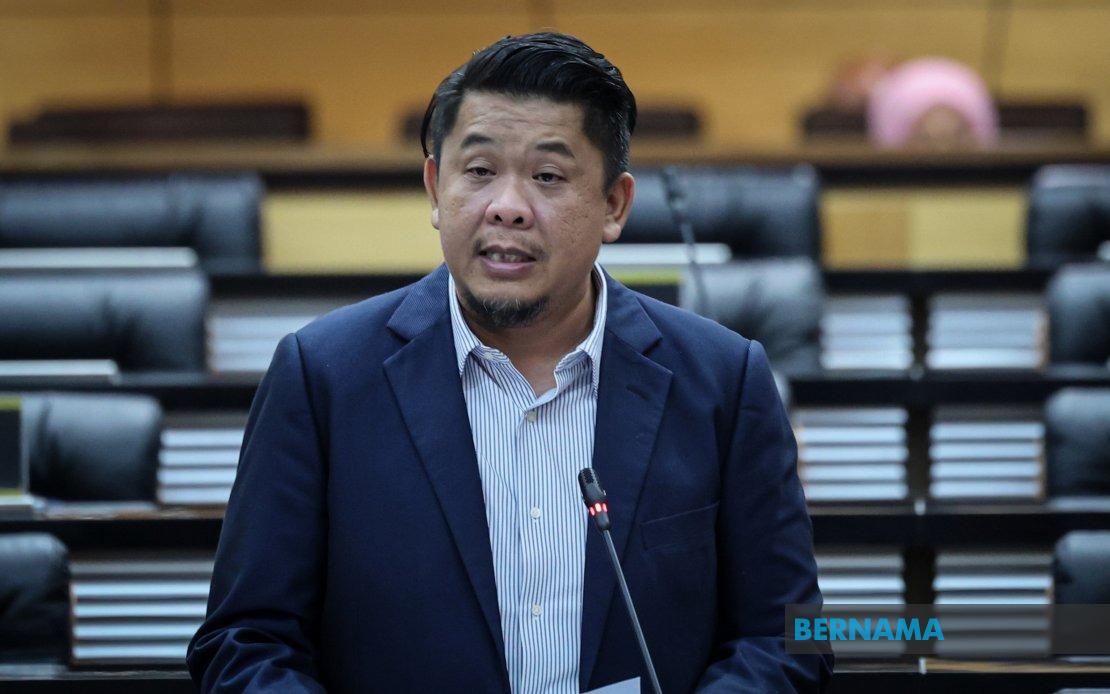
Malaysia has stepped forward as an official candidate to reclaim its place on the United Nations Security Council as a non-permanent member during the 2036-2037 term, marking a significant diplomatic gesture at a moment when global security architecture faces mounting pressure for reform. The candidacy submission, announced through Deputy Foreign Minister Datuk Lukanisman Awang Sauni, reflects Kuala Lumpur's determination to shape international discourse on peace and security whilst pushing for structural changes to a council many developing nations view as antiquated and undemocratic.
The timing of Malaysia's submission carries particular weight given the escalating tensions across multiple regions and the perceived paralysis within the Security Council itself. In recent years, permanent members have repeatedly deployed veto powers to block resolutions addressing grave humanitarian concerns, most notably during crises in the Middle East. By positioning itself as a candidate now, Malaysia signals its readiness to challenge what it characterises as an unjust power imbalance that undermines the legitimacy and effectiveness of the world's primary international security body.
Central to Malaysia's platform is an unambiguous call for the abolition of veto powers exercised by the five permanent members—the United States, Russia, China, France and the United Kingdom. Deputy Foreign Minister Lukanisman articulated a position that stops short of demanding total elimination, suggesting instead that veto use should be prohibited when addressing egregious violations of international law. This carefully calibrated stance reflects Malaysia's recognition that achieving complete veto abolition remains politically unrealistic whilst offering a pragmatic alternative that would constrain abuse of the mechanism.
The deputy minister specifically referenced the Gaza conflict as an illustration of how permanent members have leveraged their veto authority to shield allies from Security Council action, even when accusations of war crimes, genocide, and intentional destruction of civilian infrastructure have been raised. This reference demonstrates Malaysia's willingness to name and shame specific situations where the veto has allegedly impeded justice and accountability—a bold rhetorical move that underscores Kuala Lumpur's commitment to principle over diplomatic niceties.
Foreign Minister Datuk Seri Mohamad Hasan will use the platform of the 81st UN General Assembly's formal debate scheduled for September in New York to reinforce Malaysia's position on these critical matters. This represents a high-profile opportunity to amplify the candidacy campaign whilst advancing Malaysia's broader foreign policy objectives concerning global governance reform. The timing of this statement—delivered during the opening sessions when media attention peaks and key world leaders convene—suggests Malaysia intends to make its campaign visible to influential nations whose support will prove essential during the eventual Security Council election process.
The question that prompted this parliamentary disclosure, raised by Datuk Seri Sh Mohmed Puzi Sh Ali, reflects growing domestic political interest in Malaysia's multilateral engagement strategies. The emphasis on veto power disproportionality resonates with constituencies within Malaysia that view existing international structures as perpetuating power asymmetries favouring wealthy Western nations. By articulating this critique within parliament and subsequently on the global stage, the government positions itself as a champion for developing world perspectives within international institutions.
Malaysia's previous tenure on the Security Council offers historical context for understanding the significance of this candidacy. The country has served as a non-permanent member twice before, bringing perspectives shaped by its experience navigating regional security challenges, peacekeeping operations, and North-South development disparities. A return to the council would provide Malaysia with platform amplification for Southeast Asian interests and potential influence over resolutions affecting the broader Indo-Pacific region, where geopolitical competition is intensifying.
The candidacy announcement arrives amid broader conversations about Security Council reform that have gained momentum in recent years. Proposals range from expanding permanent membership to include nations from Africa, Asia and Latin America, to limiting veto authority under specific circumstances. Malaysia's emphasis on circumscribing rather than eliminating the veto suggests a negotiating position that acknowledges political realities whilst maintaining principled advocacy for structural change.
For Malaysian foreign policy, the candidacy reflects continuity in prioritising global peace and security as central strategic concerns. This positioning aligns with Malaysia's historical role as a non-aligned movement participant and its ongoing efforts to maintain equidistant relationships with major powers. By campaigning for the Security Council seat, Malaysia simultaneously builds relationships with nations likely to vote in its favour whilst raising visibility for issues—particularly those affecting Muslim-majority regions and developing countries—that might otherwise receive less international attention.
The period between now and 2036 provides Malaysia with a decade-long campaign window to build diplomatic support amongst UN member states. Securing a non-permanent seat typically requires obtaining the support of at least nine of the fifteen council members, with permanent members exercising substantive influence over candidacies from their respective regions. Malaysia's diplomatic corps will need to engage intensively with neighbour nations, fellow Non-Aligned Movement participants, and sympathetic permanent members to consolidate backing.
Moreover, Malaysia's candidacy can be understood as part of a broader Southeast Asian strategy to enhance the region's voice within global governance structures. As the region grapples with challenges ranging from maritime security to pandemic preparedness, having representation on the Security Council during 2036-2037 would allow Malaysia to advance regional perspectives on matters potentially brought before the council. This represents an investment in soft power and diplomatic influence that extends well beyond the immediate two-year term itself.
The emphasis on Security Council reform within Malaysia's candidacy platform also serves a domestic political function. By publicly championing the rights of developing nations and challenging perceived injustices within international institutions, the government appeals to constituencies concerned about Malaysian agency in a world shaped by great power competition. This framing positions Malaysia not as a passive participant in international affairs but as an active advocate for systemic change aligned with the interests of the Global South.

