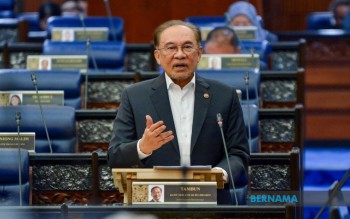
The Malaysian government has committed to examining the feasibility and implementation strategies for establishing a national petroleum reserve stock, according to Prime Minister Datuk Seri Anwar Ibrahim. The decision emerged from the National Energy Council Meeting No. 1 2026, which the Prime Minister chaired, reflecting growing concerns about safeguarding the nation's energy supplies in an increasingly uncertain geopolitical landscape. The reserve initiative forms part of a broader policy framework designed to enhance Malaysia's overall energy resilience while maintaining progress on the country's energy transition agenda outlined in the National Energy Transition Roadmap.
The establishment of a strategic petroleum reserve represents a significant policy shift for Malaysia, responding to mounting global supply chain disruptions that have exposed vulnerabilities in energy security across the region. By creating a buffer of stored petroleum products, Malaysia would join other nations in taking preventative measures against sudden market shocks or supply interruptions caused by geopolitical conflicts, natural disasters, or other unforeseen events. The timing of this initiative reflects broader regional concerns about energy independence, particularly as Southeast Asian economies navigate an increasingly volatile international environment where energy access directly impacts economic stability and growth prospects.
Malaysia's renewable energy capacity has demonstrated substantial growth, reaching 31 percent of installed capacity by December of the previous year. This expansion represents a deliberate strategic pivot away from coal dependence, aligning with both environmental commitments and long-term energy diversification goals. The government's renewable energy initiatives have accelerated through structured programmes designed to engage the private sector, ensuring that Malaysia's transition does not rely solely on state-backed projects but leverages corporate investment and innovation across multiple energy sources.
The Corporate Renewable Energy Supply Scheme, which has recently incorporated Battery Energy Storage System technology, exemplifies how Malaysia is addressing one of renewable energy's fundamental challenges: intermittency. Battery storage systems enable utilities and corporations to store excess renewable power during peak generation periods and deploy it during high-demand hours, creating more reliable and flexible energy networks. This technological integration strengthens renewable energy's viability as a baseload power source, moving beyond the limitations that have historically constrained widespread adoption of solar and wind power in tropical and monsoon-prone regions.
Transportation electrification constitutes another pillar of Malaysia's energy transition strategy, with the government accelerating the rollout of electric buses and expanding rail network electrification. Currently, 250 electric buses operate across Malaysian cities, with coverage extending to 800 kilometres of rail networks nationwide. These initiatives reduce petroleum consumption in the transport sector while simultaneously improving air quality in urban areas and reducing greenhouse gas emissions. The simultaneous promotion of B15 biodiesel fuels through the Petronas biofuel hub development in Pengerang, Johor, provides an intermediate solution for sectors where full electrification remains technically or economically challenging in the near term.
Pengerang's designation as a biofuel production hub carries strategic significance beyond fuel production. The facility positions Malaysia as a potential regional biofuel supplier, creating opportunities for feedstock development from palm-based derivatives and other agricultural sources. This approach leverages Malaysia's existing agricultural infrastructure and expertise while adding value to biomass resources that might otherwise face environmental scrutiny. The biofuel development strategy thus represents a pragmatic approach to energy transition that acknowledges Malaysia's resource endowments and geographic advantages.
Hydrogen energy development emerges as a forward-looking component of Malaysia's energy portfolio, with Phase 1 of a hydrogen hub for the Autonomous Rapid Transit system in Sarawak scheduled for completion by year-end. Hydrogen technology remains nascent in Southeast Asia, but Malaysia's early adoption positions it as a potential regional leader in this emerging sector. The ART hydrogen hub project serves dual purposes: demonstrating hydrogen's viability in public transportation while building local expertise and supply chain capacity for expanded deployment across other industries and sectors.
The interconnection between energy transition and energy security forms the conceptual foundation for the government's multifaceted approach. Rather than viewing renewable energy development and petroleum reserve creation as contradictory objectives, Malaysian policy treats them as complementary strategies addressing distinct challenges. While renewable energy and alternative fuels reduce long-term petroleum dependency and environmental impacts, a strategic petroleum reserve provides short-term security against disruptions to global energy markets and supply chains that Malaysia cannot unilaterally control or prevent.
Geopolitical uncertainties referenced by Prime Minister Anwar include tensions in energy-producing regions, international trade disputes affecting maritime shipping routes through Southeast Asia, and broader instability affecting global energy markets. For Malaysia, a net energy exporter in some sectors but dependent on imports for specific petroleum products and refined fuels, establishing strategic reserves reflects recognition that energy independence remains incomplete despite domestic hydrocarbon production. The strategy acknowledges that Malaysia's prosperity depends not only on its own energy resources but on secure access to international energy markets and reliable supply chains.
Implementing a national petroleum reserve requires substantial capital investment, storage infrastructure development, and coordination across government agencies responsible for strategic planning, energy policy, and fiscal management. The scope of such a reserve—measured in days or weeks of national consumption—will determine both its cost and protective value. International experience suggests that reserves typically contain between 30 and 90 days of national petroleum consumption, though the specific level appropriate for Malaysia depends on vulnerability assessments and budget constraints. The government's commitment to studying this matter indicates serious intent rather than definitive commitment, suggesting that detailed technical and financial analyses will inform the eventual decision.
For Malaysia's business community and energy-dependent sectors, including petrochemicals, transportation, power generation, and manufacturing, the prospect of a strategic petroleum reserve provides insurance against supply disruptions that could halt operations or inflate input costs unpredictably. Enhanced energy security ultimately supports economic competitiveness by reducing operational risk and improving planning certainty for energy-intensive industries. Regional competitors also pursuing energy security initiatives may benefit from sharing best practices and technical expertise, though such cooperation requires careful navigation of national interests and commercial considerations.

