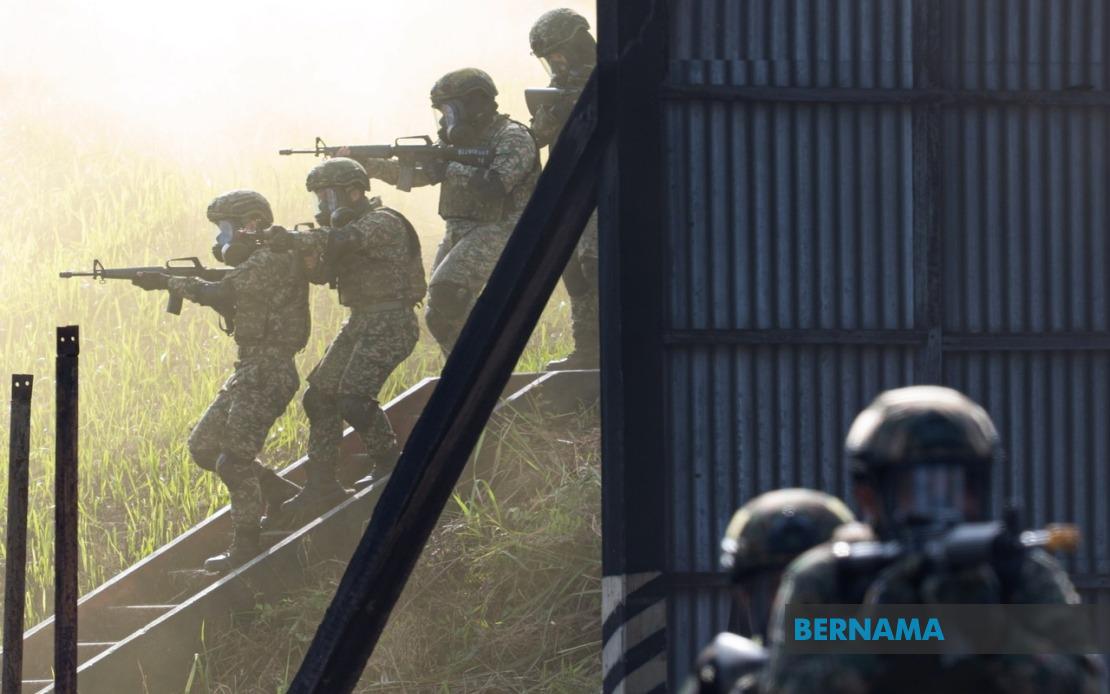
Prime Minister Datuk Seri Anwar Ibrahim has pledged that the government will pursue a substantial boost to defence spending in the 2027 budget, underscoring the administration's determination to maintain the Malaysian Armed Forces at peak operational capacity while elevating standards for military personnel. Speaking in Melaka, Anwar, who simultaneously serves as Finance Minister, stressed that augmented investment in defence represents an essential measure for protecting national security and preserving the country's most prized asset: enduring peace and stability.
The Prime Minister articulated a strategic vision for defence preparedness that transcends reactive crisis management. He emphasised that military readiness cannot be allowed to deteriorate during peacetime or built hastily only when threats materialise. The timing of conflict, Anwar observed, remains unpredictable and beyond Malaysia's control, making sustained investment in defence infrastructure and capability a non-negotiable component of governance. This forward-thinking approach reflects growing international tensions affecting the Indo-Pacific region, where Malaysia's strategic location and maritime interests demand robust military capacity.
Beyond hardware and weaponry, Anwar signalled that the forthcoming budget will prioritise the wellbeing of service personnel and their families. The proposed allocation encompasses comprehensive improvements to military accommodation, construction of a modern medical facility for armed forces personnel, and sustained maintenance of essential infrastructure including water and sanitation systems across installations. Such investments address longstanding grievances within the military community regarding living standards and healthcare accessibility, potentially improving recruitment and retention rates amid global competition for skilled personnel.
Anwar underscored his commitment to procurement integrity, calling for military acquisitions to proceed through systematic, transparent channels that eliminate unnecessary middlemen and guard against inflated commissions to external agents. This statement carries significance in Malaysia's defence procurement landscape, where historical controversies surrounding arms purchases have drawn public scrutiny and parliamentary questioning. The emphasis on transparency suggests the government recognises reputational damage from opaque defence deals and intends to reshape institutional practices.
The government's track record provides a foundation for assessing these pledges. Over the preceding three-year period, the Defence Ministry's budget had expanded by more than 35 per cent under the MADANI administration, a considerable increase that Anwar acknowledged remains insufficiently publicised or appreciated. Despite this expansion, the Prime Minister recognised that public perception of defence investment often focuses on equipment malfunctions or procurement controversies rather than cumulative improvements. This communication gap between government action and public understanding presents a challenge that heightened transparency might address.
Macroeconomic conditions have created space for elevated defence expenditure, according to Anwar's assessment. He attributed this budgetary flexibility to measurable economic improvement, particularly strengthening of the Malaysian ringgit against major currencies, expanded foreign direct investment inflows, and inflation remaining within manageable bounds. These indicators suggest that unlike previous periods of fiscal constraint, Malaysia's economic fundamentals currently permit increased allocations across multiple portfolios without necessarily requiring austerity measures elsewhere or accelerating debt accumulation.
The announcement carries regional implications for Southeast Asia's defence posture during a period of elevated geopolitical tension. Malaysia's enhanced military spending reflects broader regional trends, including defence budget increases across Association of Southeast Asian Nations member states responding to concerns about maritime security, territorial disputes, and great-power competition. An adequately equipped Malaysian Armed Forces contributes to regional stability and the credibility of mechanisms designed to manage disagreements peacefully.
At the ceremony in Melaka, Anwar distributed immediate support to military-connected organisations, providing RM147,000 to the Armed Forces Family Welfare Association and allocating RM1 million for mosque and prayer hall maintenance at four military installations including Terendak, Sungai Udang, Masjid Tanah and Bukit Beruang. These disbursements, while modest compared to overall defence budgets, demonstrate attention to spiritual and social welfare dimensions of military life.
The 2027 budget will be formally tabled before the Dewan Rakyat on October 9, providing parliament and the public an opportunity to scrutinise detailed defence spending proposals and related allocations. This parliamentary process offers transparency advocates and fiscal monitors a platform to evaluate whether enhanced defence investment aligns with stated priorities around equipment modernisation, personnel welfare, and procurement reform. The detailed budget documents will reveal specific equipment acquisitions, infrastructure projects, and personnel initiatives that translate broad commitments into concrete programmes.

