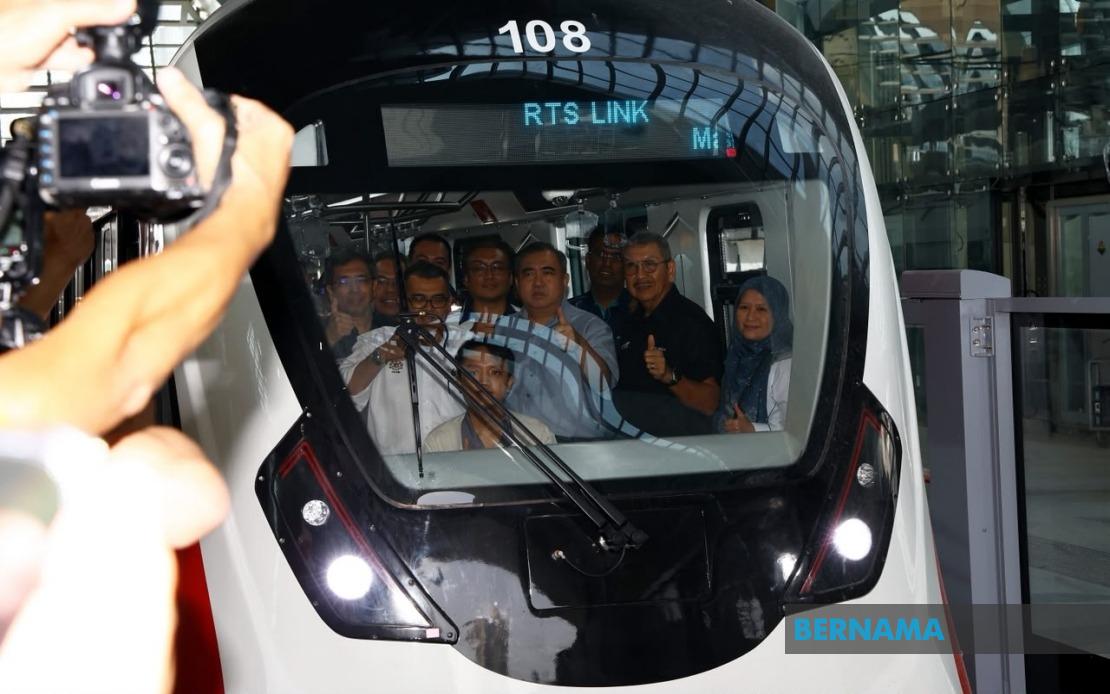
Malaysia's government has given the green light to a RM60 million infrastructure project aimed at seamlessly integrating the upcoming Bukit Chagar RTS Link Station with the existing KTMB Komuter rail network. Transport Minister Anthony Loke announced the initiative during a site visit to the Johor Bahru facility, describing it as a crucial step toward transforming the border region into a genuinely multimodal transport hub. The bridge will fundamentally reshape how commuters navigate the area by allowing direct pedestrian access from Komuter services directly into the RTS Link station, eliminating what has previously been an inconvenient detour through JB Sentral.
The significance of this connection extends beyond mere convenience. The RTS Link, which is scheduled to commence operations on January 1 next year, represents one of Southeast Asia's most strategically important transport corridors, physically linking Johor Bahru with Singapore's Woodlands North. Expected to handle up to 10,000 passengers per hour in each direction, the facility will serve as a crucial gateway for cross-border trade, tourism, and daily commuting. By establishing direct connections with existing Malaysian rail infrastructure, the government is signalling a commitment to ensuring that the RTS Link functions not as an isolated facility but as an integral node within the broader regional transport ecosystem.
According to Loke, the bridge project will be completed within approximately twelve months, a relatively aggressive timeline that reflects the government's determination to have all systems operational when the RTS Link officially opens. The Ministry of Economy has already approved the funding allocation, with the Ministry of Transport assuming responsibility for project execution. This structural arrangement demonstrates the coordinated approach being taken across government agencies to ensure the project's timely delivery.
The bridge represents just one component of a broader infrastructure push to manage anticipated passenger flows. The government is simultaneously rolling out Stage Bus Service Transformation 2.0, which will introduce at least 200 additional buses providing services from residential neighbourhoods throughout Johor Bahru to Bukit Chagar. These new routes have been strategically designed to coincide with the RTS Link's launch, ensuring that the station will have adequate feeder services to distribute passengers throughout the greater metropolitan area. The bus operator agreement is currently being finalised, with formal approval expected from the Ministry of Finance.
The integrated approach to transport planning visible in these announcements marks a departure from more fragmented infrastructure development patterns common in the region. Rather than treating the RTS Link as a standalone project, Malaysian authorities are architecting a comprehensive transport ecosystem where the new railway, existing Komuter services, expanded bus networks, e-hailing platforms, and JB Sentral itself function as interconnected components of a single system. This represents sophisticated transport planning that acknowledges modern commuters' expectations for seamless, multimodal journeys.
From a Malaysian perspective, the significance of this investment extends beyond Johor Bahru. The RTS Link functions as a critical piece of regional connectivity infrastructure, facilitating trade flows between Malaysia and Singapore while simultaneously opening employment and commercial opportunities for Malaysian workers and businesses. Efficient transport integration at Bukit Chagar directly impacts Malaysia's competitiveness as a cross-border hub and its capacity to capture value from Singapore's economic dynamism.
Construction activities at the Bukit Chagar site have already advanced substantially. The physical building, the Customs, Immigration and Quarantine complex, and the RTS Link station structure itself have all been completed. The project has now entered its critical testing and commissioning phase, which encompasses comprehensive system integration testing, fault-free operations verification, and trial runs designed to validate that all technical systems function reliably before public operations commence. This deliberate approach to validation, though extending project timelines, should theoretically minimise disruptions and safety issues once services begin.
The RM60 million bridge investment should be understood within the context of Malaysia's broader transport modernisation agenda. As the country grapples with urbanisation pressures and cross-border mobility demands, integration-focused infrastructure represents a particularly efficient use of public resources. A single connection point that facilitates smooth passenger transfers between multiple transport modes reduces congestion, improves air quality through modal shift incentives, and enhances the overall competitiveness of the region's transport system compared to alternative routing options.
For commuters and businesses in the Johor Bahru-Singapore corridor, these developments promise tangible improvements in journey experience and reliability. The elimination of forced detours through JB Sentral reduces travel times, particularly valuable for time-sensitive business travellers and daily commuters. Enhanced bus connectivity ensures that the benefits of the RTS Link extend beyond those with direct access to Komuter stations, spreading development benefits across the metropolitan area.
Looking ahead to the January 2025 launch, these preparatory investments underscore the government's recognition that infrastructure project success depends on integration, not isolated construction. The bridge, the expanded bus network, and the testing protocols collectively represent an understanding that modern transport systems function as interconnected networks rather than discrete facilities. For Malaysia and the broader Southeast Asian region, the Bukit Chagar hub's successful integration will provide a template for how cross-border transport infrastructure can be deployed to mutual advantage.

