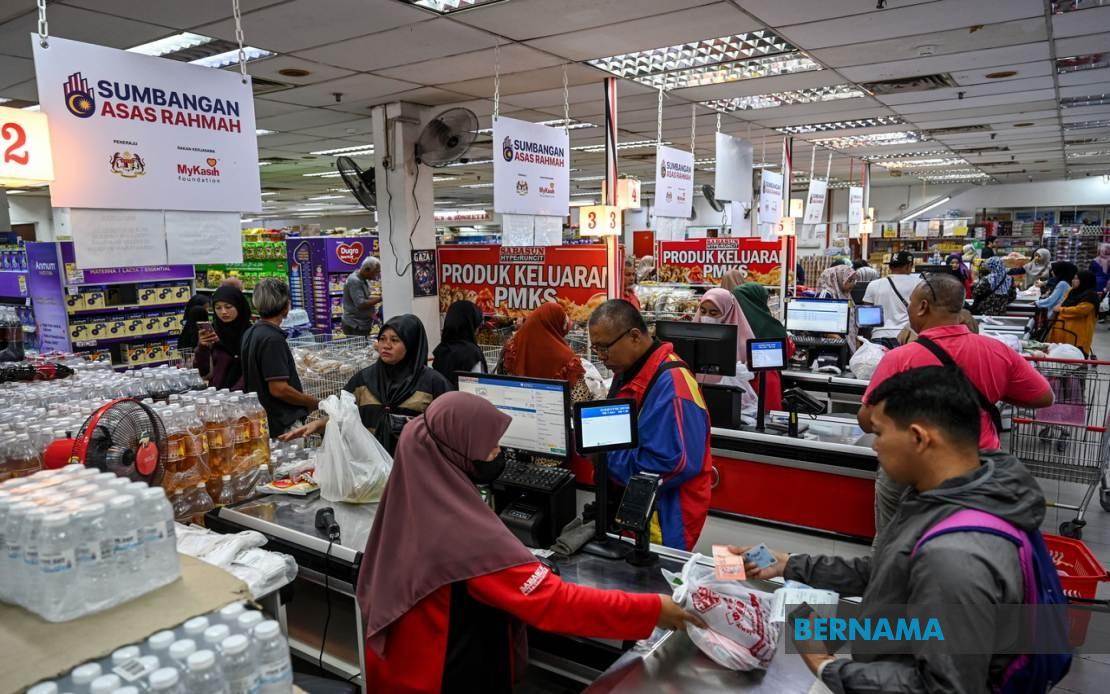
Prime Minister Datuk Seri Anwar Ibrahim has signalled openness to enhancing Malaysia's flagship cash transfer programmes, contingent on the country's economic trajectory strengthening over the coming months. Speaking at a community engagement event in Ipoh on Friday, the premier noted that discussions with Treasury officials have already begun regarding the feasibility of boosting allocations under the Sumbangan Tunai Rahmah (STR) and Sumbangan Asas Rahmah (SARA) schemes, with final decisions expected during the upcoming Budget formulation process.
The two assistance programmes represent central pillars of the MADANI Government's social safety net strategy, providing periodic cash injections to lower-income households across the nation. STR and SARA have become instrumental in cushioning vulnerable populations against inflation and rising living costs, particularly as Malaysia grapples with persistent economic pressures stemming from global uncertainties. Anwar's remarks reflect growing recognition within the administration that existing benefit levels may require recalibration to maintain their protective value for recipients.
In his address at the MADANI KITA Together with the Tambun Community Programme, organised by the Malaysian Volunteer Corps Department (RELA), Anwar emphasised that any expansion would be pursued only if Malaysia's macroeconomic fundamentals demonstrate sufficient resilience. This cautious optimism contrasts with the government's earlier fiscal consolidation efforts, suggesting policymakers believe sustainable growth trends may provide room for enhanced social spending without destabilising public finances. The Prime Minister's dual role as Finance Minister positions him centrally in these budgetary trade-offs.
For Malaysian citizens currently receiving STR and SARA payments, Anwar's statement offers a measure of hope amid widespread concerns about household purchasing power. Lower and middle-income earners have faced mounting pressure from sustained inflationary pressures affecting food, energy, and transport costs. An increase in assistance levels would provide meaningful relief to families budgeting tightly month-to-month, and could help prevent economic hardship from deepening across already-vulnerable communities.
The government's consideration of enhanced cash transfers also reflects broader policy debates about the optimal mix of targeted assistance versus universal programmes. By maintaining means-tested schemes like STR and SARA rather than universal basic income models, Malaysia concentrates limited fiscal resources on those with greatest need. However, this approach requires periodic recalibration to ensure real benefit values keep pace with inflation, a concern Anwar's statements implicitly acknowledge.
Beyond civilian assistance, Anwar drew attention to government commitment toward security sector welfare, particularly for volunteer personnel serving in frontline roles during crises. He announced that RELA members would receive RM3 million in welfare allocations for the current year, matching the prior year's commitment but acknowledging the figure remains insufficient given operational demands. This signals recognition that security and civil defence volunteers require better remuneration and support infrastructure to sustain recruitment and retention.
Rela's expanding responsibilities across disaster response, community policing, and security operations have intensified demands on volunteer members who often balance civic duties with regular employment. Anwar's acknowledgment that current welfare provisions fall short reflects acknowledgment within government that non-uniformed security personnel require enhanced recognition and material support. The RM3 million allocation, while maintained, represents only incremental commitment rather than transformative expansion.
From a regional perspective, Malaysia's approach to cash transfers and social protection reflects patterns increasingly common across Southeast Asia as governments respond to inflationary pressures and inequality concerns. Countries across the region have expanded targeted cash assistance programmes, recognising their effectiveness as counter-cyclical policy tools during economic slowdowns. Malaysia's ongoing refinement of STR and SARA positions the country within this broader trend toward systematic, data-driven social protection.
The timing of Anwar's remarks carries significance as Malaysia approaches Budget 2025 formulation, a process that typically involves intense lobbying from various constituencies seeking expanded allocations. By publicly signalling potential STR and SARA enhancements contingent on economic performance, the Prime Minister sets expectations while maintaining flexibility regarding final budget parameters. This allows policymakers to assess actual economic data before committing to specific expenditure levels, prudent practice given global economic uncertainties.
Business and investor sentiment toward enhanced social spending presents a complex picture. While increased cash transfers boost consumer demand and support economic activity, concerns persist regarding long-term fiscal sustainability if expansions become permanent entitlements rather than cyclical adjustments. Anwar's formulation—conditional on economic health—suggests government recognises this tension and seeks to balance social objectives against macroeconomic stability imperatives.
The forthcoming Budget process will reveal whether Anwar's preliminary signals translate into concrete allocative decisions. Factors including Government revenue performance, debt servicing costs, and infrastructure investment priorities will constrain resources available for expanded cash transfers. Nevertheless, the Prime Minister's public endorsement of the concept creates political momentum favouring STR and SARA enhancement, potentially influencing final budgetary outcomes.
Looking ahead, the question of whether Malaysia can sustainably increase assistance levels depends substantially on economic growth trajectory and revenue generation over coming quarters. If GDP expansion accelerates and tax revenues strengthen beyond current projections, enhanced cash transfers become feasible without proportional debt accumulation. Conversely, should economic headwinds intensify, fiscal constraints may necessitate maintaining current assistance levels despite inflationary pressures eroding their real value.
For millions of Malaysian households dependent on STR and SARA payments to meet basic needs, Anwar's remarks represent tentative signal of government responsiveness to their circumstances. The coming Budget will ultimately determine whether this signal translates into material improvement in living standards, or remains aspirational statement qualified by pragmatic fiscal constraints.

