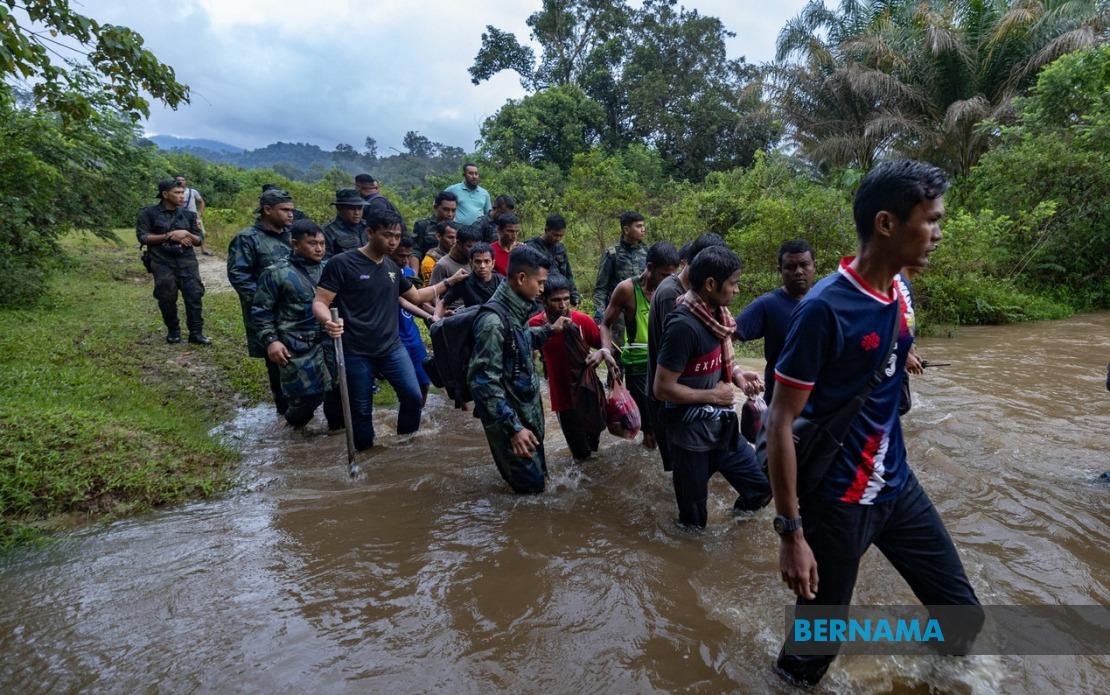
Malaysia is committed to expanding its diplomatic and humanitarian efforts to resolve the protracted Rohingya displacement crisis, working through both regional mechanisms and international agencies to tackle one of Asia's most pressing humanitarian challenges. Deputy Foreign Minister Datuk Lukanisman Awang Sauni outlined the government's comprehensive strategy during parliamentary proceedings, emphasising that enhanced cooperation with ASEAN member states and the United Nations High Commissioner for Refugees represents a vital component of Malaysia's foreign policy in the coming years.
The deputy minister highlighted Malaysia's dual-track engagement: leveraging ASEAN's collective voice to encourage Myanmar towards peaceful resolution while simultaneously partnering with UNHCR to deliver material protection and aid to the hundreds of thousands of Rohingya already sheltering within Malaysian territory. This balanced approach reflects the country's recognition that the crisis extends beyond humanitarian concern, carrying substantial implications for regional stability and national security that demand coordinated response across multiple governance levels.
From Malaysia's perspective, the refugee situation carries particular significance given the country's geographic proximity to Myanmar and its existing hosting of substantial displaced populations. The cross-border dimensions—irregular maritime migration, human trafficking networks, and security vulnerabilities—create cascading challenges that demand more than charity or temporary assistance programmes. Malaysia has positioned itself as both a responsible host nation and a constructive regional player, using this position to advocate for durable solutions while managing domestic pressures associated with large refugee communities.
Yet Lukanisman candidly acknowledged structural constraints limiting the effectiveness of current multilateral frameworks. ASEAN's founding principle of non-interference in member states' internal affairs, while historically protective of sovereignty, creates significant friction when addressing Myanmar's treatment of the Rohingya minority. The consensus-based decision-making model that underpins ASEAN coordination further restricts the organisation's capacity to impose sanctions or compel Myanmar toward accountability measures that might incentivise refugee repatriation or minority protection reforms.
The UNHCR, meanwhile, operates within a mandate circumscribed by protection and humanitarian delivery rather than political problem-solving. The organisation can facilitate safe passage, provide medical care, education and livelihood support, and document abuses—but lacks authority to influence Myanmar's governance or resolve the underlying ethnic and religious tensions that precipitated the displacement. This institutional disconnect means that refugee assistance, however generous and well-intentioned, cannot address root causes of displacement without complementary political initiatives.
Malaysia's acknowledgment of these limitations reflects a maturation in how the country views its regional role. Rather than concealing systemic constraints, officials are increasingly transparent about the gap between humanitarian response and comprehensive resolution. Current efforts remain oriented toward protecting displaced persons and securing their basic rights—a foundation upon which future progress must build, but insufficient alone to enable the voluntary, safe, and dignified return of refugees to Myanmar that both Malaysia and international partners consider the ultimate objective.
Looking ahead, Malaysia is exploring enhanced responsibility-sharing mechanisms that would distribute the burden of hosting refugee populations more equitably across ASEAN members, reducing the disproportionate weight currently borne by Thailand, Bangladesh, and Malaysia. Such arrangements require delicate negotiation, as they implicitly acknowledge permanent responsibility without achieving the political breakthroughs necessary for repatriation. Nevertheless, burden-sharing frameworks could improve conditions for refugees already displaced and signal regional commitment to collective problem-solving.
The government also intends to champion political pathways toward refugee return, though the practical mechanisms remain underdeveloped. Any sustainable repatriation requires Myanmar to implement credible reforms addressing Rohingya minority status, security guarantees for returnees, and accountability for past abuses—measures that currently appear distant given the military regime's entrenchment and continued resistance to international pressure. Malaysia's diplomatic efforts will necessarily focus on building incremental confidence and supporting Myanmar civil society actors working toward reconciliation, recognising that externally imposed solutions have historically failed in Myanmar's complex ethnic landscape.
For Malaysia specifically, deepening UNHCR cooperation offers immediate benefits including enhanced technical capacity for refugee management, international funding for support programmes, and access to global best practices in protecting displaced populations. The country hosts one of the world's largest undocumented refugee populations, with Rohingya comprising only a portion of broader displacement challenges stemming from Myanmar's various ethnic conflicts. Strengthening institutional frameworks now creates capabilities applicable to potential future crises while improving current conditions for vulnerable populations.
The regional security dimension cannot be overlooked. Large, under-resourced refugee camps create environments susceptible to criminal exploitation, radicalisation, and irregular onward migration. Malaysia's emphasis on comprehensive approaches reflects understanding that humanitarian assistance, while morally imperative, must be paired with security and development initiatives to prevent displacement from becoming a persistent destabilising force. This framing positions the Rohingya crisis not merely as a charitable concern but as a strategic issue demanding sustained investment and regional coordination.
Malaysia's articulated commitment also carries implications for ASEAN's evolving role in global humanitarian governance. As an organisation increasingly pressed to address transnational challenges, ASEAN's ability to navigate the tension between non-interference and collective action will substantially shape its credibility and effectiveness. Malaysia's advocacy for strategic engagement, while respecting established principles, offers a potential model for how regional organisations might adapt to contemporary challenges without abandoning foundational commitments.
Ultimately, the deputy minister's parliamentary statement represents candid acknowledgment that current mechanisms, however well-intentioned, have not produced the political environment necessary for sustainable refugee return. Malaysia's intensified cooperation aims to maximise humanitarian impact while creating conditions for eventual political breakthrough. Success will require not only continued Malaysian commitment but also meaningful shifts in Myanmar's governance and international pressure architecture—variables substantially beyond any single country's control.

