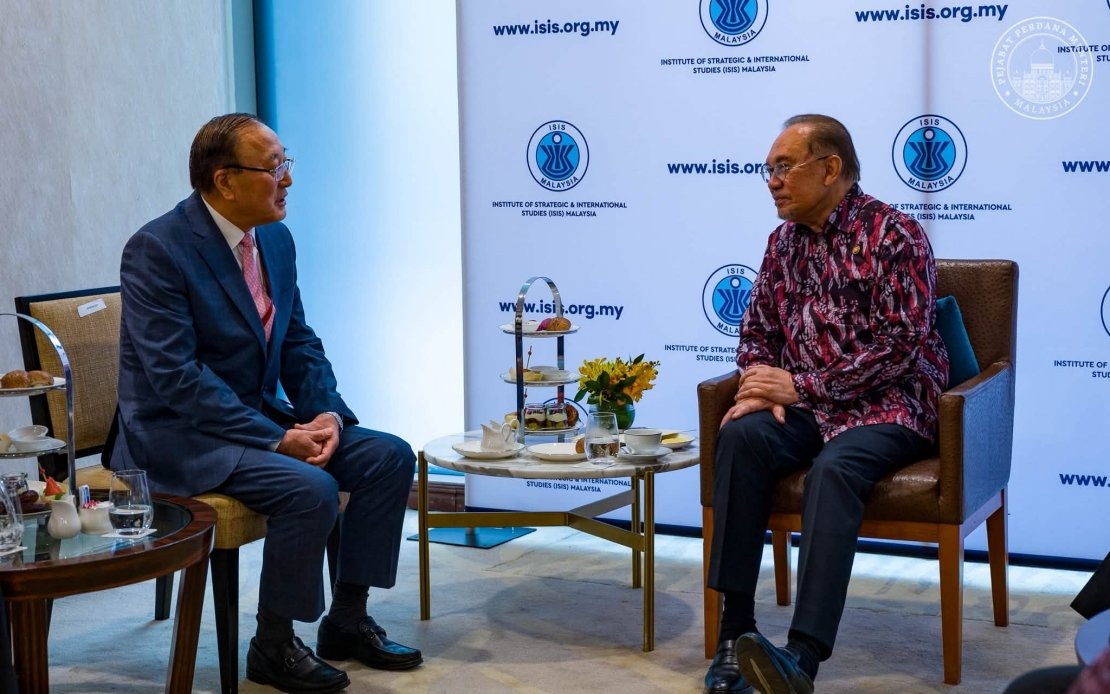
Prime Minister Datuk Seri Anwar Ibrahim has committed to deepening Malaysia's partnership with the Boao Forum for Asia across a broad spectrum of economic and technological domains, signalling the country's intent to play a more active role within one of the region's most influential policy platforms. The announcement came during a high-level engagement with BFA secretary-general Zhang Jun, who visited Kuala Lumpur to discuss the evolving regional and global landscape marked by mounting uncertainties and rapid transformation.
The scope of proposed cooperation spans sectors critical to Malaysia's economic future and regional prosperity. Trade and investment frameworks form the foundation of this expanded relationship, areas where Malaysia has traditionally leveraged multilateral forums to secure advantageous market access and attract capital flows. Beyond conventional commerce, the partnership will encompass digital transformation initiatives, positioning Malaysia to benefit from knowledge-sharing mechanisms within the BFA network as economies across Asia accelerate their technological modernisation. This alignment reflects a broader regional shift toward embedding digital infrastructure at the centre of competitive advantage.
Artificial intelligence has emerged as a frontier area where Malaysia seeks collaborative advantage. The inclusion of AI development within the BFA cooperation framework signals recognition that advanced technologies require coordinated regional approaches rather than isolated national efforts. As countries compete for talent and investment in AI innovation, positioning within multilateral networks becomes increasingly strategic. Malaysia, with its growing tech ecosystem centred in Kuala Lumpur and Cyberjaya, stands to benefit from knowledge transfer and best-practice sharing within the BFA's broader membership of Asian economies at varying stages of AI adoption.
Energy transition constitutes perhaps the most pressing dimension of the proposed collaboration. Malaysia's dual identity as both an energy producer and a developing economy seeking to balance growth with climate commitments makes this partnership particularly relevant. The BFA platform provides a venue for discussing mechanisms to finance renewable energy infrastructure, share technological expertise, and align regional energy policies without compromising economic development objectives. For Southeast Asia broadly, coordinated approaches to energy transition can prevent a fragmented landscape where individual countries compete against one another for limited clean technology investments and expertise.
Food security emerged as another focus area, reflecting vulnerabilities exposed during recent global supply chain disruptions. Malaysia, despite its agricultural capacity, remains dependent on food imports for significant portions of its domestic consumption. Through the BFA framework, Malaysia can engage with regional peers on sustainable agricultural practices, supply chain resilience, and technology transfer in food production. This becomes especially relevant as climate change threatens traditional agricultural zones across Asia, requiring coordinated adaptation strategies and equitable distribution of resources.
Education and talent development round out the enumerated cooperation zones. These elements address the long-term structural competitiveness of the region. The BFA provides Malaysia access to networks for curriculum development, student and faculty exchanges, and professional training programmes that prepare workforces for emerging industries. In an era of persistent skills mismatches between education systems and labour market demands, regional cooperation on talent development reduces duplication and accelerates capacity-building across the region.
Anwar's framing of these initiatives within a context of geopolitical uncertainty and economic pressure carries particular weight. The Asia-Pacific region faces a complex security environment characterised by great power competition, trade tensions, and divergent strategic interests among major powers. Malaysia's emphasis on dialogue-based cooperation and inclusiveness reflects both pragmatic positioning and genuine commitment to multilateralism as a stabilising mechanism. For a middle-power nation, participation in forums like the BFA offers platforms to shape regional narratives and influence outcomes that bilateral relationships cannot address.
The economic dimension of this partnership cannot be understated. As Malaysian businesses confront slowing growth and intensifying competition from neighbours, access to the broader Asian market through BFA-facilitated networks can open opportunities for export diversification and investment. The forum's membership includes some of Asia's largest economies and fastest-growing emerging markets, making it a valuable venue for Malaysian enterprises seeking regional expansion.
The timing of this engagement also merits attention. The statement coincides with broader efforts by the Malaysian government to reassert the country's position within regional institutions and international forums. Under Anwar's leadership, Malaysia has sought to rebuild diplomatic credibility and strengthen institutional ties after periods of political instability. Deepening BFA cooperation represents one element of this broader repositioning strategy, demonstrating commitment to multilateral engagement and regional problem-solving.
For Southeast Asia more broadly, Malaysia's enhanced involvement with the BFA could influence how regional interests are articulated within Asian policy discussions. As one of ASEAN's more developed members with sophisticated financial and technological capabilities, Malaysia can serve as a bridge between ASEAN's collective positions and broader Asian forum dynamics. This balancing role becomes increasingly important as regional countries navigate competition from external powers while maintaining cooperative frameworks.
The focus on resilience and shared well-being, rather than purely transactional economic relationships, suggests Malaysia envisions the partnership as contributing to structural stability in an uncertain environment. This aligns with contemporary thinking about how multilateral institutions should evolve to address challenges that transcend national borders—from pandemics to climate change to technological governance—requiring coordinated regional responses rather than competitive individual actions.
Moving forward, the substantive realisation of these cooperation commitments will depend on resources allocated, institutional mechanisms established, and political will sustained across changing administrations. The BFA, while influential, remains one among numerous regional forums competing for attention and resources. Malaysia's challenge lies in translating this announced partnership into tangible outcomes that deliver visible benefits to Malaysian citizens and businesses while maintaining constructive engagement within an increasingly crowded multilateral landscape.

