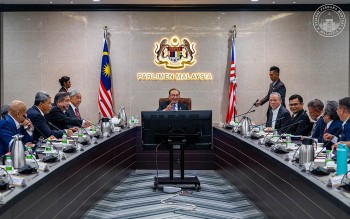
Prime Minister Datuk Seri Anwar Ibrahim has ordered the Ministry of Investment, Trade and Industry and the Ministry of Economy to initiate comprehensive discussions with manufacturers confronting escalating cost burdens arising from the global supply crisis. The directive came following a meeting of the National Economic Action Council, which Anwar chaired on Monday, where the government assessed approaches to fortify Malaysia's manufacturing foundation during a period of international economic turbulence.
The plastics industry emerged as a key focus area for government intervention, reflecting its outsized importance to the Malaysian economy. This sector functions as a critical backbone for numerous downstream industries that are central to the nation's economic output and export competitiveness. The interconnectedness of the plastics supply chain means that stress at this level rapidly transmits through to food packaging operations, electrical and electronics manufacturing, automotive production, medical device assembly, and construction—sectors that collectively represent a substantial portion of Malaysia's industrial base and employment.
Economy Minister Akmal Nasrullah Mohd Nasir provided detailed context on the plastics industry's financial performance and market composition during a briefing. The sector's sales value has contracted to RM62.69 billion in 2025 from RM64.78 billion in 2024, signalling the mounting pressure that businesses in this space are experiencing. Packaging represents the dominant market segment, capturing 45 per cent of total sales, while the electrical and electronics sector accounts for 29 per cent of demand, underscoring the reliance of Malaysia's high-value manufacturing on stable plastics supply chains.
The cascading nature of supply disruptions in the plastics industry poses systemic risks to multiple segments of the Malaysian manufacturing economy. When this foundational sector experiences cost inflation or supply constraints, the negative effects ripple outward across food packaging manufacturers who depend on plastic materials, electronics producers requiring specialized polymers and compounds, automotive suppliers sourcing plastic components and assemblies, and medical device manufacturers where plastics are integral to product design and function. The agriculture and construction sectors similarly face elevated material costs and supply uncertainties when plastics suppliers face difficulties.
Anwar's announcement reflects an acknowledgment that market forces alone may be insufficient to navigate the current period of global economic dislocation. By directing both MITI and the Economy Ministry to conduct formal engagement with affected manufacturers, the government is signalling its readiness to develop targeted interventions and policy solutions. These consultations will likely explore mechanisms to mitigate cost pressures, preserve manufacturing competitiveness, and maintain Malaysia's position as a regional manufacturing hub at a time when companies are reassessing their supply chain strategies.
The timing of this intervention is particularly significant given the regional context in Southeast Asia. Malaysia competes directly with other ASEAN nations for manufacturing investment and export market share, particularly in high-value sectors like electrical and electronics and automotive. Supply chain disruptions that disproportionately affect Malaysian manufacturers could drive investment and production capacity to competing nations, a risk that policymakers evidently view with seriousness. The government's proactive stance demonstrates an understanding that manufacturing competitiveness depends not only on labour costs and regulatory frameworks but also on the stability and efficiency of enabling industries such as plastics.
The consultation process initiated by government will need to identify which specific pressure points are most acute for manufacturers and which policy levers might be most effective in providing relief. This could potentially involve trade facilitation measures, tariff or tax adjustments, government procurement preferences, or support for research and development aimed at increasing efficiency and reducing material waste. The breadth of industries dependent on the plastics sector suggests that solutions must be carefully calibrated to avoid creating distortions or favouring certain manufacturers over others.
International supply chain disruptions, which have persisted in various forms since 2020, continue to create volatility in input costs and material availability despite a general normalization compared to the pandemic years. The plastics industry, which depends on refined petroleum products and chemical feedstocks, remains exposed to global energy price fluctuations and geopolitical factors affecting shipping and logistics. Malaysian manufacturers operating in this ecosystem have limited ability to absorb sustained cost increases without losing competitiveness, particularly in price-sensitive segments like food packaging where margins are inherently compressed.
The government's framing of the issue as one requiring sustained resilience rather than temporary relief suggests a longer-term strategic concern about Malaysia's manufacturing trajectory. As global supply chains gradually reconfigure and nearshoring trends accelerate, Malaysia's ability to retain and attract manufacturing activity depends on demonstrating reliable, cost-competitive production environments. The National Economic Action Council's focus on this matter indicates that maintaining manufacturing sector health is being treated as a national priority worthy of cabinet-level attention and coordinated inter-ministerial action.

