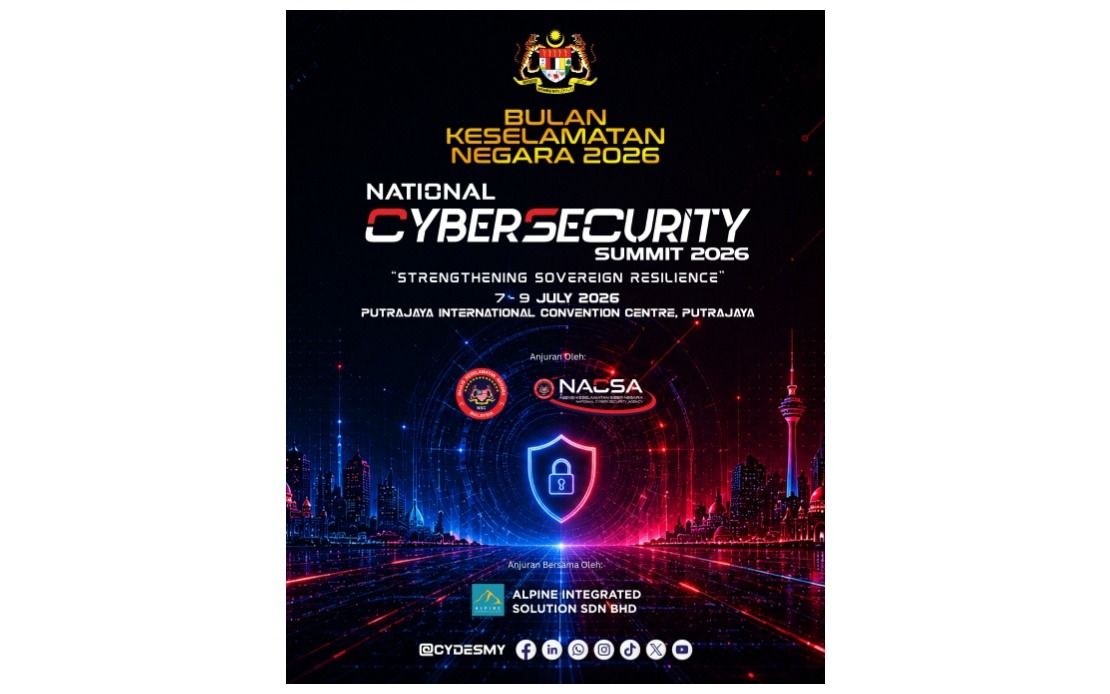
The National Cyber Security Agency (NACSA), operating under the National Security Council (MKN) within the Prime Minister's Department, will organise the National Cyber Security Summit (NCSS) 2026 at the Putrajaya International Convention Centre (PICC) from July 7 to 9. The three-day gathering marks a significant milestone in Malaysia's ongoing efforts to build a cohesive and coordinated approach to cyber security governance at the national level.
Timing proves crucial for this summit's convening, as it follows the Dewan Rakyat's passage of the Cybercrimes Bill 2026 on July 1. This legislative advancement forms part of a broader policy push initiated through the Malaysian Cyber Security Strategy (MCSS) 2025-2030, which establishes the overarching strategic framework guiding the country's response to mounting digital threats. By synchronising the summit with this legislative milestone, Malaysia demonstrates its commitment to translating policy into tangible cyber security improvements across sectors.
Under the banner "Strengthening Sovereign Resilience," the summit aims to foster a national cyber security ecosystem characterised by enhanced security, trust and operational resilience. This thematic focus reflects regional and global recognition that cyber threats transcend borders and demand coordinated multilateral responses. The summit's emphasis on sovereignty underscores Malaysia's determination to develop indigenous cyber capabilities rather than relying solely on external solutions, a positioning that resonates with Southeast Asian nations similarly navigating digital transformation amid geopolitical complexities.
The event unfolds alongside National Security Month (BKN), amplifying its message across government and civil society. This alignment enables Malaysia to embed cyber security awareness within the broader national security discourse, signalling that digital threats rank equally alongside traditional security concerns. For Malaysian organisations and citizens, this integration emphasises that cyber preparedness constitutes a fundamental aspect of national resilience rather than a technical afterthought.
With 41 high-impact sessions planned, the summit spans diverse programmatic elements addressing multiple stakeholder needs. Sessions encompass MCSS-related discussion forums, dedicated cyber crime workshops, the ICT Security Officers Convention, initiatives focused on expanding women's participation in cyber fields, specialised KRYPTECH modules, technical deep-dives and closed seminars for select practitioners. This breadth ensures that participants ranging from policy architects to technical implementers encounter content tailored to their institutional roles and professional development trajectories.
Participation from 96 speakers and panellists representing government bodies, commercial enterprises, law enforcement, technology firms, educational institutions and professional cyber communities ensures multifaceted perspectives on emerging challenges. The attendance of 122 companies—comprising 78 Malaysian firms and 44 international entities from seven countries—demonstrates the summit's pull across Southeast Asia and beyond, facilitating cross-border knowledge exchange and partnership formation. For Malaysian technology firms, this international exposure provides networking opportunities and benchmarking capabilities against global peers.
Expectations for total attendance span 3,000 participants encompassing trade visitors, conference delegates and 250 distinguished local guests. This scale positions NCSS 2026 as a cornerstone event for Malaysia's cyber security community, rivalling international conferences in scope while maintaining regional and national focus. The presence of substantial international delegations signals growing recognition of Malaysia's role as a cyber security thought leader within the Association of Southeast Asian Nations.
Prime Minister Datuk Seri Anwar Ibrahim will preside over the launch of three significant national initiatives developed through MKN and NACSA. The National Security Policy (DKN) 2026-2030 establishes the strategic foundation for whole-of-government security approaches. The National Cryptography Policy (MyKriptografi) and accompanying action plan address Malaysia's cryptographic standards and implementation frameworks—critical infrastructure for protecting sensitive government and commercial data. The Artificial Intelligence Systems Cybersecurity Framework (AISCF) reflects Malaysia's recognition that artificial intelligence deployment introduces novel security vectors requiring anticipatory policy responses.
These simultaneous policy launches underscore Malaysia's comprehensive approach to cyber governance. Rather than addressing isolated vulnerabilities reactively, the government demonstrates forward-thinking by embedding cyber security considerations across strategic policy domains, from cryptography standards to artificial intelligence deployment. For organisations across Malaysia, these frameworks will establish normative expectations and compliance requirements shaping digital transformation investments.
The summit's explicit emphasis on fostering collaboration across public and private sectors addresses a longstanding challenge in cyber security governance—namely, the fragmentation of threat intelligence, response capabilities and operational standards across institutional silos. By creating forums where government agencies, commercial entities and academic institutions encounter each other in structured settings, NCSS 2026 aims to catalyse information sharing relationships and joint initiatives that extend beyond the conference period.
For Malaysia's position within Southeast Asia, hosting this calibre of cyber security event reinforces its standing as a regional hub for digital governance innovation. Neighbouring countries observe Malaysia's policy development trajectories and institutional responses, often adapting successful models to their own contexts. The summit thus exerts influence beyond Malaysia's borders, potentially establishing benchmarks that other ASEAN member states reference when developing their own cyber security frameworks.
The event reflects acknowledgment that cyber security represents a competitive arena where nations and regions must invest continuously in institutional capacity, human capital and technological infrastructure. Malaysia's decision to convene experts and policymakers at this scale indicates recognition that cyber threats evolve faster than isolated institutional responses can address. Through coordinated national dialogue, Malaysia seeks to accelerate collective adaptation to digital threat landscapes.

