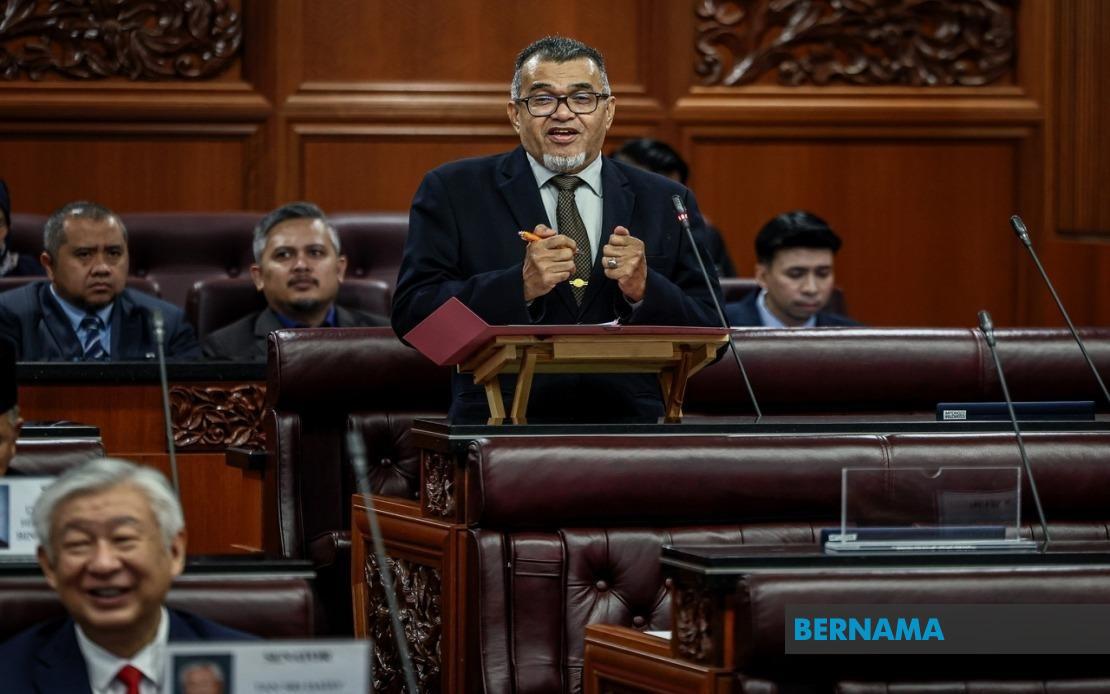
The Malaysian government is moving to dramatically strengthen its response to a persistent problem eroding the nation's rail infrastructure: the theft of cables from railway facilities. Deputy Transport Minister Datuk Hasbi Habibollah revealed that sweeping amendments to rail transport law are being finalized and are expected to reach Parliament within the current year, with proposed penalties scaling up to RM100,000 for each cable theft offence—a hundredfold increase from the existing RM1,000 fine.
The urgency behind this legislative overhaul stems from the startling financial toll that cable theft has inflicted on Malaysia's rail operators. Across the Keretapi Tanah Melayu Berhad network, Prasarana Malaysia Berhad, and the developing East Coast Rail Link project, accumulated losses now total RM50 million. The scale of the problem underscores not merely petty criminality but a coordinated phenomenon that threatens the viability of critical transport infrastructure serving millions of Malaysians.
The East Coast Rail Link project, currently still under construction, has proven particularly vulnerable to these crimes. A total of 71 cable theft incidents have been documented along the ECRL route, resulting in losses valued at RM4.06 million. Separately, 13 additional cases involving theft and damage to equipment and other materials contributed another RM0.69 million in losses, pushing the combined ECRL figure to RM4.75 million. Whilst the ECRL has not yet commenced passenger operations, these thefts jeopardize the project's timeline, potentially delaying crucial phases including installation, testing, commissioning, and operational readiness.
Government officials contend that existing penalties have been manifestly inadequate given the damage inflicted on rail operators and the cascading disruptions experienced by commuters. The RM1,000 fine, established under earlier legislation, bears little relationship to the operational and financial costs absorbed by transport authorities when service interruptions occur. By amplifying the financial deterrent to RM100,000 per offence, lawmakers hope to shift the calculation for would-be offenders, rendering cable theft economically irrational rather than a low-risk venture.
Beyond legislative remedy, the government is simultaneously investing in preventative infrastructure to harden railway assets against theft. Installation of 1,146 closed-circuit television cameras along railway corridors stretching from Johor to the country's northern regions is currently underway, creating electronic surveillance that makes targeting rail assets increasingly risky for criminals. This surveillance initiative represents a substantial capital commitment aimed at establishing persistent visual monitoring across thousands of kilometres of track.
Ground-level security operations are similarly being reinforced through human resources and specialized equipment. Keretapi Tanah Melayu Berhad has procured 20 scrambler motorcycles to strengthen the Auxiliary Police capacity for continuous 24-hour patrols along vulnerable sections. These rapid-response units enable security personnel to reach incident locations swiftly whilst providing a visible deterrent to potential offenders. Complementing motorized patrols, the authorities have deployed sniffer dogs trained to detect human presence near restricted railway facilities, whilst implementing physical security measures such as securing high-risk access points through reinforced manhole covers.
The multi-layered security strategy reflects a recognition that legislative penalties alone cannot resolve infrastructure theft without concurrent operational hardening. Malaysian rail operators and the government acknowledge that determined criminals will continue attempting theft regardless of fines unless the physical environment itself becomes hostile to such activities. The combination of surveillance, active patrolling, physical barriers, and canine detection creates overlapping defensive layers that significantly raise the operational difficulty and detection risk for thieves.
For Malaysian commuters and the broader economy, addressing cable theft carries substantial implications. Railway disruptions impose costs not merely on passengers facing delays but on businesses dependent on reliable freight and commuter transport. The East Coast Rail Link, when operational, promises to transform connectivity between the peninsula's east and west coasts, but cannot deliver that benefit if infrastructure remains vulnerable to criminal predation during the construction phase and beyond. Each cable theft incident represents not just a discrete financial loss but a potential delay in service launch or degradation in service quality once operations commence.
Regionally, Malaysia's approach mirrors broader challenges faced across Southeast Asia where infrastructure theft has become increasingly sophisticated and organized. Countries throughout the region have grappled with similar problems affecting railways, telecommunications networks, and power systems. The Malaysian government's decision to escalate penalties and simultaneously invest in surveillance and active security may signal a benchmark approach that other regional governments could reference as they confront comparable threats to critical infrastructure.
The timing of these amendments also reflects political priorities within the transport ministry. With multiple rail megaprojects under development and public expectations for reliable urban transport, demonstrating tangible action against service-disrupting crimes strengthens the government's credibility. By fast-tracking legislative change and publicizing concrete security measures, Deputy Minister Hasbi signals administrative responsiveness to a problem that affects commuters' daily experience and national infrastructure integrity.
Implementation of the enhanced penalties will require coordination between law enforcement agencies, rail operators, and prosecutors to ensure that offenders apprehended are charged with sufficient severity to warrant the elevated fines. The jump from RM1,000 to RM100,000 represents such a dramatic shift that judicial and enforcement systems must be aligned to treat such cases as serious offences rather than minor infractions. Training enforcement personnel and building prosecutorial capacity to handle these cases will be as important as the legislative change itself.
Looking forward, the government's strategy acknowledges that railway infrastructure protection requires sustained, resourced commitment rather than periodic crackdowns. The combination of legislative deterrence, capital investment in surveillance, and continuous operational security measures suggests policymakers understand that cable theft is a persistent challenge requiring permanent, layered responses. As Malaysia continues expanding its rail network and upgrading existing systems, this multi-pronged approach may become a template for protecting similar assets across the country's growing infrastructure portfolio.

