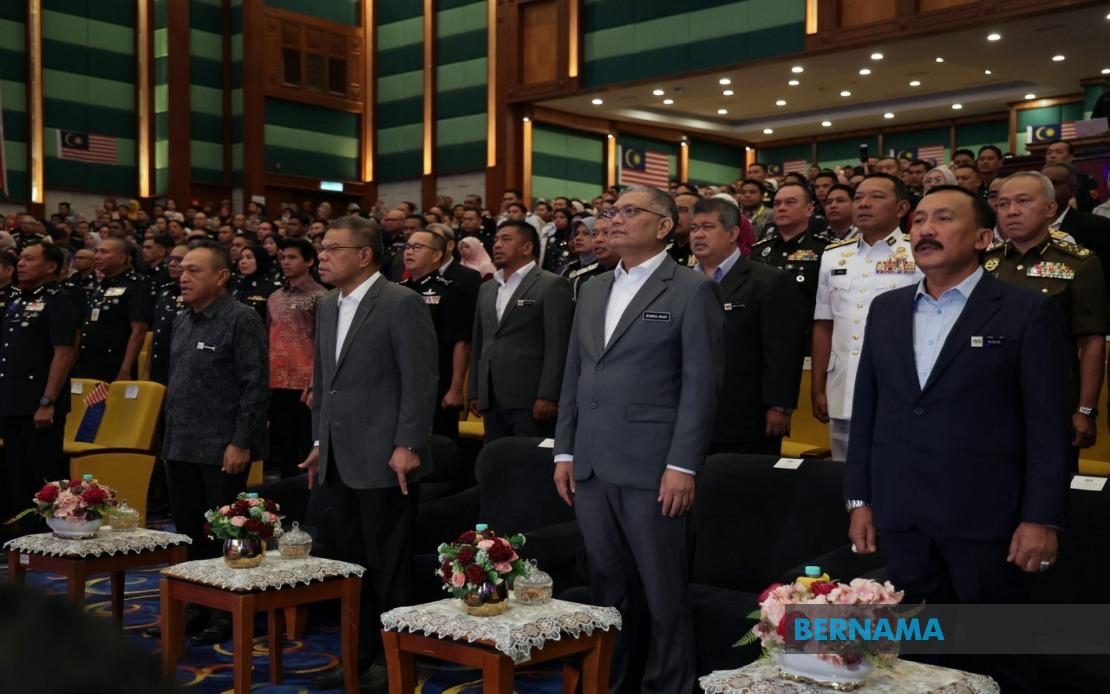
The Malaysian government is moving swiftly to tighten security protocols at the country's entry points, with Home Minister Datuk Seri Saifuddin Nasution Ismail announcing plans to present a detailed enhancement framework to Cabinet. The proposal, developed through intensive interagency coordination, reflects growing official concern about vulnerabilities in border and airport operations that may have enabled recent high-profile security breaches.
Saifuddin Nasution disclosed that Transport Minister Anthony Loke will join him in presenting the plan, underscoring its multifaceted nature. The initiative emerged from a Cabinet directive issued following heightened scrutiny over airport security management, particularly after the detention of a Malaysian pilot at Soekarno-Hatta International Airport in Indonesia, where approximately 25 kilogrammes of MDMA were discovered. This incident triggered alarm within government circles that Malaysia's international reputation could suffer from perceptions of inadequate border controls.
The two-week timeframe in which the comprehensive strategy was formulated demonstrates the priority assigned to addressing security gaps. Rather than adopt a piecemeal approach, authorities opted to conduct a thorough examination spanning multiple operational domains. The plan systematically evaluates improvements needed across human resource development, physical infrastructure enhancements, surveillance capabilities, and equipment modernisation. Officials emphasised the importance of assessing closed-circuit television systems, advanced scanning machines, and specialised training programmes for personnel managing these technologies.
A central conceptual shift underpins the new security framework: moving away from what officials describe as a "silo approach" where different agencies operated independently toward genuine collaborative oversight. Malaysian border management has historically suffered from coordination challenges between multiple bodies, each maintaining separate protocols and information systems. The revised strategy explicitly targets these institutional weaknesses by demanding better integration between agencies operating under Home Ministry jurisdiction and those within the Transport Ministry's purview.
For Malaysia's aviation sector and international standing, the timing of this initiative carries particular significance. International tourists and business travellers increasingly view airport security procedures as indicators of a destination's overall safety and governance. Recent incidents involving Malaysians abroad—particularly those involving contraband discovery—have prompted soul-searching within government about whether existing screening procedures adequately protect the country's interests and image. The Cabinet's decision to mandate a comprehensive reassessment signals acknowledgment that incremental adjustments no longer suffice.
Investigative authorities are simultaneously pursuing the pilot case through cooperation with Indonesian counterparts, seeking to determine whether the incident reflects organised transnational drug trafficking networks or constitutes an isolated criminal act. This investigative dimension directly informs the security framework being presented, as investigators hope forensic findings will illuminate specific procedural vulnerabilities at Malaysian exit and entry points. Police cooperation with Indonesian authorities has yielded substantial evidence, providing investigators with insights into how contraband transited Malaysia's security apparatus.
The planned framework encompasses both technological and human-centred solutions, recognising that sophisticated equipment alone cannot guarantee effective border management. Officials identified personnel competency enhancement as equally critical, suggesting that existing training regimes require updating to address emerging smuggling methods and concealment techniques. As global drug trafficking organisations adapt tactics to circumvent detection systems, Malaysian authorities recognise the necessity of maintaining personnel expertise at equivalent sophistication levels.
Regional implications of Malaysia's security strengthening extend beyond national boundaries. As a major transit hub for Southeast Asian trade and travel, Malaysian airports and ports directly affect the region's security landscape. Enhanced Malaysian controls potentially disrupt trafficking routes that criminal networks have exploited, affecting neighbouring countries. Conversely, vulnerabilities at Malaysian entry points create spillover risks for regional partners who depend on coordinated border management.
The government's emphasis on comprehensiveness rather than expedient measures suggests a recognition that security frameworks require considered integration rather than rushed implementation. Officials acknowledged that the plan combines institutional knowledge, operational experience, and technical expertise from diverse agencies, resulting in recommendations grounded in practical reality rather than theoretical idealism. This collaborative foundation increases likelihood that implementation will encounter fewer institutional resistance points than isolated ministry directives.
Stakeholders across Malaysia's security apparatus—from customs authorities to immigration officials to airport security personnel—will likely face modified standard operating procedures once the Cabinet approves the plan. The framework's emphasis on infrastructure assessment suggests investment requirements may necessitate budgetary allocations, particularly for scanning technology and surveillance system upgrades. Smaller airports and land borders may require particular attention, as security discussions frequently concentrate on major hubs like Kuala Lumpur International Airport while overlooking smaller facilities that could present equal vulnerabilities.
The incident prompting this security review has galvanised official attention on questions previously receiving insufficient political focus. Malaysian authorities now must balance security imperatives against operational efficiency and traveller convenience—a challenging equilibrium that requires sophisticated policy calibration. The Cabinet's two-week preparation timeline, while compressed, allowed officials to consult stakeholders and examine international best practices from jurisdictions with sophisticated border management systems.
Looking forward, implementation success depends substantially on sustained political commitment and adequate resource allocation extending beyond the current security crisis moment. Security vulnerabilities tend to receive renewed attention following high-profile incidents but subsequently fade from priority lists as attention shifts to other policy domains. Malaysian policymakers must establish mechanisms ensuring the framework receives continued scrutiny and periodic reassessment as threat environments evolve and criminal organisations develop countermeasures.

