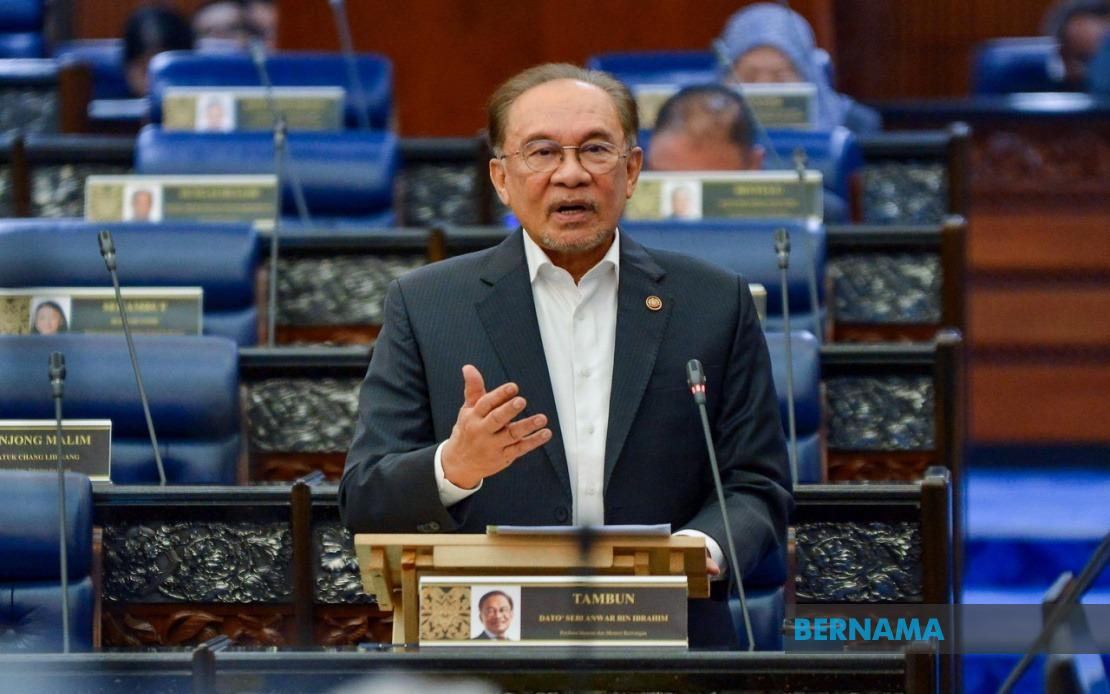
Prime Minister Datuk Seri Anwar Ibrahim has reaffirmed the government's commitment to ensuring that local workers receive priority access to job opportunities, whilst simultaneously pursuing a systematic examination of the nation's legitimate foreign workforce requirements. Speaking in parliament on July 14, Anwar outlined a balanced approach to an issue that has generated considerable debate between employers struggling with staffing shortages and workers seeking better employment prospects.
The employment challenge facing Malaysia reflects a complex tension at the heart of the country's labour market. While certain sectors genuinely depend on migrant workers to maintain operations and competitiveness, policymakers recognise the pressing need to create meaningful opportunities for the growing cohort of young Malaysians entering the workforce. This reality has prompted the administration to adopt what Anwar characterised as a calibrated strategy rather than a blanket policy change in either direction.
An important element of the government's approach involves streamlining coordination mechanisms between existing foreign workers already resident in Malaysia and new recruitment efforts. Rather than immediately importing additional overseas labour, the administration intends to prioritise placement of qualified foreign nationals currently in the country into vacant positions. This administrative refinement addresses both the practical needs of employers and the legitimate concerns of labour advocates, creating what amounts to a natural filtering system before new migration permits are granted.
Anwar acknowledged that certain economic sectors cannot currently function without foreign workers, a pragmatic recognition that distinguishes his government's stance from more rigid employment nationalism. Rather than declaring blanket restrictions, the administration is pursuing sector-by-sector analysis in coordination with the Ministry of Human Resources and Ministry of Home Affairs. This approach permits nuance, allowing for foreign worker recruitment where genuine skills gaps exist whilst simultaneously tightening approvals in areas where local talent can be deployed.
The prime minister's comments were prompted by concerns raised about job shortages affecting small and medium enterprises, a crucial economic segment that often operates with tight margins and faces genuine difficulties in sourcing workers for less desirable positions. SMEs have become increasingly vocal about labour supply constraints that threaten business continuity and expansion plans. By studying the genuine need for foreign workers rather than implementing immediate restrictions, the government aims to preserve SME viability whilst managing broader employment concerns.
A critical concern driving the government's cautious approach involves the documented problem of foreign worker syndicates that have historically enabled exploitation, human trafficking, and the accumulation of illicit wealth. Anwar explicitly identified these criminal networks as a decades-long burden on the Malaysian economy and society, signalling that his administration views the foreign worker issue through a security and governance lens rather than purely economic calculus. This framing reflects international evidence that poorly regulated migrant labour systems create vulnerabilities extending far beyond employment statistics.
Enforcement represents another pillar of the government's revised strategy. Anwar committed to strengthening actions against foreign workers who breach employment regulations, wage laws, or other legal requirements, explicitly including migrant communities such as Rohingya workers who have faced particular scrutiny. Simultaneously, he emphasised that workers complying with regulations deserve protection and fair treatment. This dual commitment to strict enforcement and worker protection reflects an attempt to navigate between conflicting pressures from business interests seeking labour flexibility and civil society organisations concerned with worker exploitation.
A particularly revealing aspect of Anwar's parliamentary statement concerns tightened scrutiny of foreign professional worker visas, an area where regulatory capture has historically enabled abuse. Some companies have allegedly obtained approval to import workers in specialised fields like artificial intelligence and digital technology whilst deploying them in roles entirely unrelated to their purported expertise. By implementing stricter vetting of professional visa applications and closer verification that imported workers actually perform work matching their approved specialisations, the government aims to prevent companies from circumventing local hiring requirements through clever application of professional visa categories.
For Malaysia's young workforce, these policy adjustments carry significant implications. The government is attempting to protect domestic job creation by restricting the use of foreign professional visas as vehicles for hiring workers in fields where Malaysian talent exists or could be developed. This approach implicitly prioritises investing in local skills development in emerging sectors such as artificial intelligence and digital technology, rather than treating foreign hiring as an automatic solution to capacity constraints.
The broader context for this policy recalibration involves Malaysia's positioning within regional labour competition. As neighbouring Southeast Asian economies develop their own workforces and upgrade skills in emerging sectors, Malaysia cannot indefinitely rely on cheaper foreign labour to maintain competitiveness. Instead, the government appears to be recognising that sustainable economic growth requires developing local human capital whilst using foreign workers strategically in sectors where gaps genuinely cannot be filled domestically in the near term.
The government's commitment to joint study by human resources and home affairs ministries signals that employment policy is being integrated with security considerations. Foreign worker management is no longer viewed solely through an economic lens but as a governance question with implications for border security, criminal networks, and social cohesion. This institutional approach may yield more comprehensive policy outcomes than narrowly focused employment discussions.
Implementing this balanced strategy will require consistent political will and institutional capacity. Business associations accustomed to relatively easy foreign worker recruitment may resist tighter approvals, whilst labour activists and young workers may demand even stronger protections. The government's ability to navigate these competing pressures whilst maintaining the policy framework Anwar has outlined will significantly influence Malaysia's economic trajectory and labour market outcomes over coming years.

