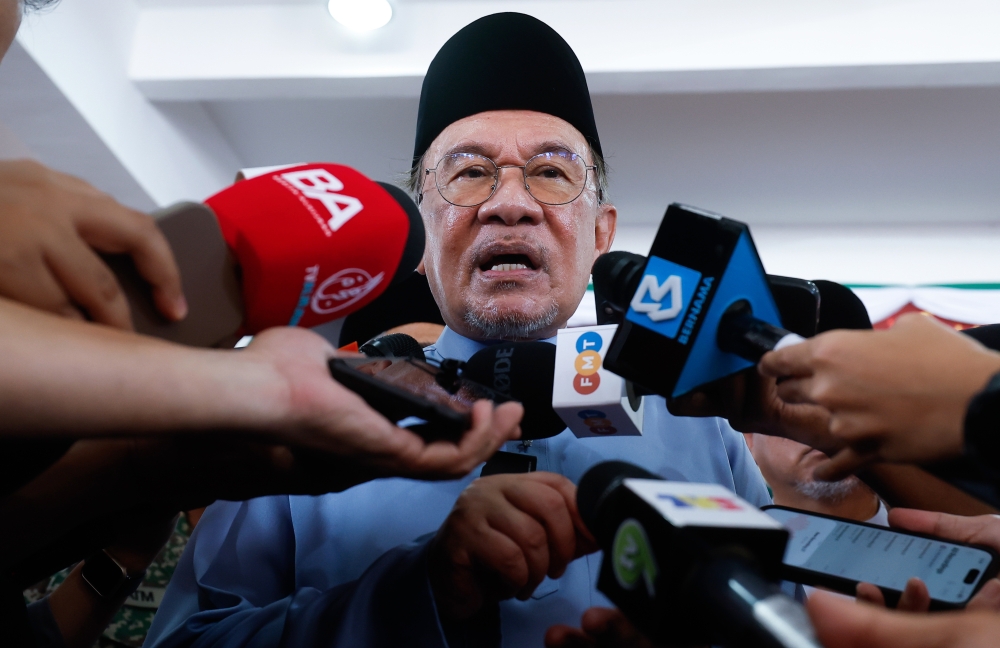
Prime Minister Datuk Seri Anwar Ibrahim has signalled that Malaysia intends to sustain its engagement with the United States on trade tariff matters, marking a measured diplomatic stance as both nations navigate complex economic negotiations. Speaking in Port Dickson on July 24, Anwar underscored the government's commitment to ongoing talks, suggesting that despite trade tensions, Kuala Lumpur remains optimistic about finding workable solutions through continued dialogue rather than confrontation.
The Prime Minister's comments reflect a broader Asian perspective on the tariff landscape, where uncertainty around protectionist policies has rattled markets and prompted regional governments to reassess their trade strategies. Anwar's public relief at the relatively moderate nature of the tariff rates under discussion points to earlier apprehensions within Malaysian policy circles about potentially more severe trade barriers. Such articulated relief serves to temper domestic anxieties while maintaining a constructive posture toward American counterparts.
Malaysia's approach to these negotiations carries particular significance for Southeast Asia, a region deeply integrated into US-led supply chains spanning semiconductors, electronics, and manufacturing. Any tariff regime imposed on Malaysian exports would reverberate across the broader region, affecting companies and workers far beyond Malaysian borders. The country's commitment to sustained talks reflects not merely bilateral interests but a regional imperative to preserve trade relationships that underpin economic stability across the Association of Southeast Asian Nations.
The context of these negotiations is crucial for understanding Malaysia's diplomatic positioning. Recent years have witnessed heightened trade protectionism globally, with multiple administrations pursuing tariff strategies as both economic and political tools. Malaysia, as a significant exporter of manufactured goods and electronic components, faces direct exposure to such policies. The government's willingness to maintain dialogue suggests a calculated gamble that negotiation can produce better outcomes than escalation or acquiescence.
Anwar's measured optimism about tariff rates being relatively restrained merits scrutiny within Malaysia's economic context. The nation's export-dependent model means that even seemingly modest tariff increases can accumulate into meaningful costs for manufacturers and ultimately consumers. Industries including automotive parts, petroleum products, and high-tech components all face potential impacts. Understanding what constitutes "relatively low" in the government's assessment requires recognition that Malaysia's competitive advantage in global markets depends on thin profit margins and volume-based economics.
The negotiations also occur against a backdrop of Malaysian domestic political considerations. Anwar's government faces periodic questions about its economic management and its capacity to protect local industry while navigating international trade complexities. Projecting confidence in ongoing talks while avoiding either excessive capitulation or stubborn resistance serves multiple domestic audiences simultaneously—assuring businesses that their interests are being championed while signalling to workers that jobs remain protected.
Regional trade dynamics further complicate Malaysia's position. Vietnam, Thailand, and Indonesia all compete in similar manufacturing sectors and face comparable tariff pressures from the United States. Malaysia's strategy of continued negotiation rather than aggressive counter-measures reflects calculations about regional cooperation and the broader ASEAN interest in maintaining open trade frameworks. Unilateral aggressive responses could trigger retaliatory measures that disadvantage the entire region.
The bilateral relationship between Malaysia and the United States extends beyond tariffs into defence, technology partnerships, and strategic alignment in the Indo-Pacific. Trade negotiations thus occur within a broader geopolitical context where both nations maintain interests in sustained cooperation. For Anwar's government, presenting tariff discussions as manageable component of a larger, fundamentally sound relationship helps maintain other dimensions of the partnership that Malaysian policymakers view as strategically valuable.
Looking forward, the sustainability of these negotiations depends on several factors beyond Malaysia's control. American domestic political priorities, shifts in broader US trade policy, and global economic conditions all influence the trajectory of talks. However, Malaysia's explicit commitment to continued engagement signals that Kuala Lumpur intends to remain actively involved rather than passively accepting outcomes. This proactive stance may yield better terms than alternatives available to nations that withdraw from negotiation or adopt purely defensive postures.
For Malaysian businesses, particularly small and medium enterprises in export sectors, the government's continued engagement offers some assurance of advocacy at senior levels. However, companies must also prepare for various tariff scenarios and consider diversifying supply chains and markets. The period of ongoing negotiation provides window for strategic repositioning that may prove more valuable than the final tariff rates themselves.
Anwar's comments also reflect broader Southeast Asian interest in navigating great power competition without becoming collateral damage. As tensions between major powers intensify, countries like Malaysia seek to maintain productive relationships across multiple partners while protecting core national interests. Tariff negotiations exemplify this balancing act, requiring simultaneous firmness in defending local interests and flexibility in accommodating global partners' concerns.

