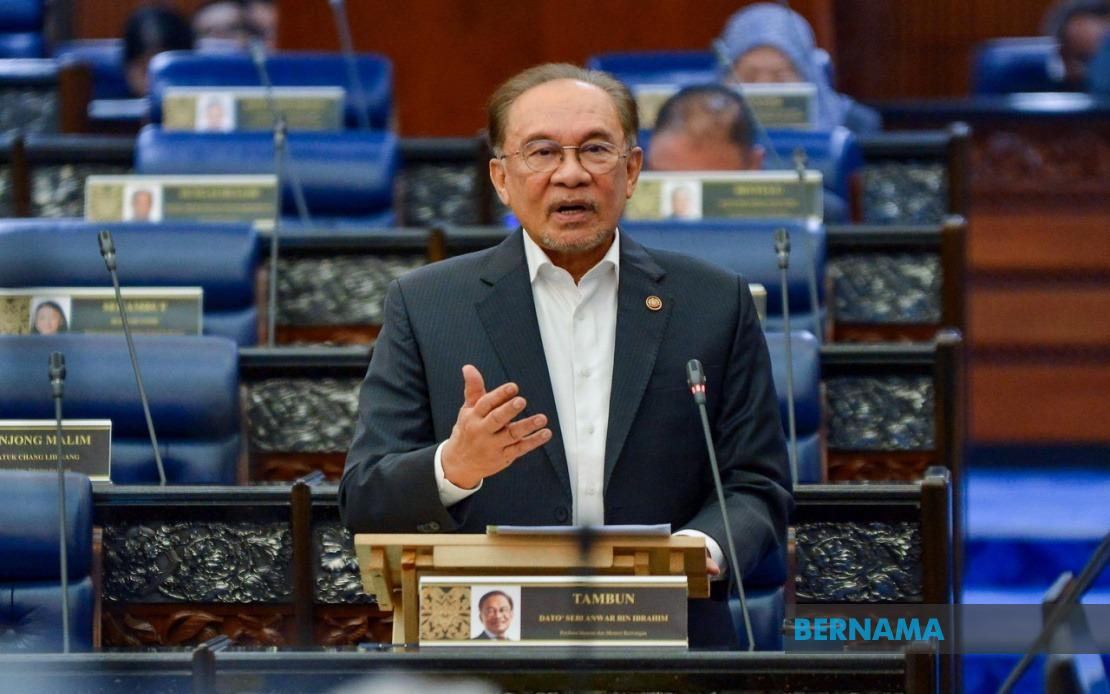
Prime Minister Datuk Seri Anwar Ibrahim has reiterated that Malaysia will persist in using diplomatic negotiation and the 1982 United Nations Convention on the Law of the Sea (UNCLOS) as the foundation for managing maritime boundary disagreements with its neighbours. Speaking in Parliament on July 14, Anwar emphasised that while the International Maritime Organization (IMO) plays a supportive role in maritime governance, it operates within the constraints of UNCLOS 1982, which establishes the primary legal framework governing maritime affairs across the globe.
Yet Anwar acknowledged the inherent limitations of international maritime law, noting that different nations interpret UNCLOS provisions in varying ways and that the convention alone cannot adequately address every boundary dispute that arises. This recognition reflects the practical reality facing Southeast Asian states, where overlapping territorial claims and competing interpretations of maritime rights have generated ongoing tensions. The Prime Minister's candid assessment suggests that Malaysian policymakers understand the gap between ideal legal frameworks and the messy reality of implementing them in contested waters.
In the context of the South China Sea, Anwar outlined ASEAN's collective strategy, which hinges on utilising UNCLOS as a negotiating standard while simultaneously working with China to develop a finalised Code of Conduct designed to minimise incidents and prevent escalation. He indicated that talks involving the Philippines present particular complications due to the historically contentious Sabah issue, which remains unresolved and complicates the broader maritime dialogue. For other ASEAN members, Malaysia has consistently advocated for sustained negotiation, even when discussions become protracted and require multiple rounds of talks to progress forward.
Anwar's comments reflect a nuanced appreciation of how maritime disputes can be managed without requiring complete resolution. He highlighted Malaysia's experience with Joint Development Authorities established alongside Thailand and Vietnam as a model demonstrating that economic cooperation and resource sharing can proceed even while sovereignty claims remain contested. Under this arrangement, disputed zones are explicitly designated as areas where neither nation abandons its legal position, yet both countries cooperate in developing natural resources and dividing the resulting economic benefits. This pragmatic approach has allowed Malaysia to pursue mutual advantage without surrendering its territorial assertions.
The relationship with Vietnam exemplifies this doctrine most clearly. Though the two nations maintain distinct and competing claims over the same maritime area, they have created institutional mechanisms permitting joint exploration and development of petroleum and other marine resources. This framework provides a working model for how Southeast Asian states might manage their numerous boundary disagreements without requiring one party to capitulate or compromise its fundamental legal stance. The model suggests that territorial disputes need not paralyse economic cooperation or force escalatory confrontation.
Anwar outlined the extent of Malaysia's maritime boundary challenges, identifying disputes involving six separate neighbours: Brunei, Thailand, Indonesia, Singapore, the Philippines, and China. The complexity and number of these disagreements underscore why Malaysia has adopted a consistent diplomatic posture rather than pursuing aggressive unilateral action or military brinkmanship. Escalating any single dispute risks triggering wider regional tension and could jeopardise the broader stability upon which Malaysian trade and security depend.
Regarding boundary negotiations with Brunei, Anwar reported substantial progress, with only a limited number of outstanding issues remaining and most of those primarily involving Sarawak rather than federal Malaysian interests. This suggests that where two parties have limited conflicting interests and smaller populations at stake, agreement becomes more achievable. Discussions with Indonesia, by contrast, concentrate on maritime areas adjacent to Sabah and necessarily involve consultation with that state's own government, reflecting Malaysia's federal structure and the substantial stakes held by Sabah in these negotiations.
The Prime Minister's parliamentary remarks underscore a deliberate strategic choice by the Malaysian government to prioritise stability and cooperative management over unilateral assertion or confrontational posturing. As a maritime nation heavily dependent on secure shipping lanes and international trade, Malaysia benefits from a rules-based international order where disputes are adjudicated through established legal mechanisms rather than resolved through military superiority. This position aligns with Malaysia's strategic interests as a relatively smaller military power operating in a region containing several larger nations with expanding defence capabilities.
The emphasis on UNCLOS and negotiated settlement also reflects broader ASEAN principles of non-interference and respect for state sovereignty, which have historically shaped the association's conflict-management approach. By committing to international law and diplomatic process rather than military confrontation, Malaysia demonstrates solidarity with regional norms while simultaneously protecting its own interests. This adherence to established frameworks provides both legitimacy for Malaysian claims and constraints on neighbouring states' unilateral actions, benefiting all parties seeking to avoid the destabilising consequences of escalatory spirals.
Anwar's acknowledgement that interpretations of UNCLOS vary significantly reveals an important understanding: while international law provides essential structure and legitimacy, it cannot mechanically resolve all disputes without requiring human judgment, negotiation, and compromise. Different nations legitimately read the same treaty language and historical evidence differently, and these interpretive gaps cannot be eliminated through more careful drafting or legal analysis alone. This reality necessitates the very diplomatic engagement that Anwar advocates, where representatives meet repeatedly, explain their positions, seek common ground, and gradually narrow disagreement through incremental agreement.
Looking forward, Malaysia's approach suggests that maritime boundary disputes in Southeast Asia will likely persist as long-standing features of the regional landscape rather than be definitively resolved in any near timeframe. The goal therefore becomes not total victory or complete territorial satisfaction, but rather management of disputes within frameworks that permit economic cooperation, prevent dangerous military incidents, and avoid triggering wider conflicts. The Joint Development Authority model offers a template for this management, allowing competing nations to derive mutual benefit from contested areas without forcing resolution of underlying sovereignty questions. This approach, while perhaps unsatisfying to those seeking complete vindication of territorial claims, has proven workable and sustainable across multiple bilateral relationships.

