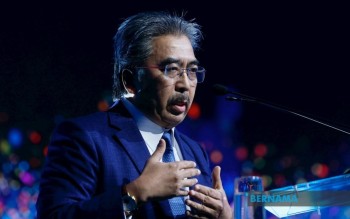
The Malaysian government intends to undertake a thorough assessment of the country's import requirements across all sectors, particularly capital goods, with the aim of formulating targeted policies that will lessen the nation's dependence on foreign suppliers and bolster locally-based industries. Investment, Trade and Industry Minister Datuk Seri Johari Abdul Ghani outlined this strategic initiative while addressing participants at RHB Bank Bhd's RHB Progress Series 2026 conference in Kuala Lumpur, signalling a significant shift in how policymakers approach Malaysia's economic development in an increasingly complex global trading environment.
The minister emphasised that creating genuine economic value within Malaysia's borders should be a priority, alongside developing indigenous technological capabilities and ensuring that the country's robust trading performance translates into meaningful benefits for all Malaysians. This statement reflects growing concerns within government circles about whether rising trade volumes are genuinely strengthening the nation's industrial base or simply allowing Malaysia to serve as a conduit for foreign goods and services. The distinction matters considerably, as it determines whether economic growth will be sustainable and capable of generating quality employment opportunities.
Malaysia's recent trade performance offers encouraging headline figures. Last year marked a historic achievement as the country's total trade exceeded RM3 trillion for the first time, with exports climbing 6.5 per cent to RM1.61 trillion and imports increasing 6.2 per cent to RM1.45 trillion. The resulting trade surplus of RM151.8 billion demonstrates Malaysia's continued competitive strength in global markets, particularly in electronics, palm oil and petroleum products. However, these figures mask underlying vulnerabilities that policymakers are increasingly keen to address, especially as the country grapples with productivity challenges and the need to move up the value chain.
Central to the government's concerns is Malaysia's progression towards high-income nation status, a longstanding aspiration that remains frustratingly out of reach. According to World Bank metrics, high-income economies are defined as those with a gross national income per capita exceeding US$14,375. Malaysia currently stands at US$12,380, representing a gap of roughly 16 per cent from the target threshold. Critically, this benchmark continuously shifts upward as other developing nations advance, meaning Malaysia must achieve not merely incremental improvements but sustained jumps in productivity, technological innovation and economic complexity to close the distance.
Dating the past decade of policy-making as insufficient, Johari stressed that Malaysia cannot rely on conventional approaches that have served the nation adequately in previous decades. The minister called for the kind of strategic flexibility and decisiveness that will enable Malaysia to recalibrate partnerships, adjust to unforeseen disruptions and make calculated decisions that prioritise long-term national interests over short-term convenience. This language suggests recognition within government that structural economic challenges require more than marginal adjustments and instead demand a fundamental reimagining of how Malaysia positions itself within regional and global supply chains.
A cornerstone of the government's emerging approach involves reconsidering which products should continue to be imported and which sectors warrant policies encouraging domestic production and expansion. The minister warned against an over-reliance on cheaper imported goods, arguing that such dependency erodes the capacity of local industries to innovate, invest and develop technological sophistication. Over time, this dynamic can hollow out domestic manufacturing capabilities, creating an economy dependent on foreign inputs and vulnerable to supply disruptions or price volatility in external markets. Johari illustrated the danger through Malaysia's iron and steel sector, once a self-sufficient industry that has substantially contracted following competition from larger foreign producers offering similar products at lower costs.
The iron and steel example carries particular resonance for Southeast Asian policymakers grappling with similar challenges across multiple industrial sectors. When foreign competitors establish dominance in markets where domestic producers once thrived, reversing that trend becomes exponentially more difficult. Local firms struggle to attract capital for modernisation, skilled workers migrate to more dynamic sectors, and knowledge accumulated over decades dissipates. Johari's approach suggests the government will move cautiously but deliberately toward protecting certain strategic industries while simultaneously inviting foreign investment that brings genuinely novel products, technologies and capabilities not yet established in Malaysia. This balancing act requires sophisticated industrial policy and nuanced implementation.
The minister welcomed foreign direct investment but insisted it should complement Malaysia's existing industrial ecosystem by introducing goods and technologies that do not yet exist domestically. Such an approach could theoretically reduce import requirements whilst allowing both multinational and local enterprises to flourish, creating synergies rather than displacement. Whether Malaysian policymakers can execute such selectivity remains uncertain, particularly given institutional pressures and the complexity of distinguishing genuinely novel offerings from products that merely relocate existing manufacturing capacity. The government's ability to implement coherent industrial policy will significantly influence whether this review process yields genuine structural change.
Parallel to these strategic reviews, Malaysia's financial sector continues modernising its payment infrastructure to support domestic businesses. RHB Bank unveiled RHB Pay, described as the nation's first bank-owned unified online payment gateway, providing enterprises with a single platform to accept various digital payment methods and receive funds directly into their accounts. The platform offers bank-grade security, automated settlement reconciliation, enhanced visibility of cash flows and faster access to funds, addressing persistent pain points for Malaysian businesses navigating an increasingly complex payments ecosystem. By consolidating payment acceptance, RHB Pay potentially reduces operational friction that has historically disadvantaged smaller Malaysian enterprises compared to larger multinational competitors.
The payment gateway initially supports card transactions, FPX and DuitNow Pay, with additional capabilities including e-wallets, QR-based payments, direct debit arrangements and automated debit scheduled for introduction in the fourth quarter of 2026. This phased rollout approach allows the platform to stabilise core functionality before expanding into adjacent services. The system targets mid-sized enterprises, commercial operations, corporate entities and government-linked institutions seeking scalable payment acceptance solutions. For Malaysian small and medium enterprises struggling to manage multiple payment processing relationships, such consolidation potentially improves competitiveness against foreign competitors whilst reducing administrative burden.
Taken together, the government's emerging import review strategy and the private sector's investment in payment infrastructure modernisation represent complementary efforts to strengthen Malaysia's domestic economic capacity. While the policy review addresses supply-side structural challenges and sectoral competitiveness, improved payment systems reduce operational costs and friction for local businesses. These initiatives suggest policymakers and business leaders increasingly recognise that Malaysia's progression toward high-income status requires systematic improvements across multiple dimensions rather than relying on trade volume or foreign investment alone. The critical test will be whether government follow-through matches the ambitions articulated in speeches and whether implementation proves flexible enough to accommodate the complexity of modern industrial development.

