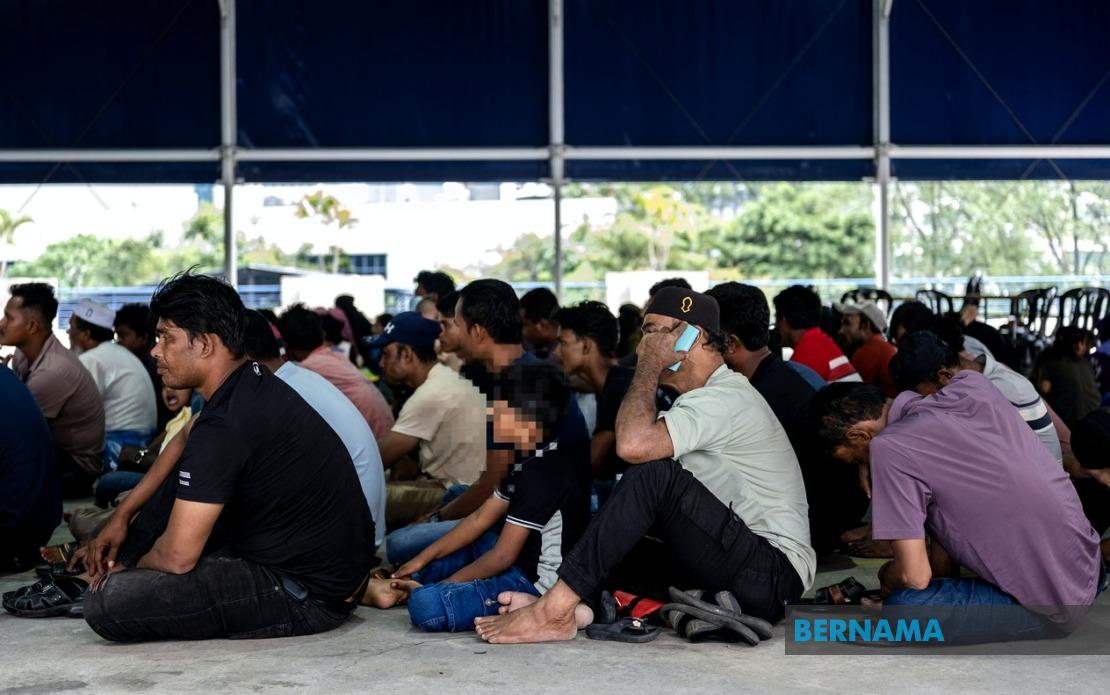
Malaysia is on track to compile its first comprehensive dataset on Myanmar refugees by the end of this year, Home Minister Datuk Seri Saifuddin Nasution Ismail announced during a public event in Putrajaya on Friday. The government has been systematically gathering information on individuals registered under the Refugee Registration Document (DPP) programme, a national initiative designed to bring order and clarity to refugee management across the country. Saifuddin Nasution indicated that preliminary figures would be made available to media outlets following completion of the collection phase, marking a significant milestone in Malaysia's efforts to document and properly account for this population segment.
The push to consolidate refugee data reflects the Home Ministry's commitment to establishing a more rigorous administrative framework for managing displaced persons. Through the Immigration Department, authorities have been implementing coordinated data collection efforts with relevant stakeholders to ensure accuracy and completeness. This systematic approach represents a departure from previous ad-hoc methods and aligns with Malaysia's broader strategy outlined in National Security Council Directive No. 23 (Revision 2023), which provides the policy foundation for how the country addresses refugee issues in an organized manner.
The DPP programme itself serves as the primary mechanism through which Malaysia identifies and registers individuals claiming refugee status. By gathering verified biometric data and comprehensive identity information, the government aims to establish a reliable baseline that distinguishes genuine refugees from other groups. This distinction is crucial not only for administrative purposes but also for determining eligibility for repatriation and humanitarian assistance. The programme's implementation reflects international best practices in refugee documentation while adapting them to Malaysia's specific security and administrative requirements.
Myanmar refugees represent a particularly significant cohort within Malaysia's broader refugee population, driven by the military coup and ongoing conflict in that country since 2021. However, the Home Minister clarified that the data collection initiative extends beyond Myanmar nationals to encompass all individuals in refugee categories currently present in Malaysia. This comprehensive approach enables the government to develop a complete picture of the refugee situation nationwide, facilitating better resource allocation and policy formulation. The broader scope also reflects Malaysia's position as a transit country managing multiple flows of displaced persons from across Southeast Asia.
Once preliminary data becomes available in the final quarter of 2024, individuals confirmed as legitimate refugees will become eligible for priority repatriation consideration. The Foreign Ministry, known locally as Wisma Putra, will take the lead on repatriation arrangements, coordinating with relevant international organizations and the home countries of displaced persons. This institutional division of labour ensures that data collection remains a Home Ministry function while diplomatic negotiations and repatriation logistics fall to the Foreign Ministry. The prospect of organized repatriation represents a significant development for individuals who have been living in uncertain circumstances.
Outreach and voluntary registration form critical components of the DPP programme's success. Rather than imposing mandatory registration through enforcement alone, the government is emphasizing public communication to inform Myanmar refugees and others of the opportunity to register their status officially. This approach recognizes that many displaced persons may harbor legitimate concerns about coming forward to government authorities, whether due to prior traumatic experiences or uncertainty about Malaysia's intentions. By framing registration as a path toward legitimate recognition and eventual repatriation, authorities hope to encourage higher participation rates.
The collection mechanism itself requires careful coordination between multiple government agencies and non-governmental organizations that work with refugee populations. Immigration officials, civil society groups, and community leaders must work together to reach individuals who may be geographically dispersed or otherwise difficult to access through conventional channels. The challenge of gathering complete and accurate data should not be underestimated, as many refugees operate within informal settlements or employment arrangements that deliberately keep them out of official view.
For Malaysian stakeholders and regional observers, the publication of refugee data carries significant implications. Businesses relying on informal labour markets may face increased scrutiny once refugee populations become formally documented. Civil society organizations working on humanitarian and protection issues will gain clearer understanding of actual numbers, enabling better program targeting. The data will also inform policy discussions about Malaysia's refugee absorption capacity and burden-sharing arrangements with international partners. Additionally, neighbouring countries managing their own refugee outflows may gain insights into Malaysia's systematic approach to documentation and repatriation.
The timing of data release in the fourth quarter also suggests that policy responses or international announcements regarding repatriation efforts may follow shortly thereafter. Myanmar's government and neighbouring countries have shown varying degrees of receptiveness to accepting repatriated nationals, making the diplomatic groundwork crucial. Malaysia's transparent approach to documenting refugee numbers may facilitate discussions with regional partners and international organizations about coordinated responses to the ongoing Myanmar crisis and its refugee spillover effects across Southeast Asia.

