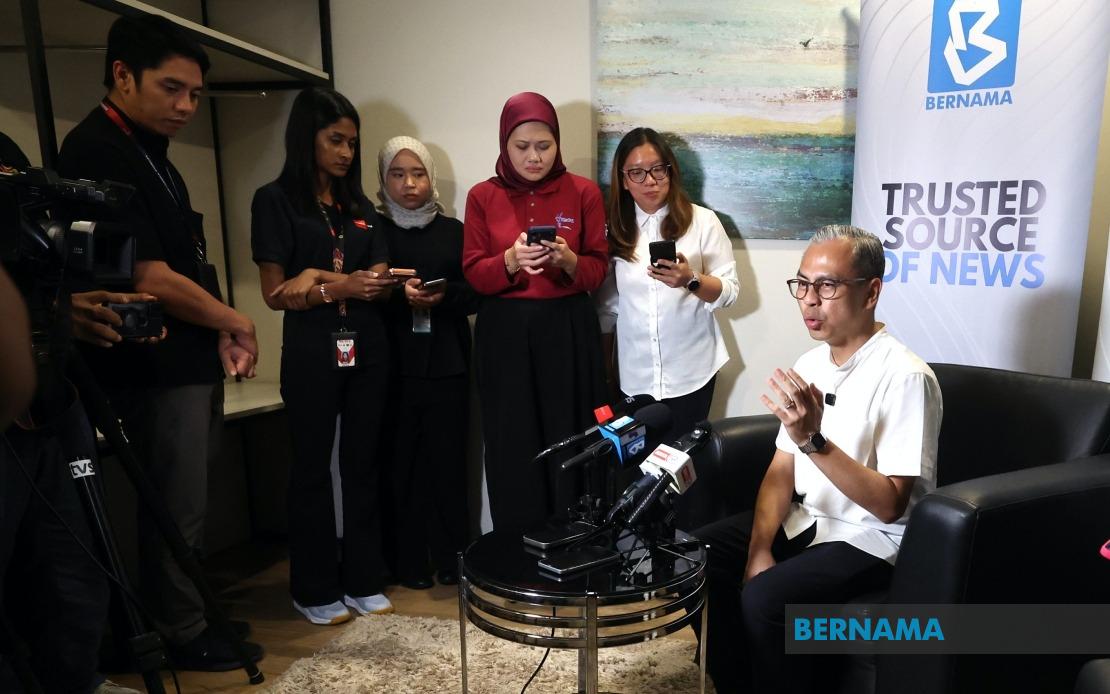
Communications Minister Datuk Fahmi Fadzil has moved to bolster the Malaysian Media Council as a cornerstone of the country's media self-regulation framework, arguing that a more robust industry-led oversight mechanism is essential for maintaining ethical standards across traditional and digital platforms. Speaking during a visit to the Malaysian National News Agency (Bernama) operations centre in Johor Bahru on July 7, Fahmi emphasised that the fledgling council requires strategic government assistance during its nascent phase, combined with aggressive expansion of membership across media organisations and social media companies.
The minister's remarks come as part of a broader government strategy to reshape how media accountability functions in Malaysia. Rather than relying solely on state intervention or legal mechanisms, the administration is positioning the Malaysian Media Council as a buffer institution that can address complaints and violations through industry consensus and peer review. This approach reflects an international trend towards stakeholder-driven governance, though it remains to be seen how effectively such self-regulation operates when political sensitivities are at stake.
Fahmi made clear that the government intends to provide tangible support to accelerate the council's work, particularly in its formative years when institutional capacity remains limited. He stressed that broadening membership would amplify the council's ability to tackle media-related issues independently, without requiring government intervention at every stage. The logic here is straightforward: the more media organisations and platforms voluntarily subject themselves to shared standards, the more credible and comprehensive the self-regulatory system becomes.
Prime Minister Datuk Seri Anwar Ibrahim has already signalled a significant policy shift regarding journalist accountability. Under the new framework, complaints filed against journalists from recognised media organisations will no longer trigger automatic investigations or enforcement actions. Instead, such grievances must first be routed through the Malaysian Media Council, ensuring that any disciplinary measures proceed through an ostensibly fairer, more transparent, and independent mechanism. This represents a departure from earlier practices where journalists faced potential prosecution or investigation without consistent procedural safeguards.
Yet the most contentious aspect of the government's media strategy concerns the recruitment of social media platforms into the Malaysian Media Council. Fahmi pointed out that while established media organisations generally respect professional ethical codes, the same cannot be said for content circulating through digital platforms, where material often spreads without consideration for local context or cultural sensitivities. The dissemination of personal information and investigative details—such as victims' identities in criminal cases—through unmoderated social channels highlights the vulnerability of Malaysia's information ecosystem to harmful practices.
The minister cited a recent incident in Banting to illustrate the problem: when a teenager stabbed a student, victim photographs and police investigation details rapidly proliferated across social media platforms, creating risks for ongoing legal proceedings and causing distress to those involved. This type of incident recurs frequently across Malaysia and other Southeast Asian countries, where social media companies' global content policies often fail to accommodate local legal frameworks, privacy norms, and judicial processes.
Fahmi argued that platforms operating in Malaysia currently apply rules designed for global audiences, with insufficient attention to the country's specific context and community values. By incorporating these platforms into the Malaysian Media Council, the government envisions a mechanism through which digital content standards could be calibrated to align with Malaysian law, cultural expectations, and ethical practices. The challenge, however, lies in convincing multinational technology companies to accept local self-regulatory oversight, particularly when it might conflict with their existing corporate policies or expose them to liability.
The government believes that expanding the Malaysian Media Council's remit and reach will bolster Malaysia's standing in international media freedom indices. Currently, the nation's performance on organisations like Reporters Without Borders' World Press Freedom Index reflects concerns about journalist safety, legal harassment, and government pressure. By demonstrating a commitment to industry-led accountability and transparent complaint resolution, Malaysian policymakers hope to present a more favourable image to international observers, even as questions persist about how much genuine editorial independence such an institution can guarantee when facing political pressures.
Fahmi's comments also reveal tensions embedded in Malaysia's media landscape. On one hand, the government acknowledges that vigorous media institutions contribute to national development and public trust. On the other hand, officials are keen to prevent certain types of reporting or content distribution deemed harmful to security, public order, or social harmony. The Malaysian Media Council, positioned as a neutral arbitrator, will inevitably face pressure to reconcile these competing imperatives, determining which complaints warrant investigation and which can be dismissed as legitimate journalism or expression.
For foreign media companies and platforms, the Malaysian government's push for stronger self-regulation signals both opportunity and risk. Participation in the council could offer protection against arbitrary action by state authorities, while demonstrating corporate responsibility to Malaysian audiences and regulators. Conversely, joining a government-supported self-regulatory body might entangle platforms in disputes with local politicians or interest groups, or require them to impose content restrictions that conflict with their global practices.
The involvement of Bernama, Malaysia's national news agency, alongside the Department of Information and the Malaysian Communications and Multimedia Commission, underscores how the media council functions within a wider ecosystem of state-influenced institutions. While technically an industry body, the council operates under considerable government influence and support, which raises questions about how independently it can adjudicate disputes or protect journalists from political targeting.
Looking ahead, the success of the Malaysian Media Council will depend on whether media organisations, platforms, and the government itself view it as a genuine neutral forum rather than another mechanism for managing content and controlling narratives. For Malaysia to credibly advance its media freedom agenda in the region, the council must demonstrate consistent, transparent decision-making that protects journalism while addressing legitimate concerns about misinformation, privacy, and public safety. Whether it achieves this balance remains an open question.

