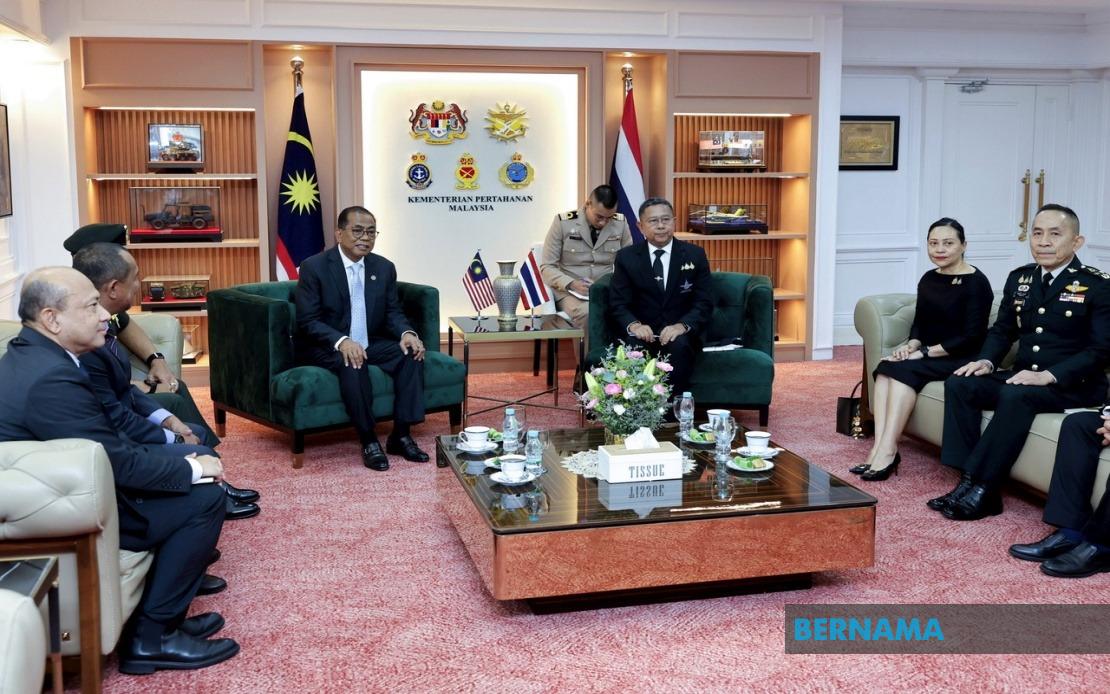
Malaysia has committed to working closely with Thanut Suvarnananda, the recently appointed chief of Thailand's Peace Dialogue Panel, as the two nations intensify efforts to bring lasting peace and stability to the troubled southern region. Defence Minister Datuk Seri Mohamed Khaled Nordin made the announcement following discussions with his Thai counterpart, Lieutenant General Adul Boonthumjaroen, emphasising that the fresh leadership in Bangkok's peace machinery represents a meaningful opportunity to accelerate the dialogue process.
Khaled's public endorsement of Thanut's appointment carries symbolic weight in a region where diplomatic messaging often telegraphs strategic intent. By welcoming the Thai government's decision announced earlier this year, Malaysia signals its readiness to engage constructively with Thailand's evolving institutional framework for resolving the conflict. Such pronouncements matter in Southeast Asia's conflict zones, where neighbouring states frequently calibrate their rhetoric to demonstrate commitment without overstepping boundaries of sovereignty or legitimacy.
The appointment of new leadership in Thailand's peace machinery comes at a juncture when the southern insurgency, though substantially diminished from its peak violence in the mid-2000s, continues to claim lives and destabilise communities. Malaysia's willingness to engage suggests Bangkok's counterparts see value in refreshed diplomatic engagement rather than relying solely on security operations. Khaled explicitly noted that Malaysia's role remains strictly facilitative, respecting Thailand's primacy in military affairs and domestic security—a carefully calibrated position that allows Kuala Lumpur to support peace without appearing to meddle in Thai internal matters.
Datak Rabin Basir, Malaysia's designated facilitator for the Southern Thailand Peace Dialogue, will serve as the primary conduit for coordination with Thanut's office. This institutional arrangement reflects the formal, bureaucratic nature of peace processes in the region, where designated officials and structured channels reduce friction and provide political cover for all parties. The existence of such clear appointment frameworks suggests the peace effort has matured beyond ad-hoc interventions into something resembling sustainable diplomatic infrastructure.
Beyond peace dialogue mechanics, the bilateral defence engagement encompasses a broader security agenda with direct implications for Malaysia. The two countries have committed to intensifying efforts against smuggling networks and preventing cross-border movement of destabilising elements, concerns that transcend southern Thailand's immediate political dynamics. These objectives will be formalised through the Malaysia-Thailand General Border Committee, which both nations view as a critical institutional mechanism for managing their shared 643-kilometre frontier.
The 57th GBC Meeting, scheduled for Malaysia to host this year, will address a comprehensive security and development portfolio extending far beyond counter-insurgency concerns. Discussions encompassing joint military operations, border security protocols, socio-economic development initiatives in frontier areas, and disaster management reflect the holistic approach increasingly adopted by Southeast Asian neighbours to border governance. Such meetings provide opportunities to build personal relationships between officials, establish procedural consistency, and demonstrate to domestic constituencies that governments are actively managing transnational challenges.
Khaled also articulated Malaysia's support for Thailand's bilateral approach to its Cambodia border dispute, endorsing the principle of dialogue over confrontation—though notably through ASEAN frameworks rather than unilateral Thai action. This positioning indicates Malaysia's commitment to regional stability writ large and its preference for ASEAN mechanisms to mediate interstate tensions. By referencing the Philippines' 2026 ASEAN Chair role as a potential conflict-easing intermediary, Malaysia demonstrates how multilateral institutions can provide diplomatic scaffolding for bilateral disputes without threatening sovereignty.
The broader context involves alignment between Malaysian and Thai defence postures ahead of the ASEAN Defence Ministers' Meeting and ADMM-Plus, gatherings where regional security concerns surface with increasing salience. The Philippines will host these sessions, making it an opportune moment for Malaysia and Thailand to coordinate positions on maritime security, traditional transnational threats, and the evolving geopolitical environment in Southeast Asia. Such pre-positioning prevents surprise positions that could complicate multilateral consensus-building.
Crucially, both nations have agreed to conclude a Memorandum of Understanding this year to strengthen regional security cooperation and foster joint development of their respective defence industries. This commitment extends the bilateral relationship beyond security problem-solving into economic and technological collaboration, suggesting decision-makers view the partnership as having growth potential. Defence industry cooperation carries strategic implications, as it can deepen institutional ties, create shared interests in regional stability, and reduce transaction costs for future security partnerships.
For Malaysian audiences, this engagement reaffirms Kuala Lumpur's role as a stabilising regional player and Thailand's principal trusted partner in navigating southern insurgency challenges. The consistent Malaysian emphasis on facilitation rather than direct involvement reflects both diplomatic sensitivity and practical constraints—Malaysia cannot police Thailand's territory but can offer institutional space and diplomatic credibility for dialogue. The appointment of Thanut Suvarnananda thus offers Kuala Lumpur an opportunity to refresh its peace facilitation efforts and demonstrate continued regional commitment without expanding its exposure to Thai domestic security complexities.

