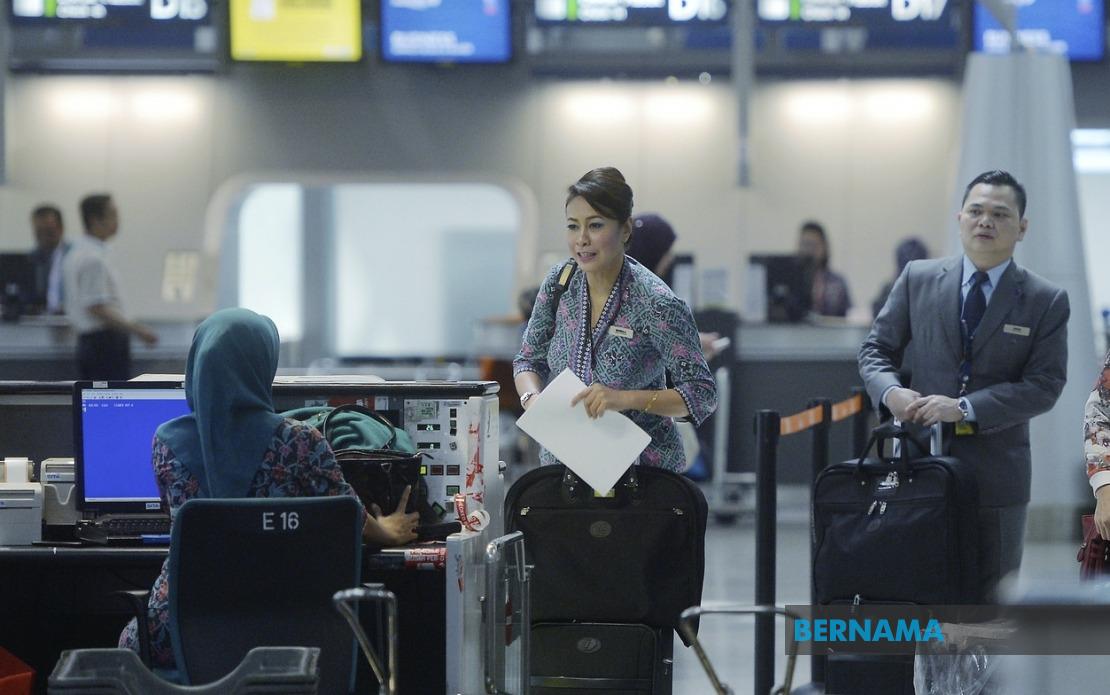
Malaysia's border control authorities are moving to substantially upgrade security screening protocols for aviation personnel across the country's airport network, a response triggered by the recent arrest of a pilot accused of attempting to smuggle controlled substances through Indonesia. The announcement signals growing concern among transport and security officials about vulnerabilities in existing procedures, particularly regarding staff who operate within restricted areas of major airports.
Datuk Seri Mohd Shuhaily Mohd Zain, director-general of the Malaysian Border Control and Protection Agency (AKPS), revealed during a press conference at Sepang that comprehensive changes are in motion following a coordination meeting convened by Transport Ministry secretary-general Datuk Seri Jana Santhiran Muniayan. The session brought together representatives from AKPS, the Royal Malaysia Police (PDRM), and Malaysia Aviation Group (MAG) to examine the security framework governing airport access and personnel movement.
The catalyst for this review was the July 29 detention of a 39-year-old Malaysian pilot at Soekarno-Hatta International Airport in Jakarta. According to Indonesia's Director-General of Customs and Excise Djaka Budi Utama, the suspect arrived on a scheduled international passenger service from Kuala Lumpur and was found carrying approximately 25 kilogrammes of ecstasy valued at roughly Rp60 billion (approximately RM135,000). The discovery highlighted a significant security lapse, as the pilot had successfully traversed screening procedures at Kuala Lumpur International Airport (KLIA) on July 28 before departure.
What makes this incident particularly concerning for Malaysian aviation authorities is the contradiction between the individual's apparent clearance and the subsequent discovery of contraband. Mohd Shuhaily acknowledged that the pilot underwent routine X-ray and scanner-based screening at KLIA, with neither his luggage nor its contents triggering alarms during the standard security checkpoint procedures. The individual passed all mandatory checks before boarding his aircraft, suggesting the drugs were either not detected by existing equipment or were concealed in a manner that circumvented current detection methods.
The involvement of Malaysia Aviation Group in the security review underscores the aviation industry's stake in restoring public confidence and preventing future incidents. MAG representatives demonstrated serious engagement with the matter, recognizing that any breach involving airline personnel damages the reputation and operational credibility of Malaysian carriers in international markets. The group's participation indicates that enhanced procedures will likely involve coordination between airport authorities and individual airlines regarding staff vetting and monitoring protocols.
Mohd Shuhaily indicated that forthcoming measures will impose more rigorous screening standards affecting all pilots and flight crew members across Malaysian airports. Rather than maintaining existing screening methodologies, the enhanced approach will presumably incorporate stricter questioning procedures, more comprehensive background investigations, and potentially upgraded scanning technology capable of detecting substances that current equipment may overlook. The specifics of these improvements remain under discussion as authorities await additional intelligence from police investigations.
The case reflects growing international concern about the vulnerability of aviation personnel to involvement in drug trafficking networks. Pilots and crew members occupy a uniquely advantageous position within supply chains due to their legitimate access to international borders, their ability to transport items with minimal scrutiny compared to ordinary passengers, and their irregular schedules that complicate monitoring. The fact that a Malaysian pilot allegedly exploited these advantages signals that recruitment by criminal networks may extend to professional aviation staff, not merely ground personnel.
From a Southeast Asian perspective, this incident carries broader implications for regional aviation security coordination. As drug trafficking organizations increasingly adapt to enforcement measures, they inevitably probe security protocols at major aviation hubs. Malaysia's position as a regional aviation center connecting established routes means that any gaps in screening procedures could attract sophisticated criminal attention. The enhanced screening approach therefore represents not merely a domestic adjustment but a signal to international partners that Malaysia takes seriously its responsibility as a major transit point.
The police investigation remains ongoing, with authorities still analyzing how the contraband evaded detection at KLIA. This phase will likely prove crucial for identifying systemic weaknesses beyond the screening checkpoint itself—including potential corruption among airport staff, inadequate equipment maintenance, or training gaps among personnel operating detection equipment. Mohd Shuhaily's statement that officials await police feedback suggests that the investigation may reveal factors beyond simple equipment limitations.
For Malaysian passengers and the aviation industry, the enhanced screening regime will likely mean longer processing times for pilots and crew at airports as procedures become more comprehensive. Airlines may face increased operational complexity managing the additional requirements, though industry representatives have demonstrated acceptance of these inconveniences as necessary security measures. The broader message from authorities emphasizes that aviation security is not negotiable, regardless of professional status.
International observers, particularly regulatory bodies in neighboring countries and major aviation markets, will watch how Malaysia implements these improvements. The credibility of Malaysian aviation depends partly on demonstrable commitment to security standards that match or exceed global benchmarks. Enhanced screening for aviation personnel aligns with recommendations from International Air Transport Association and other international bodies that have identified staff as a potential vulnerability vector.
The incident also reflects the sophisticated methods employed by drug trafficking networks operating across Southeast Asia. The selection of a pilot as a courier suggests organized criminal groups have developed recruitment strategies targeting individuals in high-access roles. This represents a qualitative shift from opportunistic smuggling toward systematic infiltration of aviation infrastructure, which necessitates correspondingly sophisticated countermeasures.

