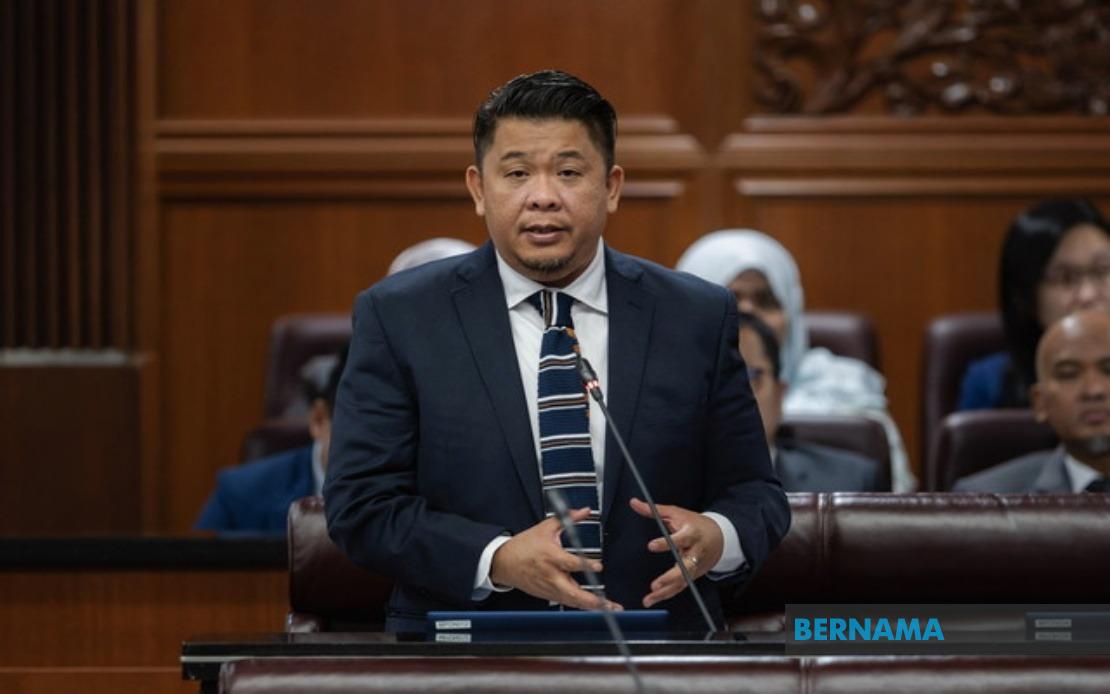
The Malaysian government is maintaining active surveillance of more than 21,000 citizens living in or visiting 14 countries affected by armed conflicts, with detailed contingency plans in place to extract them rapidly if security conditions deteriorate further. Deputy Foreign Minister Datuk Lukanisman Awang Sauni disclosed the monitoring operation during parliamentary questioning, emphasising that the nation's prior experience managing regional crises had sharpened official readiness for potential mass evacuation scenarios. This revelation underscores Kuala Lumpur's heightened alertness to the volatile security landscape across multiple regions and its commitment to safeguarding nationals abroad, a responsibility that has grown increasingly complex given Malaysia's substantial diaspora scattered throughout geopolitically sensitive areas.
The comprehensive monitoring architecture rests on coordination among multiple government departments and external partners. Lukanisman specified that the plan integrates input from relevant ministries, state agencies, humanitarian organisations, tour operators specialising in religious pilgrimages, and the Royal Malaysian Air Force alongside commercial airlines capable of deploying charter aircraft. This multi-layered approach reflects the reality that evacuating tens of thousands of people requires logistical sophistication extending well beyond conventional consular operations. The inclusion of Petronas, Malaysia's national petroleum company, in planning discussions signals recognition that Malaysian corporate interests abroad—particularly in energy sectors within vulnerable regions—represent substantial populations requiring tailored evacuation protocols.
All Malaysian diplomatic missions maintain continuously updated contingency documents tailored to their specific operational environments. These operational blueprints encompass detailed geographical mapping of Malaysian communities, established communication channels with citizens, pre-arranged resource allocation mechanisms, and evacuation pathways suited to each location's unique circumstances. Rather than applying a one-size-fits-all template, missions adjust their activation thresholds according to real-time threat assessments, the scale of the Malaysian population potentially affected, and the evolving security calculus. This adaptive framework acknowledges that crises manifest differently across regions and that premature or delayed activation decisions could prove equally problematic.
The Foreign Ministry has implemented multiple digital tools designed to strengthen citizen engagement and information flow. Malaysian nationals residing abroad or undertaking temporary visits are now encouraged to register their presence with their nearest diplomatic mission through email, telephone, or the dedicated e-Consular system. Additionally, the ministry promoted the MyWorldAlert mobile application as a mechanism enabling citizens to receive real-time alerts about emerging threats and access guidance for securing emergency assistance. These technological infrastructure investments represent a shift toward more decentralised, citizen-initiated reporting that supplements traditional government tracking and acknowledges that many Malaysians abroad do not maintain regular contact with official channels.
West Asian instability prompted the Foreign Ministry to issue three separate travel advisories earlier this year, reflecting the acceleration of security concerns in that strategically significant region. The disruptions extended to commercial aviation, with much of the region's airspace closing temporarily as conflict intensified. However, the situation has demonstrably improved since April 8, when key parties announced a ceasefire agreement. Subsequent weeks have seen progressive reopening of airspace and stabilisation of flight operations, reducing immediate evacuation pressures and allowing some return to normalcy. Nevertheless, the Foreign Ministry's continued vigilance suggests officials view recent improvements as potentially fragile rather than constituting fundamental conflict resolution.
The scale of Malaysians requiring monitoring across 14 separate conflict zones reflects the breadth of Malaysian overseas engagement. This population encompasses students pursuing higher education, expatriate professionals in energy and finance sectors, religious pilgrims conducting umrah journeys, business owners operating regional ventures, and diplomatic staff themselves. Each cohort presents distinct evacuation challenges—students may require coordination with educational institutions, professionals with employers, pilgrims with tour operators, and diplomats with host governments. The figure of 21,427 individuals represents the largest consolidated snapshot of Malaysian citizens in simultaneous jeopardy across multiple theatres, yet such comprehensive accounting remained challenging prior to implementation of registration systems.
The government's strategic approach derives substantial legitimacy from lessons learned during previous regional upheavals. Malaysia has evacuated nationals from conflict zones before, though rarely at such scale or complexity. These historical experiences established protocols that, while refined and expanded, retain institutional memory of what works operationally and what creates bottlenecks. The Deputy Foreign Minister's explicit reference to learning from prior conflicts signals that current preparedness represents evolution rather than ad hoc improvisation. However, the difference between managing thousands of evacuees across one or two countries and coordinating extraction from fourteen simultaneously distinct theatres remains substantial.
The involvement of commercial airlines in contingency planning addresses a practical reality: successful evacuation at scale depends on civilian transport infrastructure, not military aircraft alone. While the Royal Malaysian Air Force maintains some capacity for emergency flights, commercial carriers offer greater passenger volume, more diverse routing options, and fewer political complications in overflight negotiations. Establishing pre-agreed charter arrangements with airlines ensures that when activation orders arrive, aircraft can be rapidly redeployed without protracted commercial negotiations. This partnership approach also recognises that Malaysian carriers themselves have competitive interests in regional stability and evacuation protocols.
Umrah pilgrimage operations occupy particular significance within Malaysia's overseas vulnerability profile. Religious journeys to Saudi Arabia and other Gulf locations involve substantial numbers of Malaysian nationals, many from less urbanised backgrounds potentially less familiar with embassy registration systems. The integration of umrah operators into contingency planning acknowledges that evacuation success for pilgrims requires cooperation from tour companies who maintain direct relationships with pilgrim groups and logistical arrangements in Gulf countries. These specialised intermediaries become force multipliers in communicating evacuation requirements and marshalling groups toward designated assembly points.
The registration mechanisms emphasising citizen responsibility represent a subtle shift in government communication around overseas security. Rather than projecting omniscient state surveillance, officials are encouraging voluntary information-sharing through multiple accessible channels. This approach acknowledges practical limits on government tracking capacity while enlisting citizens themselves as partners in their own security management. The emphasis on MyWorldAlert and e-Consular registration suggests that in contemporary crisis scenarios, bidirectional communication flows—citizens learning of threats while simultaneously informing government of their locations—prove more effective than unidirectional government broadcasting.
Looking ahead, Malaysia's sustained monitoring operation reflects structural vulnerabilities inherent to regional geopolitics that show no signs of fundamental resolution. Even as immediate crisis indicators recede, the underlying conflicts generating those risks persist. The 21,427 Malaysians under active watch represent not merely current caseloads but emblematic populations in a region where Malaysian interests—educational, commercial, religious, diplomatic—remain deeply embedded. Maintaining preparedness infrastructure for potential rapid escalation thus becomes a permanent feature of Malaysian foreign policy rather than an exceptional measure, consuming resources and attention even during extended periods of relative calm.

