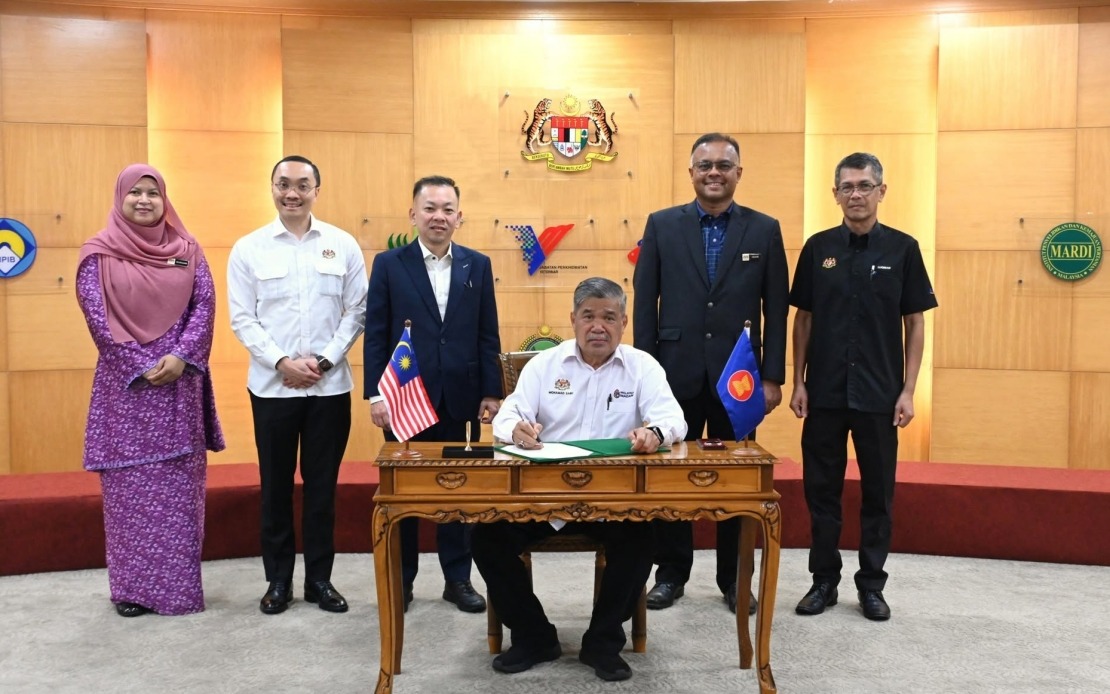
Malaysia has secured significant commercial and technological opportunities through two Memoranda of Understanding inked under the ASEAN framework, positioning the country to deepen its foothold in regional agricultural markets whilst adopting sustainable farming practices resilient to climate shocks. Datuk Seri Mohamad Sabu, the Agriculture and Food Security Minister, executed the agreements on Malaysia's behalf during the ASEAN Ministers on Agriculture and Forestry (AMAF) Meeting, signalling renewed commitment to collaborative agricultural development across Southeast Asia.
The first accord, styled the ASEAN Cooperation in Agriculture and Forest Products Scheme, encompasses five strategic pillars designed to reshape how the bloc approaches food systems and natural resource stewardship. Beyond simply facilitating trade flows, the initiative targets the fortification of regional food security architecture—a pressing concern given the continent's vulnerability to monsoon disruptions, prolonged dry seasons, and transnational pest incursions. The agreement explicitly mandates coordinated conservation of forests and arable land, recognising that environmental degradation in one nation cascades across borders through ecosystem disruption and commodity scarcity.
Under this framework, Malaysia has assumed leadership roles reflecting its agricultural comparative advantages. The Ministry of Plantation and Commodities (KPK) will steer regional strategy on palm oil and cocoa, commodities where Malaysia remains a global heavyweight despite decades of sustainability scrutiny. Simultaneously, the Ministry of Agriculture and Food Security (KPKM) will champion Malaysia's diverse agri-food portfolio, encompassing everything from rice and poultry to aquaculture and processed foods. This dual-leader arrangement underscores how the agreement leverages each nation's strengths rather than imposing uniform approaches.
The scheme opens avenues for coordinated international advocacy that could prove invaluable for Malaysian producers. Through joint ASEAN campaigns, palm oil exporters and other producers can present unified messaging in global markets where individual nations lack negotiating heft. This collective bargaining approach matters enormously for Malaysia, where palm oil sales face persistent environmental criticism in Western markets and anti-trade sentiment in some consumer nations. By aligning positions with fellow ASEAN producers, Malaysia strengthens its ability to counter discriminatory trade practices or unfounded commodity narratives that ignore certified sustainable production.
Beyond oils and major commodities, the agreement unlocks export expansion for higher-value, differentiated products that Malaysian farmers and agribusinesses have cultivated over decades. Industrial crops ranging from rubber to spices, livestock products including processed poultry and beef, herbs and medicinal plants drawing on traditional Southeast Asian knowledge, and forest-derived goods like mushrooms, nuts, and honey all stand to benefit from improved market access arrangements. For rural communities and small-to-medium agribusinesses, this widened regional market represents tangible income opportunities that can reduce dependence on volatile global commodity pricing.
The second MoU, forged between ASEAN and China, extends the regional framework into a critical bilateral relationship spanning five years and encompassing 18 distinct cooperation domains. China's massive agricultural research apparatus and its advancing technologies in climate adaptation make this partnership particularly consequential for Malaysia and neighbouring countries racing to adapt farming systems to shifting monsoon patterns and temperature volatility. The agreement recognises that climate-smart agriculture—farming methods engineered to maintain productivity whilst reducing carbon emissions—requires knowledge transfer, not merely market access.
Specific mechanisms embedded in the ASEAN-China accord address vulnerabilities that keep Southeast Asian agricultural systems fragile. Disaster risk management provisions acknowledge that flooding and drought threaten harvests unpredictably, whilst agricultural insurance frameworks can distribute losses across seasons and geographies. Cross-border pest and disease control initiatives respond to the reality that tropical pests recognise no boundaries; coordinated surveillance and rapid-response protocols are far more effective than isolated national efforts. Research collaboration provisions facilitate joint studies into climate resilience, soil health, and crop varieties suited to future climatic conditions—investments requiring scale and resources beyond what individual nations can muster alone.
For Malaysia specifically, the low-carbon agriculture and sustainable forest management components carry profound implications. Malaysian agriculture contributes significantly to the nation's greenhouse gas emissions, particularly from palm cultivation and peat soils. Access to Chinese expertise in precision agriculture, soil carbon sequestration, and low-emission farming techniques could enable Malaysian producers to maintain or enhance yields whilst reducing environmental footprint. This technological upgrading positions Malaysia competitively as international markets increasingly demand carbon-conscious sourcing and as investors impose climate risk criteria on agricultural investments.
The policy coordination element of the ASEAN-China arrangement facilitates harmonisation of standards and regulations across the region, reducing transaction costs for traders and investors. When nations align quality assurance protocols, food safety standards, and certification requirements, cross-border commerce accelerates and supply chains become leaner. For Malaysian exporters, uniform ASEAN-wide standards mean they can scale operations more efficiently, serving multiple markets under compatible frameworks rather than navigating a patchwork of national requirements.
These agreements arrive at a juncture when Malaysian agriculture faces mounting pressure from multiple fronts. Climate change is already altering rainfall patterns and temperature regimes that Malaysian farmers have adapted to over generations. Trade tensions globally have made diversification of export destinations essential. Labour shortages in rural areas push towards mechanisation and technology adoption. Simultaneously, international capital increasingly flows towards firms demonstrating environmental stewardship and resilience to climate risks. By anchoring Malaysia within these ASEAN and ASEAN-China frameworks, the government positions domestic agribusiness to access the capital, technology, and markets necessary to navigate this complex terrain.
The practical outcomes of these MoUs will ultimately depend on implementation rigour and resource allocation. ASEAN regional initiatives often suffer from weak enforcement and uneven participation. Yet the deliberate pairing of market-access agreements with technology-transfer mechanisms suggests policymakers recognise that expanded trade without upgraded productivity and sustainability risks simply relocating problems rather than solving them. For Malaysian stakeholders—whether plantation owners, commodity traders, smallholder farmers, or agribusiness investors—the challenge lies in leveraging these institutional frameworks to secure genuine competitive advantage in an increasingly climate-conscious global marketplace.

