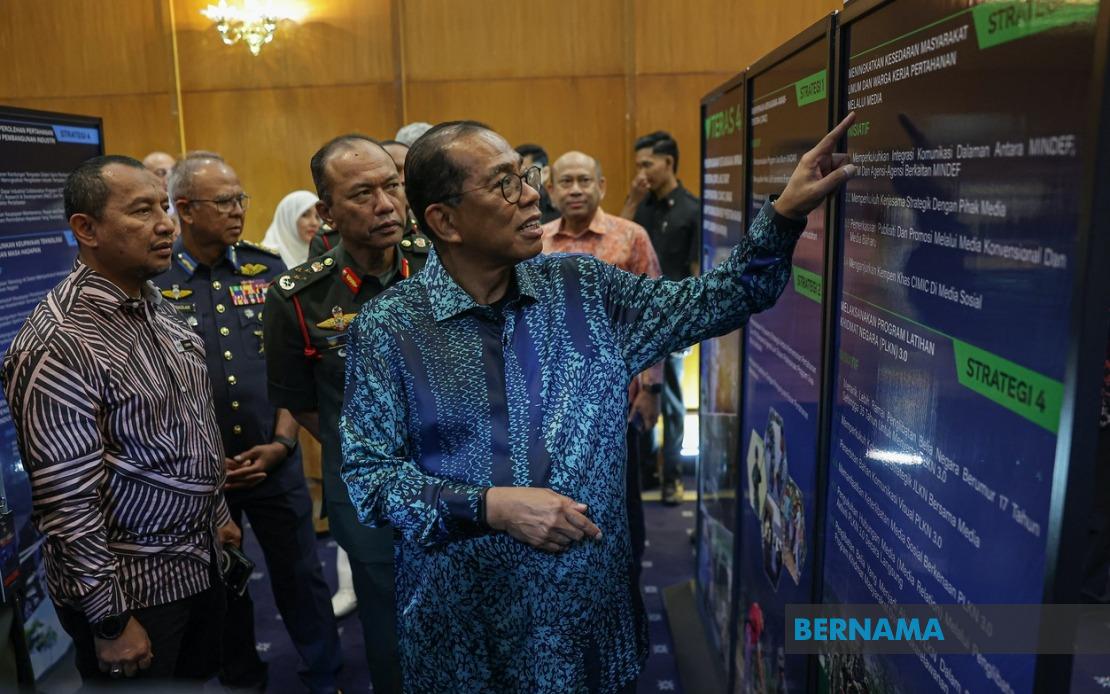
Malaysia's Defence Ministry has released an ambitious blueprint for the next five years, introducing the National Defence Strategic Plan (PSPN) and Defence Capacity Blueprint (RTKP) 2026-2030 to fortify the nation's security posture against an increasingly complex threat environment. Launched in Kuala Lumpur on June 25, these twin frameworks represent a significant recalibration of how Malaysia approaches defence planning in an era characterised by unpredictable geopolitical dynamics, sophisticated military technologies, and security challenges that defy conventional categorisation.
Defence Minister Datuk Seri Mohamed Khaled Nordin explained that both documents function as complementary instruments to the existing Defence White Paper, providing more granular operational guidance while maintaining strategic flexibility. The world, he noted, confronts a widening spectrum of security pressures—from escalating geopolitical rivalries between major powers reshaping regional alignments, to transformative technologies like artificial intelligence and automation that fundamentally alter military doctrine, alongside emergent threats that traditional defence structures struggle to address.
For Malaysia and other Southeast Asian nations, this dual approach carries particular relevance. The region faces mounting tensions over maritime boundaries, expanding great-power competition in its waters, and transnational threats ranging from terrorism to cybercrime that require sophisticated interagency responses. By embedding adaptability into its defence framework through the PSPN, Malaysia signals a commitment to remaining operationally responsive rather than locked into rigid strategic postures that become obsolete rapidly.
The PSPN rests on seven strategic pillars, each addressing fundamental dimensions of military effectiveness. These include ensuring the Malaysian Armed Forces maintain peak operational readiness for contemporary and anticipated contingencies, systematically advancing defence capabilities across all service branches, protecting the material and psychological welfare of active personnel and veterans whose morale directly influences force cohesion, fostering technological advancement and innovation within defence industries, and integrating these elements into a coherent whole.
Equally important, the Defence Capacity Blueprint translates ambitious strategic goals into concrete resource allocation and institutional development. Mohamed Khaled emphasised a crucial distinction: the PSPN identifies strategic destinations while the RTKP supplies the means to reach them. This encompasses not merely financial appropriations but sustained investment in human capital—recruiting, training, and retaining skilled military personnel and civilian defence professionals whose expertise underpins modern operations. Technological expertise and research capacity receive explicit attention, acknowledging that militaries without indigenous innovation capacity become dependent on foreign systems and vulnerability to supply disruptions.
The blueprint explicitly adopts a whole-of-government and whole-of-society framework, departing from narrower institutional approaches that confined defence to the military sphere alone. This reflects growing recognition that contemporary security challenges—from disaster response to infrastructure protection to managing information warfare—require coordination across defence, interior, intelligence, economic, and diplomatic agencies. It also signals that national resilience depends partly on civilian preparedness, industrial capacity, and public awareness, not exclusively on military capability.
Concrete acquisitions underscore this strategic intent. Malaysia received three ANKA Medium Altitude Long Endurance Unmanned Aircraft Systems in March, with these systems now deployed operationally at Labuan Air Base. These surveillance platforms extend Malaysia's maritime awareness across its vast territorial waters and exclusive economic zone, a critical requirement given the region's importance to global trade and the complexity of monitoring vast ocean areas. The unmanned systems approach offers cost advantages and reduces pilot exposure to hostile air defence while extending endurance beyond manned aircraft capacity.
Additional procurement commitments reinforce capability modernisation. The Malaysian Armed Forces anticipate receiving FA-50M light combat aircraft—a versatile platform suitable for training, ground attack, and air defence roles—alongside maritime patrol aircraft essential for extended ocean surveillance. The second batch of Littoral Mission Ships, designed specifically for littoral and coastal operations where Malaysia expects future contingencies, continues acquisition on schedule. These platforms reflect strategic prioritisation of maritime domains where Malaysia's interests, vulnerabilities, and operational requirements concentrate.
These acquisitions gain significance within the broader geopolitical context affecting Malaysia. The Indo-Pacific region experiences intensifying competition between established powers, emerging technologies that compress decision-making timelines, and an environment where smaller nations like Malaysia must calibrate military modernisation carefully to maintain security without provoking escalation or destabilising arms competition. The emphasis on unmanned systems, light combat aircraft, and littoral-focused platforms represents a balanced approach—sufficient deterrence and operational capability without pursuing expensive, power-projection platforms that exceed Malaysian strategic requirements and fiscal capacity.
The timing of this strategic announcement also reflects Malaysia's domestic political consolidation and emphasis on institutional strengthening. After periods of political turbulence, systematic defence planning and professionalised military modernisation contribute to institutional stability and demonstrate governance competence to both citizenry and international partners. Regional neighbours observe these developments closely—Malaysia's security choices influence perceptions of regional stability and reliability as a partner in multilateral security frameworks.
Looking forward, the PSPN-RTKP framework establishes metrics and accountability mechanisms for defence performance across five-year cycles, enabling periodic assessment and recalibration as security environments shift. This contrasts with longer defence white papers that, while establishing overarching principles, sometimes struggle with implementation rigour. By institutionalising intermediate planning horizons and capacity assessments, Malaysia creates conditions for more responsive strategy evolution.
The implications extend beyond Malaysia itself. As an Association of Southeast Asian Nations cornerstone with significant maritime interests, Malaysia's defence modernisation influences regional security calculations. Neighbouring countries observe equipment acquisitions and strategic rhetoric to assess relative capabilities and intentions. A transparent, institutionally grounded defence framework that emphasises interagency coordination and civilian oversight reduces miscalculation risks and strengthens Malaysia's diplomatic position within regional and international security dialogues where credible, articulate defence strategies carry significant weight.

