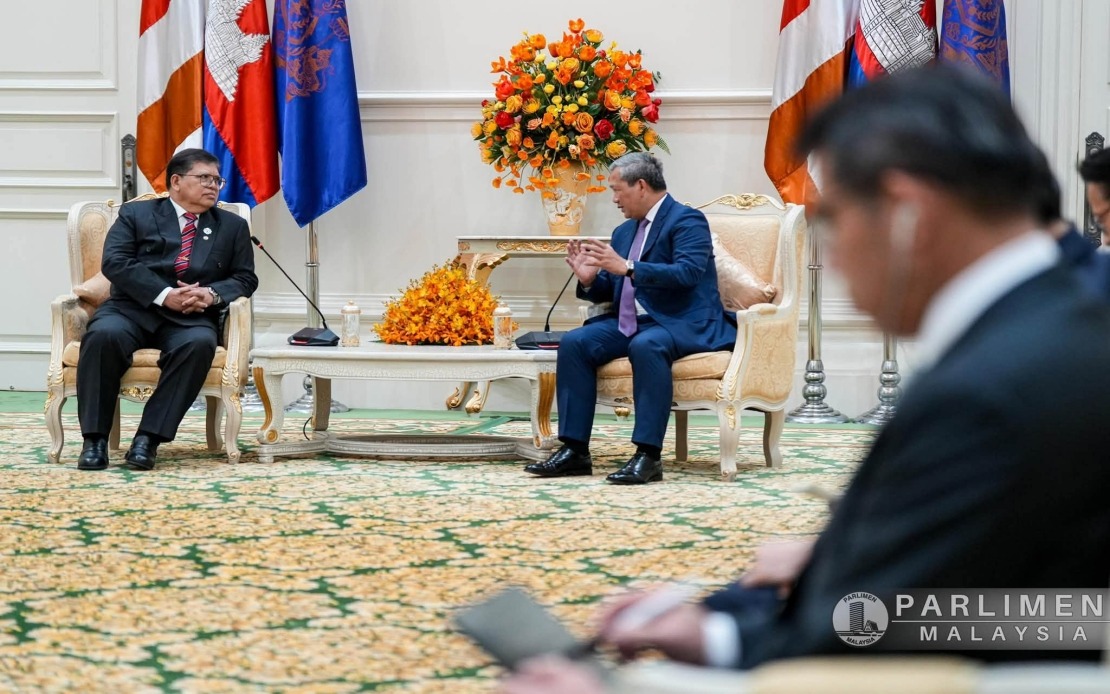
Malaysia has reiterated its commitment to supporting peaceful diplomatic solutions to the Cambodia-Thailand border dispute, with Dewan Rakyat Speaker Tan Sri Johari Abdul warning that unresolved tensions between the two neighbours could undermine the collective strength of Southeast Asia. Speaking on the sidelines of the Second Inter-Parliamentary Speakers' Conference in Phnom Penh, Johari emphasised that regional cohesion depends on member states prioritising dialogue over confrontation when navigating territorial and bilateral disagreements.
The border tensions between Cambodia and Thailand have persisted for years, with sporadic clashes affecting civilian populations in adjacent communities and creating humanitarian concerns. Johari's intervention reflects Malaysia's broader role as a respected mediator within ASEAN, a bloc that has long struggled with inter-member disputes ranging from maritime boundaries to historical grievances. By positioning Malaysia as a voice for restraint, the speaker underscored the bloc's foundational principle that conflicts must be managed through constructive engagement rather than escalation.
During his bilateral meeting with Cambodian Prime Minister Hun Manet, Johari acknowledged Phnom Penh's legitimate concerns about the border situation and its consequences for civilians. Malaysia's explicit recognition of Cambodia's position signals diplomatic sensitivity to the affected communities while stopping short of taking sides in the dispute. This balanced approach allows Kuala Lumpur to maintain working relationships with both parties and positions Malaysia as a potential facilitator should either government seek mediation.
The speaker stressed that ASEAN's credibility as a regional institution hinges on its ability to preserve internal harmony and manage disagreements without allowing disputes to fracture the bloc's unity. ASEAN operates on principles of non-interference and consensus-building, frameworks that have enabled the association to maintain its relevance despite member states' diverse interests and occasional territorial disagreements. Johari's remarks serve as a reminder that even when individual nations face conflicts, the collective good must be protected through sustained diplomatic channels.
Malaysia's commitment to supporting efforts to bring both Cambodia and Thailand back to the negotiating table reflects Kuala Lumpur's investment in regional stability. With Malaysian companies operating across Southeast Asia and significant trade flows dependent on calm borders, Malaysia has tangible economic interests in conflict resolution. Johari's statement also suggests that Malaysia may be willing to offer its good offices or technical support to facilitate future negotiations between Phnom Penh and Bangkok.
Beyond the border issue, Johari and Prime Minister Hun Manet discussed expanding bilateral cooperation across multiple sectors. Parliamentary exchanges, economic partnerships, and human capital development emerged as areas where Malaysia and Cambodia can deepen their relationship. These initiatives are not merely ceremonial; they build institutional ties and personal relationships that strengthen overall ties and create informal networks for addressing future disagreements.
The discussion on Technical and Vocational Education and Training (TVET) cooperation is particularly significant for Malaysia, which has positioned itself as a regional hub for skills development. By offering training opportunities and institutional exchanges with Cambodia, Malaysia supports Phnom Penh's development agenda while creating employment and investment opportunities for Malaysian educators and businesses. Such programmes also foster generational ties between the two nations, potentially reducing long-term friction.
Youth engagement emerged as a priority in talks between the two parliamentary leaders, with both sides recognizing that younger generations must inherit a region of cooperation rather than conflict. Student exchange programmes, joint cultural initiatives, and inter-parliamentary youth forums create spaces where future leaders from Cambodia and Malaysia can build mutual understanding. These investments in people-to-people connections often prove more durable than formal government agreements.
Johari's appreciation for Cambodia's role in facilitating Malaysian business operations reflects the economic interdependence that increasingly characterises ASEAN relationships. As Malaysian firms invest in Cambodia's growing economy, they become stakeholders in the nation's stability and prosperity. Conversely, Cambodia benefits from Malaysian capital, technology transfer, and management expertise. This mutual economic interest, though not sufficient to eliminate border disputes entirely, provides a foundation for sustained engagement and compromise.
Malaysia's diplomatic posture on the Cambodia-Thailand issue illustrates how middle powers within ASEAN can shape regional outcomes without imposing solutions. By consistently advocating for dialogue and highlighting the consequences of escalation, Malaysia influences the broader diplomatic environment in which bilateral disputes unfold. Even when Malaysia lacks direct leverage, its voice carries weight in ASEAN deliberations and international forums.
The timing of Johari's statement during the Inter-Parliamentary Speakers' Conference is strategically significant. Parliamentary diplomacy operates in parallel to traditional government-to-government channels and sometimes proves more flexible in addressing sensitive issues. Speakers and legislators can explore creative solutions and build cross-party consensus in ways that executive branches sometimes cannot, particularly when public positions have hardened or nationalist pressures intensify.
Looking forward, Malaysia's sustained advocacy for dialogue on the Cambodia-Thailand border will likely continue through various diplomatic channels. Whether through ASEAN's mechanisms, bilateral visits, or parliamentary forums, Malaysia can maintain pressure on both parties to seek peaceful resolution. For the broader Southeast Asian region, Malaysia's commitment to supporting diplomatic solutions serves as a model for how nations can address neighbours' conflicts without compromising their own interests or regional stability.

