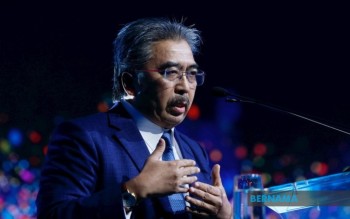
The Malaysian government is navigating a delicate balancing act between accelerating electric vehicle adoption and securing funding for the charging infrastructure that will make widespread EV use practical. Speaking during a Dewan Negara session this week, MITI Minister Datuk Seri Johari Abdul Ghani clarified that no decision has been made on implementing a proposed EV levy, emphasising instead that policymakers are still evaluating the most suitable delivery mechanism. The government's cautious approach reflects the complexity of the issue: any costs imposed on vehicle manufacturers are likely to be passed on to consumers, potentially dampening enthusiasm for what is intended to be an environmentally progressive policy.
The core challenge facing Malaysia mirrors that faced by many developing and middle-income nations attempting to transition towards cleaner transportation. Unlike China, which has invested heavily in state-funded charging networks as part of broader infrastructure initiatives, Malaysia operates under fiscal constraints that limit direct government spending. The government is simultaneously managing various automotive subsidies whilst attempting to build a credible public charging network—a combination that demands creative funding solutions. Johari's acknowledgement of these constraints reflects a growing recognition within the administration that the transition to electric vehicles cannot proceed on ideological grounds alone; it must be financially sustainable and politically palatable.
One mechanism under serious consideration is a per-vehicle levy imposed on every EV sold in Malaysia, with revenues directed into a dedicated fund specifically designated for expanding public charging stations. This approach offers several advantages: it creates a revenue stream that grows proportionally with EV adoption, ensuring infrastructure development scales alongside the growing vehicle population. It also establishes a direct linkage between the EV market and charging infrastructure investment, potentially creating momentum for both. However, such a levy would ultimately increase the effective purchase price of electric vehicles, potentially contradicting government efforts to make them more affordable and attractive compared to petrol-powered alternatives.
The minister's comments reveal the government's awareness that any unilateral cost-shifting carries political and economic consequences. If manufacturers absorb levy costs, Malaysia risks making locally assembled vehicles less competitive in international markets and potentially discouraging investment in EV manufacturing facilities. Conversely, passing costs to consumers could slow domestic EV adoption by making electric vehicles more expensive at the point of purchase—precisely when the government is trying to build momentum in this sector. This tension underscores why MITI is taking time to evaluate options rather than rushing to implementation.
Johari's emphasis on the "bigger picture" also highlights an often-overlooked reality in Malaysia's energy transition: the country remains substantially dependent on fossil fuels for electricity generation. Coal and gas-fired power stations still account for a significant portion of Malaysia's electricity supply, meaning that charging an EV does not automatically translate to zero-emissions driving. This infrastructure reality complicates the narrative around environmental benefits and requires integrated planning across both transport and energy sectors. The minister's point, though sometimes unpopular with environmental advocates, reflects the pragmatic view that Malaysia must work with existing energy infrastructure whilst gradually transitioning towards renewables.
The government's fiscal deficit situation, which Johari explicitly referenced, has become increasingly central to policy discussions. Running a budget shortfall limits the ability to fund major infrastructure projects through general revenue, forcing policymakers to identify targeted revenue sources or seek private sector partnerships. An EV levy represents one such mechanism—relatively easy to implement administratively since it can be integrated into existing vehicle registration and sales processes. Yet the government has also not ruled out alternative approaches, such as incentivising private companies to build and operate charging networks, or expanding partnerships with energy providers like TNB that have both technical expertise and existing distribution infrastructure.
The charging infrastructure gap is particularly acute in Malaysia's less urbanised areas, where the business case for private charging stations is weaker. Urban centres like Kuala Lumpur and Selangor already benefit from growing private investment in charging networks, but rural regions and smaller towns lag significantly behind. A government-funded charging network, financed through targeted levies or subsidies, would be essential for ensuring that EV adoption is not confined to wealthy urban consumers. This equity dimension adds another layer to the government's decision-making, as policymakers must consider not just national aggregate adoption rates but geographic distribution of charging access.
The timing of these discussions is significant given Malaysia's stated commitment to carbon reduction targets and regional integration into ASEAN climate frameworks. Other regional economies are also grappling with similar infrastructure challenges, and Malaysia's approach could either set an example or serve as a cautionary tale depending on implementation success. Singapore's highly centralised model works for a city-state with dense urban development, whilst Indonesia faces even more acute infrastructure constraints. Thailand's EV incentive structures, meanwhile, offer useful comparative lessons about balancing consumer affordability with infrastructure investment.
Moving forward, MITI's evaluation process will likely involve extensive consultation with stakeholders including vehicle manufacturers, charging infrastructure operators, energy companies, and consumer groups. The government's willingness to acknowledge trade-offs and complexities in these discussions, rather than advancing a predetermined solution, suggests that final policy decisions will emerge from this consultative process. What remains clear is that securing adequate charging infrastructure is non-negotiable for Malaysia's EV transition—the only question is how the financial burden will be distributed and who ultimately bears the costs of this essential public good.

