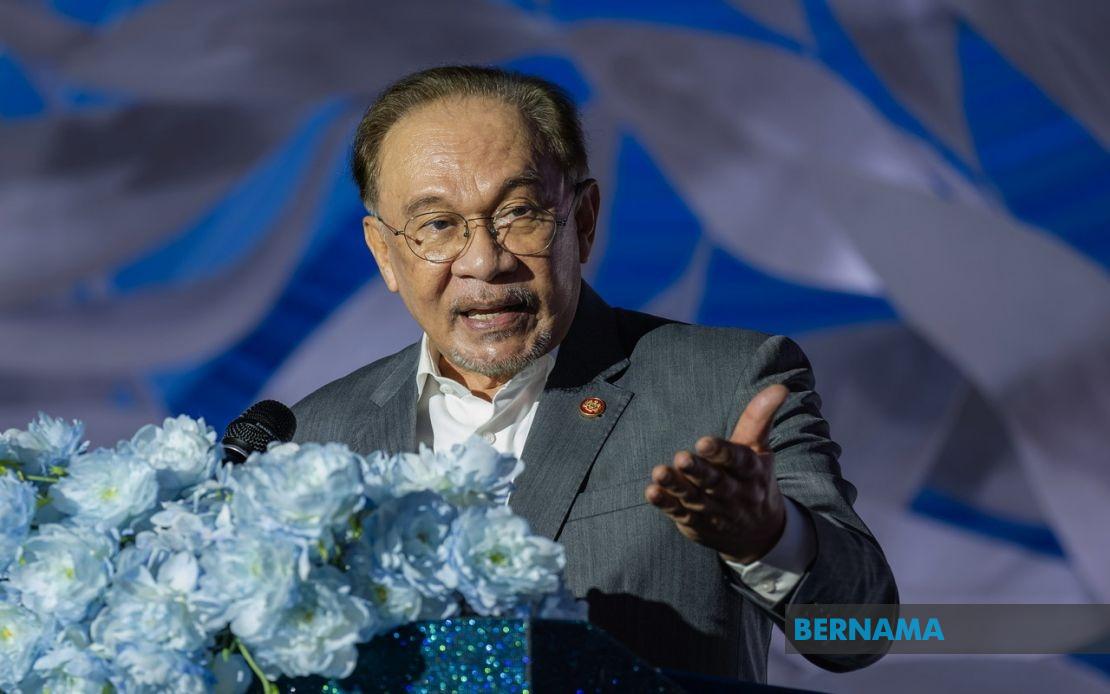
Prime Minister Datuk Seri Anwar Ibrahim has reaffirmed Malaysia's uncompromising stance on Israeli nationals, declaring that the country will enforce immediate deportation of any such individuals found within its borders. Speaking to reporters in Kuala Lumpur, Anwar underscored that Malaysia's refusal to recognise Israel remains a fundamental pillar of the nation's foreign policy, and this principle will be upheld without exception regardless of circumstances or dual citizenship arrangements.
The government's firm position comes in response to media reports suggesting that individuals holding Israeli passports, some in combination with citizenship documents from other countries, had attempted entry or were already present in Malaysia. These allegations prompted immediate concern across governmental agencies and among state officials, triggering a coordinated investigative response to establish the validity and scope of such claims.
According to Anwar, the country's security apparatus is currently conducting comprehensive investigations into the reported incidents. He expressed confidence that relevant authorities would uncover the full details and take appropriate enforcement action. The Prime Minister indicated that his government views this matter with utmost seriousness, given the sensitive nature of Malaysia's relationship with Israel and the domestic sensitivities surrounding this issue.
The Johor state government had previously flagged concerns about the Network School operating in Forest City, alleging that the institution's activities involved Israeli nationals who purportedly used alternative citizenship documents to circumvent immigration controls. Johor Menteri Besar Datuk Onn Hafiz Ghazi expressed alarm that individuals had successfully leveraged dual nationality provisions to enter Malaysia, thereby circumventing standard security vetting procedures that might otherwise have flagged their Israeli connections.
This incident highlights a vulnerability in Malaysia's border security framework: the dual citizenship loophole that allows individuals to enter the country using non-Israeli travel documents while concealing their Israeli nationality status. Such arrangements pose operational challenges for immigration authorities attempting to maintain consistent enforcement of the nation's non-recognition policy. The discovery that individuals could exploit alternative passports to mask their true national affiliation has prompted calls for enhanced screening protocols.
Higher Education Minister Datuk Seri Dr Zambry Abdul Kadir is expected to provide fuller details regarding the alleged activities at Network School and the scope of the investigation. The involvement of an educational institution in this controversy adds complexity, as it suggests potential broader plans for institutional engagement rather than isolated incidental entry. The authorities are investigating whether the alleged Israeli nationals were conducting educational activities, research, or other programmes that might have longer-term implications for Malaysia's national interests.
Malaysia's position on Israeli nationals has deep historical roots. Since Malaysia's independence, successive governments have consistently refused diplomatic recognition of Israel, a stance aligned with broader Muslim-majority nation perspectives and support for Palestinian self-determination. This policy extends to restrictions on Israeli business operations, travel, and institutional presence within Malaysian territory. The current government has not deviated from this foundational principle, demonstrating continuity across different administrations on this particularly sensitive matter.
The incident also reflects broader regional dynamics in Southeast Asia. While some neighbouring countries maintain pragmatic if informal relations with Israel, Malaysia has maintained categorical non-engagement. This approach resonates with domestic constituencies who view the Palestinian-Israeli conflict through the lens of religious solidarity and post-colonial justice. Any suggestion that Israeli nationals are operating within the country generates significant political sensitivity and public concern.
For Malaysian readers, this episode underscores that despite globalisation and increasing cross-border movements, the government prioritises maintaining its principled stance on Israel recognition. The deportation policy represents not merely administrative procedure but reflects core commitments regarding national sovereignty and alignment with Muslim-majority consensus. The willingness to investigate and enforce such measures signals that this is not a nominal policy but one the government actively enforces.
The broader implications extend to immigration policy more generally. The Network School case demonstrates that Malaysia's immigration authorities must remain vigilant about potential misuse of dual citizenship provisions and alternative documentation. Tightened screening protocols may become necessary to prevent similar circumvention attempts, particularly regarding nationals from countries with which Malaysia maintains formal non-recognition policies. This could require enhanced cooperation between immigration, education, and security agencies.
From a Southeast Asian perspective, Malaysia's firm position reinforces its distinctive approach to Israel relations within the region. Unlike some other ASEAN members who have developed various levels of engagement, Malaysia maintains categorical non-recognition. This consistency, while limiting certain bilateral opportunities, aligns Malaysia with broader Islamic world positions and demonstrates the primacy of principle over pragmatic commercial considerations in this particular policy domain.
Moving forward, the investigation outcomes will likely inform enhanced procedures for detecting and preventing Israeli nationals from entering Malaysia through alternative means. The case serves as a reminder that maintaining consistent foreign policy requires not merely rhetorical commitment but sustained implementation capacity and willingness to invest resources in enforcement mechanisms that prevent policy circumvention.

