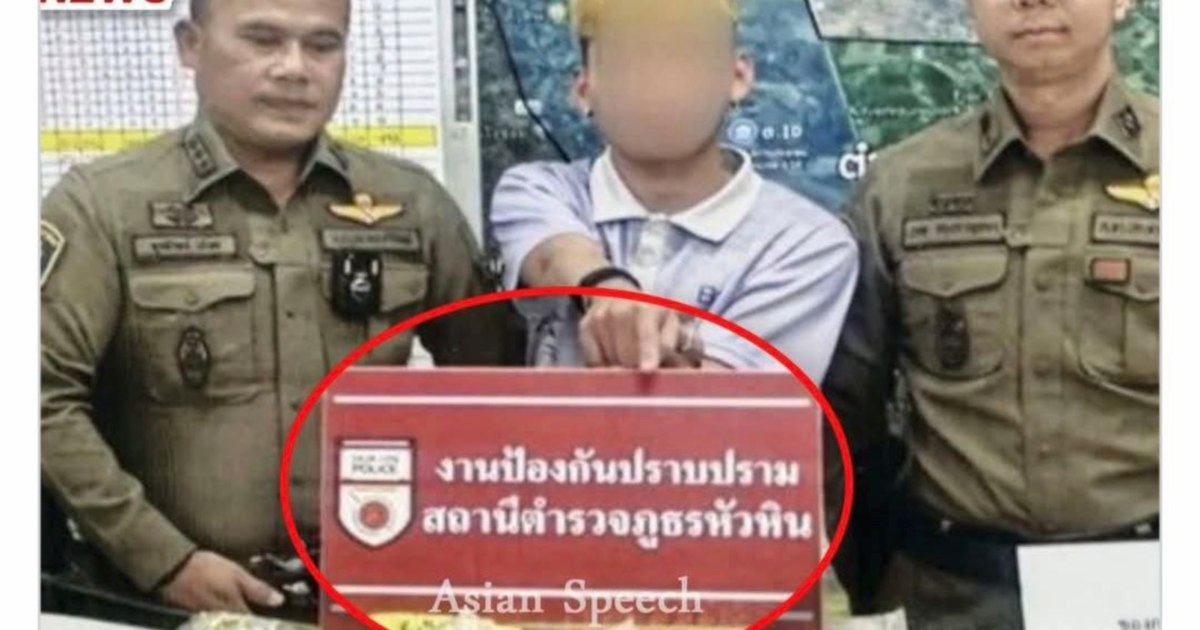
A 20-year-old Malaysian national was taken into custody by Thai police on Saturday following the discovery of 166 kilograms of crystal methamphetamine in his vehicle near Hua Hin in Prachuap Khiri Khan province. The narcotics haul, with an estimated street value exceeding RM8 million, represents one of the more significant drug intercepts reported in recent cross-border enforcement operations. The arrest underscores persistent challenges in combating methamphetamine trafficking networks that exploit routes linking Malaysia and Thailand.
The detention came after the driver attempted to navigate through a police checkpoint in the coastal province, prompting authorities to conduct a secondary inspection of the BMW vehicle. Officers discovered the substantial quantity of syabu concealed within the car, leading to immediate apprehension and preliminary investigations. The circumstances surrounding the checkpoint evasion suggest the accused may have been aware of law enforcement presence and sought to avoid scrutiny, a common tactic employed by drug couriers operating along major trafficking corridors.
Crystal methamphetamine remains one of the most trafficked illicit substances across Southeast Asia, with supply chains typically originating from clandestine laboratories in Myanmar and distributed through Thailand into Malaysia and beyond. The drug commands significant market value throughout the region, making it an attractive commodity for smuggling networks despite substantial legal penalties. This particular seizure aligns with patterns observed by regional drug enforcement agencies, which have documented increased trafficking activity along both maritime and land routes.
The age of the detainee raises questions about recruitment strategies employed by trafficking organisations, which increasingly target younger individuals for courier roles. Such operatives are often offered substantial financial incentives or coerced through debt bondage and personal circumstances. Youth involvement in drug trafficking has become a concerning trend across the region, with research suggesting many courier-level participants lack awareness of the severe legal consequences they face, particularly in Thailand where narcotics laws carry mandatory minimum sentences.
Thailand's enforcement response reflects its position as both a transit country and consumer market for methamphetamine. The kingdom has intensified drug interdiction operations at checkpoints and major transportation routes in recent years, particularly in provinces bordering Malaysia such as Satun and Yala. Hua Hin's location along a major north-south corridor makes it a strategic point for detection efforts. However, traffickers continuously adapt their routes and methodologies, employing vehicle swaps, maritime smuggling, and compartmentalised distribution networks to circumvent detection.
For Malaysia, the incident carries significant implications. Malaysian traffickers and syndicates are frequently implicated in cross-border operations, either as organisers, financiers, or transporters moving drugs through Thai territory toward Malaysian distribution networks. The arrest of a young Malaysian citizen involved in courier-level smuggling reflects broader concerns about organised crime's ability to recruit local participants willing to assume substantial personal risk. Investigations by Malaysian enforcement agencies typically focus on identifying higher-level organisers and financial networks behind such operations.
The RM8 million valuation of the seized consignment demonstrates the economic scale of regional methamphetamine markets. Such large quantities are typically destined for wholesale distribution rather than retail street sales, suggesting the network involved operates at a significant organisational level. The loss of a shipment of this magnitude would represent a considerable financial setback for trafficking organisations, potentially prompting adjustments to operational security or recruitment patterns.
Cross-border cooperation between Malaysian and Thai authorities has expanded considerably over the past decade, with joint task forces and intelligence sharing arrangements facilitating operations such as this interdiction. However, differences in legal frameworks, investigative procedures, and resource allocation continue to challenge coordinated enforcement efforts. The capture of this courier may trigger bilateral investigations aimed at identifying his handlers and the broader supply chain structure.
The case arrives amid broader regional concerns about methamphetamine production capacity. Estimates suggest Myanmar's clandestine labs are producing record quantities annually, with seizure data indicating only a fraction of total supply is being interdicted. This supply-demand imbalance perpetuates trafficking incentives despite enforcement successes. For Malaysian citizens engaged with or exposed to trafficking networks, the risks extend beyond legal penalties to include personal safety, as disputes within criminal organisations frequently result in violence.
Thailand's judicial system, while establishing clear deterrence through mandatory sentencing provisions, also reflects broader systemic challenges in managing large caseloads and ensuring consistent application of law. The Malaysian detainee now faces Thai prosecution under Thailand's Narcotic Drugs Act, which imposes penalties ranging from significant imprisonment terms to capital punishment depending on quantity and aggravating circumstances. His case will likely proceed through Thai courts with minimal consular intervention beyond notification and basic welfare monitoring by Malaysian diplomatic officials.
The seizure reinforces recommendations from regional policy experts advocating for enhanced community awareness programmes targeting vulnerable populations, particularly youth in economically disadvantaged areas susceptible to recruitment. Prevention initiatives addressing the socioeconomic drivers of trafficking participation remain underfunded relative to enforcement operations throughout Southeast Asia. Furthermore, addressing production capacity in source countries requires sustained diplomatic pressure and support for alternative livelihood programmes in affected regions of Myanmar.
Looking forward, this interdiction serves as a reminder of the sophisticated networks required to move large drug quantities across borders despite security measures. Malaysian stakeholders including law enforcement, social services, and community organisations would benefit from coordinated strategies addressing both supply reduction and demand management. The incident also highlights the continued utility of checkpoint operations and intelligence-led interdiction, particularly when combined with cross-border information sharing mechanisms that enable rapid response to suspicious activity patterns along established trafficking routes.

