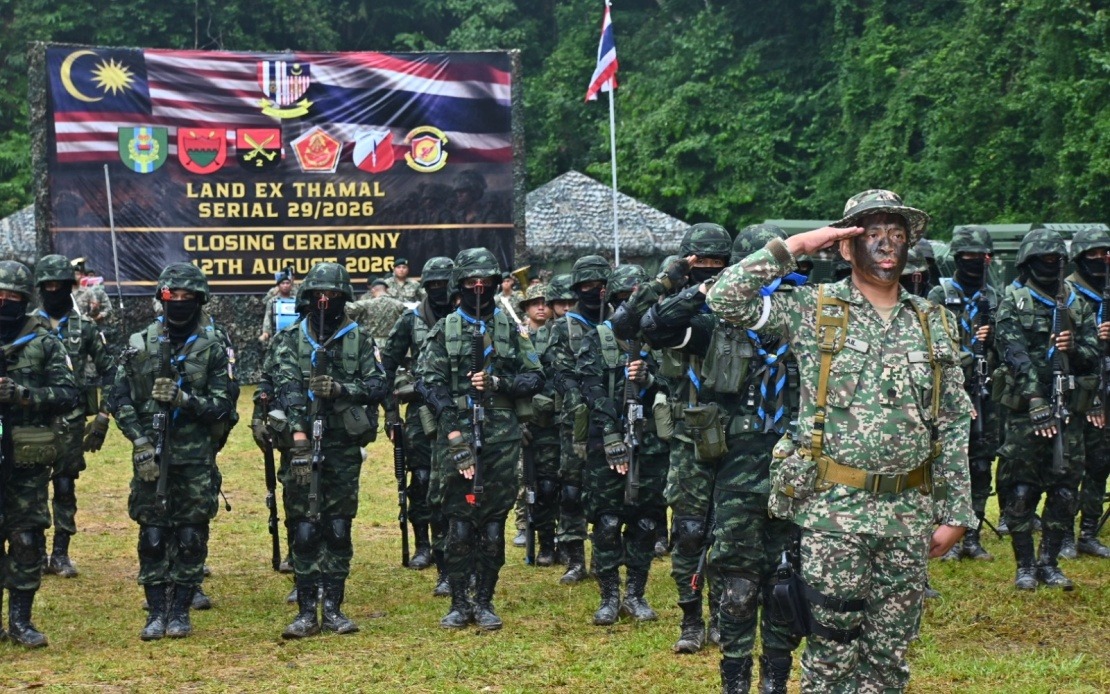
More than 250 soldiers from Malaysia and Thailand have embarked on an intensive training programme designed to sharpen combat readiness and deepen operational coordination between the two neighbouring nations. Exercise LAND THAMAL Series 29/2026, which commenced on August 5 in Gerik, represents a significant milestone in military cooperation, bringing together 197 Malaysian Army personnel alongside 55 counterparts from the Royal Thai Army. The initiative underscores the deepening defence relationship between Kuala Lumpur and Bangkok at a time when regional security challenges continue to evolve.
The exercise unfolds across three distinct phases, each targeting specific aspects of military proficiency and interoperability. The Cross Training Exercise provides foundational knowledge exchange, while the Field Training Exercise exposes troops to realistic combat scenarios including navigation through obstacles, establishing forward operating positions, reconnaissance patrols, and tactical assault operations. These components are complemented by the Combined Military Civil Action programme, which extends the military's engagement beyond traditional defence considerations into community-oriented initiatives. This comprehensive approach reflects modern military doctrine, which recognises that security extends beyond conventional warfare into disaster response, humanitarian assistance, and civil-military cooperation.
The opening ceremony on August 5 at Gerik Airstrip was jointly officiated by Brigadier General Datuk Mohd Zaini Hashim, Commander of the 30th Malaysian Infantry Brigade, and Senior Colonel Taweeporn Kanatong, who heads the 5th Infantry Brigade of the Thai contingent. The dual leadership structure symbolises the equal footing both nations maintain in this partnership, moving beyond the traditional senior-junior dynamic that occasionally characterises military exchanges. Taweeporn's remarks during the ceremony highlighted how LAND THAMAL transcends routine training, positioning itself as a platform for addressing shared regional challenges ranging from natural disasters to transnational security threats and border management issues.
The exercise carries particular significance for Southeast Asia's security landscape. Malaysia and Thailand share not only geographical proximity but also similar security concerns, including managing porous borders, combating cross-border criminal networks, and responding to humanitarian crises. By conducting joint drills, both militaries develop standardised procedures and communication protocols that become invaluable during actual emergencies. This harmonisation of operational methods reduces the friction that can arise when different forces respond to crises independently, ultimately saving lives and resources. For Malaysian readers, such cooperation is essential given the nation's position as a maritime and terrestrial crossroads in the region.
The emphasis placed on knowledge sharing and tactical capability exchange reflects evolving military thinking in Southeast Asia. Rather than viewing defence relationships as primarily intelligence-gathering or deterrent-focused, both nations recognise that transparency and genuine partnership strengthen overall regional resilience. The 2nd Malaysian Infantry Division, which coordinated the exercise, explicitly noted that participants engage in exchanging ideas and experiences, not merely executing predetermined drills. This approach builds mutual understanding at the officer and soldier level, creating personal networks that often prove invaluable when crises demand rapid cross-border coordination.
The inclusion of the Jiwa Murni Programme within the exercise demonstrates how contemporary military operations integrate civil-military relations. By conducting community activities at Sekolah Menengah Kebangsaan Sultan Idris Shah II in Gerik, participating troops from both countries simultaneously enhance their public image and demonstrate tangible military commitment to civilian welfare. For local communities near the Malaysia-Thailand border, witnessing soldiers from both nations working together on school improvements sends a powerful message of stability and neighbourly cooperation. This soft power dimension complements the hard security benefits of interoperability training.
From a strategic perspective, Exercise LAND THAMAL represents a measured response to regional tensions while avoiding provocative messaging toward other powers. Unlike exercises conducted near contested waters or explicitly targeting particular nations, this bilateral drill focuses on capability enhancement and genuine partnership. This approach allows Malaysia and Thailand to strengthen their position without triggering diplomatic friction or unnecessary escalation. The continuity of LAND THAMAL, now in its 29th iteration within the 2026 series framework, demonstrates institutionalised commitment rather than opportunistic cooperation.
The operational readiness gains from such exercises deserve emphasis. When Thai and Malaysian units eventually respond to border incursions, natural disasters, or maritime emergencies requiring joint response, they will draw upon muscle memory and established procedures developed during LAND THAMAL. The trust built between commanders and soldiers during training translates into faster decision-making and smoother coordination during actual operations. This preparation is invaluable given the unpredictability inherent in border regions and maritime zones where Thailand and Malaysia maintain shared interests.
For Malaysia specifically, deepening military ties with Thailand addresses strategic imperatives in the northern corridor. The Straits of Malacca and surrounding waters remain critical to global commerce and Malaysian prosperity, yet piracy, smuggling, and maritime security challenges persist. A Thai military that is better trained and more interoperable with Malaysian forces contributes to the stability of these vital shipping lanes. Additionally, coordinated responses to transnational crime, human trafficking, and illegal fishing are more effective when both nations' armed forces operate from shared playbooks developed during exercises like LAND THAMAL.
The broader defence relationship between Malaysia and Thailand has historically faced various pressures, from diplomatic tensions to competing economic interests. By institutionalising joint exercises and embedding cooperation into regular military calendars, both nations create structural incentives for maintaining positive relations even during periods of political disagreement. Military-to-military relationships often prove resilient precisely because they focus on concrete operational challenges rather than political rhetoric. When soldiers train together, they develop professional respect that transcends political cycles.
Looking forward, the continuation of Exercise LAND THAMAL reflects confidence that Malaysia-Thailand military cooperation remains central to Southeast Asian security architecture. As the region confronts transnational challenges ranging from terrorism to climate-related disasters, bilateral cooperation becomes increasingly valuable. The involvement of 252 personnel across multiple phases suggests a serious commitment to building lasting partnerships rather than conducting perfunctory drills. Each iteration of this exercise likely incorporates lessons from previous iterations, creating an evolving platform that becomes progressively more sophisticated and effective.
The exercise also carries implications for ASEAN cohesion and the broader regional security environment. When major Southeast Asian militaries demonstrate effective cooperation, the entire region benefits from enhanced stability and reduced misunderstanding. Malaysia and Thailand's willingness to conduct joint training sends subtle but important signals to other nations regarding the possibilities of multilateral defence cooperation. As maritime disputes and security challenges continue evolving across Southeast Asia, the model represented by LAND THAMAL offers a constructive pathway for managing tensions through professional military engagement and institutional cooperation. This approach, emphasising capability-building over confrontation, remains particularly valuable in a region navigating complex geopolitical currents.

